
Your Ultimate Checklist Project Management Guide for 2025

Moving a project from a brilliant idea to a successful launch is a complex journey filled with potential pitfalls. Without a clear roadmap, teams can easily get lost in missed deadlines, scope creep, and budget overruns. This is where a structured, phase-by-phase checklist project management system transforms chaos into clarity. It's not just about ticking boxes; it’s about creating a repeatable, reliable framework for success that prevents critical tasks from falling through the cracks.
This comprehensive guide breaks down the entire project lifecycle into eight distinct, actionable checklists. From the initial spark of an idea in the initiation phase to the final lessons learned at project closure, you'll gain access to a detailed operational playbook. We will provide specific templates and practical, real-world examples to ensure no critical step is ever missed. This approach standardizes processes, enhances team communication, and significantly reduces the risk of project failure.
Whether you're managing a remote team or an in-house crew, these checklists will serve as your single source of truth, empowering you to deliver projects on time, on budget, and to the highest standard. You will learn how to:
- Define clear project objectives and scope from day one.
- Identify and mitigate potential risks before they derail your timeline.
- Systematize communication with stakeholders to maintain alignment.
- Ensure quality control through every stage of execution.
By implementing this checklist project management methodology, you can build a more predictable, efficient, and successful project delivery engine. Let's dive into the first phase: Project Initiation.
1. Project Initiation Checklist
The Project Initiation Checklist is the foundational first step in any structured project management approach. It’s a formal process to define a new project or a new phase of an existing one, ensuring all key stakeholders are aligned on the project's purpose, objectives, and high-level requirements before significant resources are committed. This phase transforms an abstract idea into a tangible, authorized project.
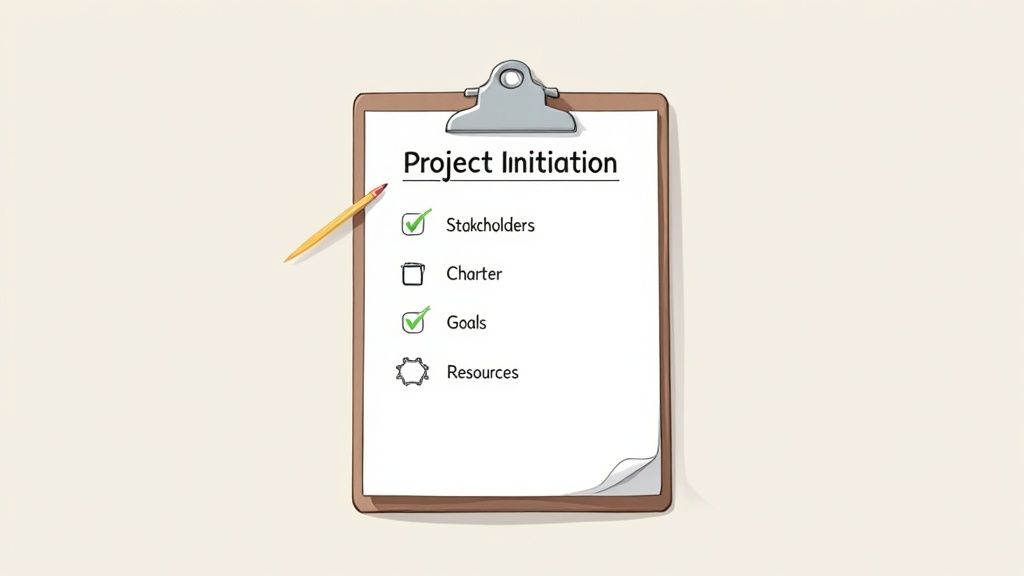
This checklist acts as the gatekeeper for project viability. By systematically ticking off items like defining the business case, identifying key stakeholders, and drafting a project charter, you prevent scope creep and resource waste down the line. It establishes the "why" behind the project, which is critical for maintaining momentum and making informed decisions later. This initial step is non-negotiable for predictable project success.
When to Use This Checklist
Use the Project Initiation Checklist at the very beginning of any endeavor, no matter the size. It's especially crucial for projects with multiple departments, significant budgets, or high strategic importance. For example, enterprise software implementations at Fortune 500 companies rely on this phase to align IT, finance, and operational teams before a single line of code is written. Similarly, many rigorous processes for new product initiatives ensure every project has a clear problem to solve and a defined market before receiving funding.
Actionable Implementation Tips
To effectively use this crucial part of checklist project management, follow these best practices:
- Create a Project Charter: This is the cornerstone document. It should concisely outline the project's objectives, scope, key stakeholders, high-level risks, and the project manager's authority. Keep it brief yet comprehensive, typically 1-3 pages.
- Conduct Stakeholder Analysis: Before drafting the charter, identify everyone impacted by the project. Map their influence and interest to understand communication needs and manage expectations from day one.
- Document Assumptions: Clearly list all assumptions and constraints. This transparency prevents misunderstandings and provides a baseline for future change requests.
- Hold a Formal Kickoff: Once the charter is approved, schedule a formal kickoff meeting to align the team and stakeholders. To ensure this meeting is productive, you should prepare a clear and concise agenda. You can learn more about how to structure an effective project kickoff meeting agenda.
2. Planning and Scope Definition Checklist
The Planning and Scope Definition Checklist is where a project's high-level vision transforms into a detailed, actionable roadmap. This critical phase involves breaking down the project into smaller, manageable components, defining clear deliverables, and establishing firm boundaries. It ensures every team member and stakeholder understands exactly what needs to be done, by when, and what constitutes "complete."
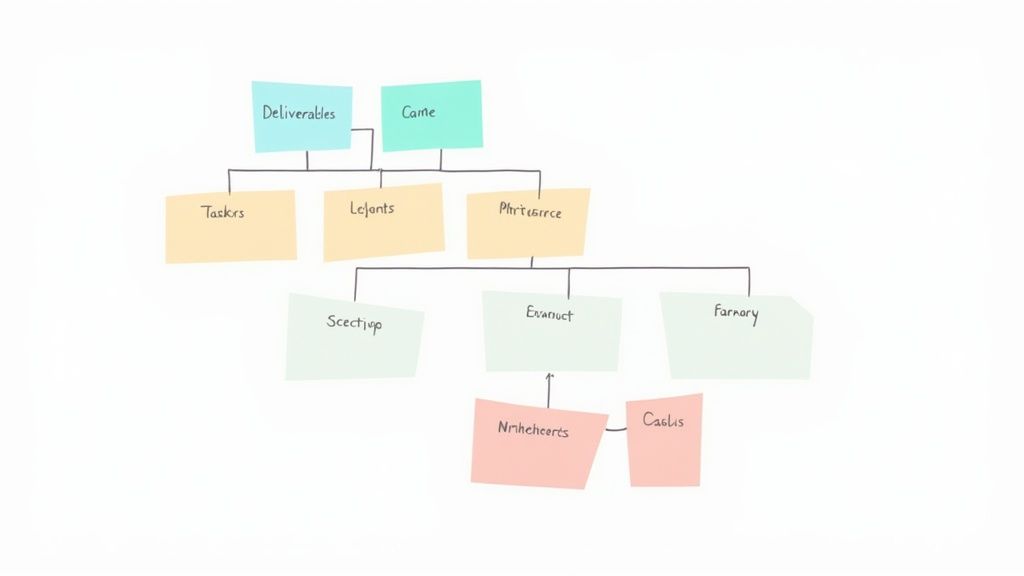
This checklist serves as the blueprint for execution, preventing the dreaded scope creep that derails timelines and inflates budgets. By meticulously documenting deliverables, timelines, and constraints, you create a shared source of truth for the entire project lifecycle. This methodical approach, central to project management frameworks and adapted for iterative environments, is fundamental to delivering projects on time and within budget.
When to Use This Checklist
This checklist is essential after the project charter is approved but before any significant execution work begins. It is indispensable for complex projects where ambiguity can lead to costly errors. For instance, in large-scale construction, this checklist defines every material, blueprint, and labor requirement before breaking ground. Similarly, software development projects rely on detailed scope documents to align vast engineering teams on features and functionality, ensuring a cohesive final product.
Actionable Implementation Tips
To get the most value from this phase of checklist project management, implement these best practices:
- Create a Work Breakdown Structure (WBS): Use a hierarchical approach to decompose the project's major deliverables into smaller, more manageable work packages. This clarifies the full scope of work and helps in assigning tasks.
- Involve Subject Matter Experts: Engage team members and experts who will perform the work during scope definition. Their insights are invaluable for creating realistic estimates and identifying potential technical constraints early on.
- Get Formal Scope Approval: Document the final scope, deliverables, assumptions, and constraints in a formal scope statement. Circulate this document and obtain written sign-off from all key stakeholders before moving to the execution phase.
- Review Scope Regularly: Continuously compare the work being performed against the approved scope document. This helps you quickly identify and address any deviations or instances of scope creep.
3. Risk Management Checklist
The Risk Management Checklist is a structured process for identifying, analyzing, and responding to potential threats and opportunities that could impact a project. It’s not about eliminating all risk, but about proactively understanding potential issues to minimize their negative effects and maximize the upside of opportunities. This checklist guides a team from initial brainstorming to creating concrete mitigation plans, ensuring that uncertainty doesn't derail the project timeline or budget.
This process turns reactive panic into proactive strategy. By systematically identifying risks, you prevent last-minute scrambles and costly fixes. This structured approach is a hallmark of mature project management. It establishes a clear plan for what could go wrong, so the team is prepared to act decisively if and when it does.
When to Use This Checklist
A Risk Management Checklist should be initiated during the project planning phase and remain a living document throughout the project lifecycle. It is indispensable for complex projects with high stakes, such as in finance, healthcare, or construction. For instance, a financial institution launching a new trading platform would use it to identify cybersecurity threats and regulatory compliance issues. Likewise, pharmaceutical companies rely on this process to manage the immense risks associated with clinical trials, from patient safety to data integrity.
Actionable Implementation Tips
To effectively integrate this into your checklist project management system, follow these best practices:
- Create a Risk Register: This is your central document for tracking all potential risks. It should include columns for the risk description, its potential impact, its probability of occurring, a risk score (impact x probability), the owner responsible for monitoring it, and the planned mitigation strategy.
- Conduct Brainstorming Sessions: Involve cross-functional team members in risk identification workshops. Different perspectives from engineering, marketing, and finance will uncover a wider range of potential issues that a single person might miss.
- Prioritize Ruthlessly: Focus your mitigation efforts on risks with the highest impact and probability scores. You cannot address every single potential problem, so it’s critical to allocate resources where they will make the most difference.
- Assign Clear Ownership: Every identified risk must have a designated owner. This individual is responsible for monitoring the risk, tracking triggers, and initiating the response plan if necessary, ensuring accountability.
4. Quality Assurance and Testing Checklist
The Quality Assurance and Testing Checklist is a systematic process designed to verify that project deliverables meet specified quality standards and stakeholder expectations. It moves beyond simply finding bugs; it’s a proactive approach to prevent defects by building quality into the entire project lifecycle, from planning to final delivery. This checklist ensures that every output is fit for purpose and aligns with the acceptance criteria defined during the project planning phase.
This checklist serves as the project’s quality gate, ensuring nothing substandard reaches the end-user. By methodically addressing items like quality planning, testing protocols, and defect management, teams can deliver consistent, high-quality results. This structured approach transforms quality from an afterthought into an integrated, non-negotiable component of successful checklist project management.
When to Use This Checklist
This checklist should be integrated throughout the project lifecycle, not just at the end. It is indispensable for software development, manufacturing, and any project where the end product's reliability is critical. For instance, major tech companies implement continuous testing protocols from the very first sprint to catch issues early. Similarly, in healthcare, quality assurance checklists are used to standardize patient care delivery and ensure compliance with strict regulatory standards.
Actionable Implementation Tips
To effectively implement this quality-focused checklist, follow these best practices:
- Define Quality Standards Early: Before execution begins, clearly document what "quality" means for your project. Define specific, measurable, and achievable acceptance criteria for each deliverable.
- Implement Continuous Testing: Instead of a single testing phase at the end, integrate quality checks throughout the project. This agile practice helps identify and fix issues when they are smaller and less costly to resolve.
- Classify Defects Clearly: Create a straightforward system for classifying defects by severity and priority. This helps the team focus on fixing the most critical issues first, optimizing resource allocation.
- Involve End-Users in Acceptance Testing: User Acceptance Testing (UAT) is crucial. Involving actual users ensures the final product not only works as designed but also meets their real-world needs and expectations.
- Conduct Post-Project Quality Reviews: After the project is complete, hold a review session to analyze what went right and wrong with the quality process. Use these lessons to refine your checklist for future projects.
5. Stakeholder Communication and Engagement Checklist
The Stakeholder Communication and Engagement Checklist is a strategic framework designed to manage relationships and ensure information flows effectively throughout the project lifecycle. It moves beyond simple status updates to proactively identify, analyze, and engage every individual or group impacted by the project, ensuring their needs and expectations are understood and managed. This systematic approach is crucial for building trust, gaining buy-in, and mitigating risks related to misalignment or opposition.
This checklist serves as the project's diplomatic roadmap. By methodically addressing stakeholder needs, you transform potential obstacles into advocates for your project's success. Effectively managing these relationships is often the deciding factor between a project that is merely completed and one that is truly successful and widely adopted.
When to Use This Checklist
This checklist should be initiated during the project planning phase and actively maintained until project closure. It is indispensable for complex projects with diverse stakeholders, such as large-scale infrastructure projects requiring community engagement or corporate mergers affecting multiple departments. Professional services firms, like management consultancies and law firms, rely on this rigorous communication process to manage client expectations and ensure satisfaction.
Actionable Implementation Tips
To effectively integrate this into your checklist project management system, follow these best practices:
- Create a RACI Matrix: Clearly define who is Responsible, Accountable, Consulted, and Informed for each major task or deliverable. This eliminates confusion and ensures the right people are involved at the right time.
- Tailor Communication Methods: Not all stakeholders need the same information. Segment your stakeholders and customize the communication frequency, format, and channel (e.g., executive dashboards for sponsors, detailed reports for the project team).
- Schedule Regular Check-ins: Proactively schedule one-on-one meetings or group updates with key stakeholders. This provides a dedicated forum to address concerns, gather feedback, and maintain alignment before issues escalate.
- Visualize Status Reports: Use simple, visual tools like traffic light reports (red, yellow, green) or dashboards to provide quick, at-a-glance project health updates. This makes information digestible for busy executives.
- Document Key Decisions: Maintain a clear record of all significant communications and decisions. To further enhance your communication strategy and ensure all stakeholders are aligned, exploring various project communication plan samples can provide valuable templates and inspiration. You can learn more about how to implement effective project communication strategies for your team.
6. Schedule and Timeline Checklist
The Schedule and Timeline Checklist is a critical component of project planning that translates your project scope into a time-bound action plan. It provides a structured process for estimating task durations, sequencing activities, allocating resources, and identifying key milestones. This ensures that the project progresses logically and that everyone involved understands the temporal commitments required for success.
This checklist is the roadmap that keeps your project from getting lost. By breaking down the work into manageable tasks and setting realistic deadlines, you create a baseline against which progress can be measured. This approach allows for proactive management of dependencies and prevents delays from cascading through the project. It is an indispensable tool in any effective checklist project management framework for delivering results on time.
When to Use This Checklist
This checklist should be completed during the project planning phase, immediately after the scope has been defined. It is essential for any project with a fixed deadline, multiple interdependent tasks, or limited resource availability. For example, large-scale construction firms use intricate scheduling to coordinate everything from foundation pouring to electrical installation. Similarly, software development teams at major tech companies rely on detailed release schedules to plan sprints, manage feature rollouts, and hit market launch dates.
Actionable Implementation Tips
To effectively develop a robust project schedule, follow these best practices:
- Use Three-Point Estimation: For each task, estimate the optimistic (O), pessimistic (P), and most likely (M) duration. Use the formula (O + 4M + P) / 6 to create a more accurate, weighted average, which accounts for uncertainty.
- Identify the Critical Path: Map out task dependencies to find the longest sequence of activities that must be completed on time for the entire project to finish on schedule. This is your critical path; focus your monitoring efforts here.
- Visualize with Gantt Charts: Use visual tools to represent your timeline, tasks, and dependencies. This makes the schedule easier for stakeholders to understand and track. You can explore how to use Gantt charts for seamless project management to improve communication and clarity.
- Schedule Regular Reviews: A schedule is not a static document. Hold weekly or bi-weekly meetings to review progress against the baseline, identify variances, and make necessary adjustments to keep the project on track.
7. Budget and Cost Control Checklist
The Budget and Cost Control Checklist is a critical financial governance tool used to manage a project's finances from initial estimate to final reporting. It provides a structured framework for developing a realistic budget, tracking actual expenditures, controlling spending, and making informed financial decisions. This process ensures a project remains financially viable and delivers value without unexpected overruns.
This checklist serves as the financial backbone of your project. By systematically addressing budget allocation, cost tracking, and variance analysis, you can proactively manage financial health rather than reactively dealing with crises. Methodologies like Earned Value Management (EVM) are built on the principles of this checklist, integrating scope, schedule, and cost for a holistic view of project performance.
When to Use This Checklist
This checklist should be implemented during the planning phase and actively used throughout the project lifecycle until closure. It is indispensable for projects with significant financial investment, strict budgetary constraints, or complex procurement needs. For example, a real estate development firm uses rigorous cost control checklists to manage expenses for materials, labor, and permits, preventing budget creep that could erode profit margins. Similarly, government contractors rely on these detailed financial checks to ensure compliance and maintain transparent reporting.
Actionable Implementation Tips
To effectively use this crucial part of checklist project management, follow these best practices:
- Build in Contingency Reserves: Allocate a contingency fund, typically 10-20% of the base budget, to cover unforeseen risks or "known unknowns." This buffer provides financial flexibility without derailing the project.
- Use Earned Value Management (EVM): For objective progress tracking, implement EVM. This technique compares the budgeted cost of work scheduled with the value of work actually completed and the actual cost incurred, providing clear metrics like Cost Performance Index (CPI) and Schedule Performance Index (SPI).
- Establish Clear Approval Authority: Define and document who can approve expenditures and cost changes. A clear chain of command prevents unauthorized spending and ensures all financial decisions are deliberate and recorded.
- Track Committed Costs: Beyond tracking actual money spent, monitor committed costs, which are expenses you have agreed to pay but haven't yet, such as signed purchase orders. This gives a more accurate picture of your remaining budget.
- Conduct Regular Forecasts: Perform monthly or bi-weekly cost-to-complete forecasts. This forward-looking analysis helps you predict the final project cost and make necessary adjustments early.
8. Project Closure and Lessons Learned Checklist
The Project Closure and Lessons Learned Checklist is the critical final phase in a project's lifecycle. It provides a structured process for formally closing out a project, ensuring that all deliverables have been accepted, contracts are finalized, and resources are released. More importantly, it facilitates the capture and documentation of valuable knowledge to improve future endeavors. This phase transitions a completed project into an organizational asset.
This checklist ensures that a project doesn't just fade away but concludes with purpose and adds to the organization's collective intelligence. By systematically validating final deliverables, closing finances, and archiving documentation, you prevent loose ends that can create future problems. The emphasis on "lessons learned," a concept foundational to Agile retrospectives, transforms experience into a repeatable advantage, making it an indispensable part of checklist project management.
When to Use This Checklist
This checklist should be implemented at the end of every project, regardless of its outcome. It is essential for ensuring accountability and continuous improvement. For example, government projects require rigorous final audits and closeout reports to ensure public funds were used appropriately. Similarly, in software development, a retrospective after a major release helps the team refine its processes for the next product cycle, while construction projects use a similar process for final inspections and warranty handoffs to the client.
Actionable Implementation Tips
To effectively conclude your project and capture valuable insights, follow these best practices:
- Schedule a Lessons Learned Meeting Promptly: Hold this session within two weeks of project completion while memories are still fresh. Invite all key team members and stakeholders to ensure a diverse range of perspectives is included.
- Use a Structured Template: Guide the discussion with a template covering what went well, what could have been better, and specific, actionable recommendations for future projects. This prevents the session from becoming an unstructured complaint forum.
- Assign Ownership for Recommendations: For each recommendation generated, assign an owner responsible for ensuring it is considered or implemented in subsequent projects. This step turns insights into action.
- Celebrate Successes: Formally close the project by acknowledging the team's hard work and celebrating key achievements. This boosts morale and provides positive closure for everyone involved.
8-Point Project Checklist Comparison
| Checklist | 🔄 Implementation complexity | ⚡ Resource requirements & effort | 📊 Expected outcomes | 💡 Ideal use cases | ⭐ Key advantages |
|---|---|---|---|---|---|
| Project Initiation Checklist | Moderate — front-loaded process, formal approvals | Moderate — stakeholder time, templates, sponsor input | Clear scope, charter, aligned stakeholders | New projects, enterprise initiatives, regulated programs | Prevents scope creep; establishes accountability |
| Planning and Scope Definition Checklist | High — detailed WBS and constraints analysis | High — subject-matter experts, detailed workshops | Defined deliverables, schedule basis, scope baseline | Construction, large software projects, complex campaigns | Enables accurate scheduling & budgeting |
| Risk Management Checklist | Moderate–High — iterative identification and analysis | Moderate — cross‑functional sessions, risk tools, ongoing reviews | Risk register, mitigation plans, fewer surprises | High‑uncertainty or regulated projects (pharma, finance) | Proactive mitigation; protects schedule & budget |
| Quality Assurance and Testing Checklist | High — formal testing and compliance processes | High — QA staff, tooling, test environments | Reduced defects, compliance, higher customer satisfaction | Software releases, manufacturing, healthcare delivery | Catches issues early; ensures consistent quality |
| Stakeholder Communication & Engagement Checklist | Moderate — ongoing coordination and tailoring | High — frequent communications, meetings, reporting | Increased buy‑in, reduced conflicts, better transparency | Client services, multi‑stakeholder programs, community projects | Improves alignment and stakeholder support |
| Schedule and Timeline Checklist | Moderate–High — dependencies & critical path analysis | Moderate — planners, scheduling tools, regular updates | Realistic timelines, milestone visibility, variance tracking | Construction, product releases, event planning | Identifies critical activities; improves on‑time delivery |
| Budget and Cost Control Checklist | High — financial tracking and forecasting required | High — finance resources, EVM/tools, approvals | Controlled spending, accurate forecasts, ROI visibility | Large capital projects, government contracts, IT infra | Prevents overruns; enables data‑driven financial decisions |
| Project Closure & Lessons Learned Checklist | Low–Moderate — structured but end‑of‑project focused | Low — post‑project meetings, documentation effort | Formal acceptance, archived deliverables, organizational learning | All projects (recommended), post‑implementation reviews | Captures lessons, ensures clean closeout and handoff |
Supercharge Your Checklists with Real-Time Data
Throughout this guide, we've broken down the project lifecycle into a series of actionable, detailed checklists. From the high-level strategy of the Project Initiation Checklist to the granular details of the Project Closure and Lessons Learned Checklist, you now have a comprehensive framework. This structured approach to checklist project management is designed to bring clarity, accountability, and consistency to your workflow, transforming chaotic processes into predictable, manageable steps.
The power of these checklists lies in their ability to standardize excellence. By implementing them, you ensure that critical tasks are never overlooked, stakeholder communications are consistently managed, and risks are proactively identified. You move from a reactive state of firefighting to a proactive state of strategic execution, where every team member understands their role and every project phase has a clear roadmap.
From Static to Dynamic: The Data-Driven Evolution
A checklist is an exceptional guide, but its true potential is unleashed when it becomes a living document, evolving with each project. This is where real-time data becomes your most valuable asset. A static checklist can tell you what to do, but it can’t tell you how long a task is actually taking compared to your estimate or reveal hidden productivity drains that are silently sabotaging your timeline.
By integrating productivity and time-tracking data, you can transform your checklists from prescriptive lists into responsive, intelligent tools.
- Refine Your Planning: Imagine analyzing time-tracking data from your last five projects and discovering that the "Quality Assurance and Testing" phase consistently takes 25% longer than planned. You can now adjust your Schedule and Timeline Checklist for future projects with this data-backed insight, creating far more accurate and reliable forecasts.
- Validate Resource Allocation: Does your team have the bandwidth they need? Activity level reports can show if certain members are overloaded during specific project phases, indicating a need to re-evaluate the resource allocation in your Planning and Scope Definition Checklist. This data helps you prevent burnout and maintain a sustainable pace.
- Identify Bottlenecks Early: If a task on your Execution Checklist is showing high time investment but low progress, this is a clear red flag. Productivity data can pinpoint these friction points early, allowing you to intervene, offer support, or reallocate resources before a minor delay escalates into a major roadblock.
Key Takeaway: A checklist tells you the path; real-time data illuminates that path with a spotlight, showing you exactly where the bumps, obstacles, and opportunities for acceleration are. This combination moves you beyond simple task management and into the realm of true project optimization.
Making Your Checklists Smarter
Embracing this data-driven approach is the key to continuous improvement. Each completed project becomes a source of invaluable intelligence, feeding back into your checklists to make them smarter, more accurate, and more effective for the next initiative. The insights gained from how your team actually works allow you to build a system that is perfectly tailored to your unique processes and challenges. For those eager to innovate, exploring top AI-powered project management tools can significantly enhance your ability to integrate real-time data into your checklists.
Ultimately, mastering checklist project management isn't just about ticking boxes. It's about building a reliable, repeatable system for success. It's about empowering your team with the structure they need to do their best work and leveraging the data they generate to get better with every project you undertake. Start with the templates provided, adapt them to your needs, and commit to refining them with real-world data. This is how you build a resilient, efficient, and consistently successful project management engine.
Ready to bridge the gap between your checklists and reality? DeskCove provides the real-time productivity data and time-tracking insights you need to supercharge your project management. See exactly where time is going, identify bottlenecks, and make data-driven decisions to keep your projects on track and on budget. Start your free trial of DeskCove today and transform your checklists into powerful tools for optimization.
