How to Onboard Remote Employees: A Chaos-Free Start

When you're bringing a new remote employee into the fold, the game plan has to be about more than just shipping a laptop and tossing a few calendar invites their way. A successful start hinges on a well-thought-out experience built on preparation, connection, and integration.
It starts long before their first official day. We're talking about a deliberate pre-boarding phase, an engaging first week fueled by crystal-clear communication, and a conscious effort to immerse them in the company culture to keep that dreaded sense of isolation at bay.
Your Blueprint for a Successful Remote Start
Let's be real: onboarding a remote hire is your first, and maybe most important, chance to build a lasting, productive relationship. If you get it wrong, your new team member is left feeling disconnected, confused, and second-guessing their decision. But when you nail it? You build a rock-solid foundation of confidence and belonging from day one.
The goal here is to trade in the boring old checklist for a genuine, human-centric experience. This means you have to anticipate their needs, intentionally foster connections with the team, and give them a clear roadmap to becoming a productive contributor. It's not without its challenges, of course. Fighting off loneliness and navigating all the digital tools requires a proactive, not reactive, approach.
The Core Pillars of Remote Onboarding
An effective strategy isn't just a single event; it's a journey broken down into three distinct, yet interconnected, phases. Each stage has a specific goal, designed to seamlessly guide your new hire from a promising candidate to a fully integrated part of the team. Think of these pillars as the foundation for their long-term success with your company.
This visual flow really captures the journey from pre-boarding all the way through to full integration.
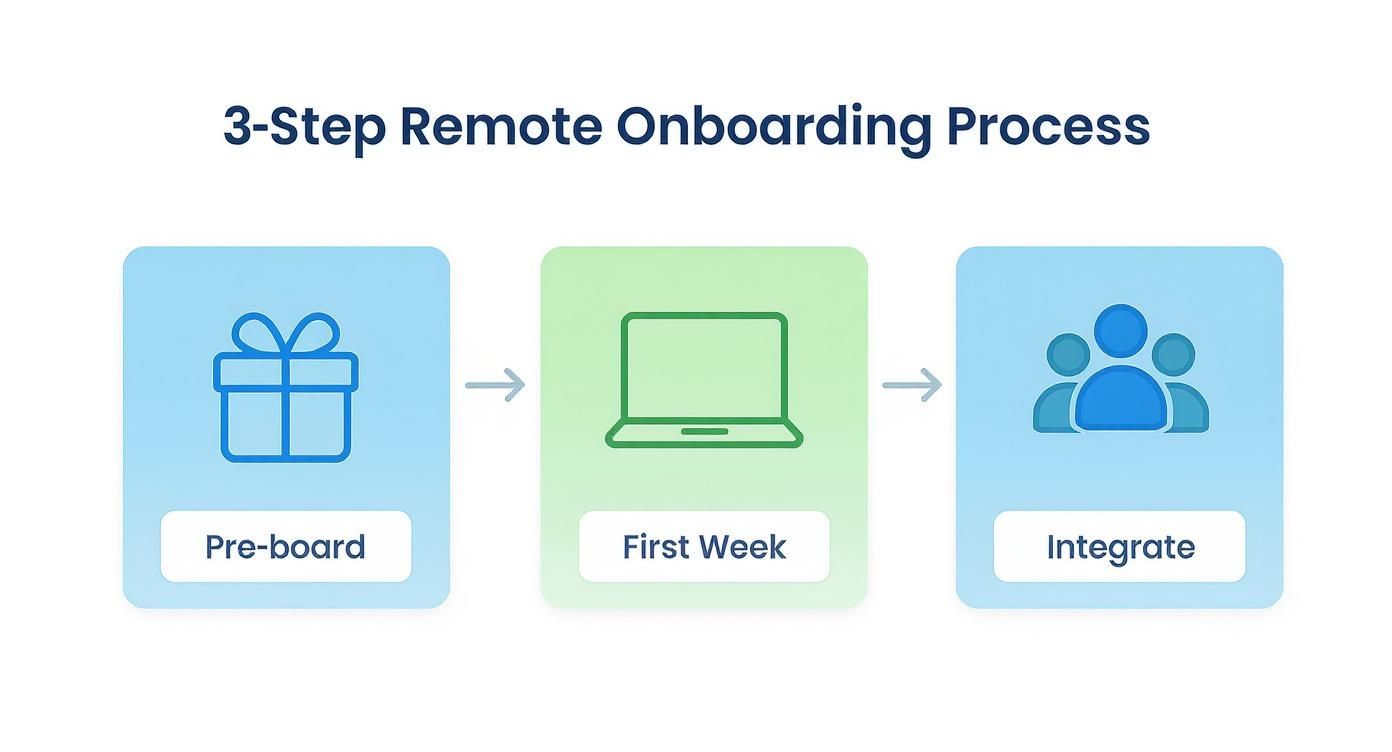
As you can see, this isn't a one-week affair. Great onboarding is a continuous process that builds momentum over time.
To simplify this, let's break down the journey into its essential components.
The Three Pillars of Effective Remote Onboarding
This table summarizes the core phases and their primary objectives, giving you a high-level view of a successful remote onboarding experience.
| Pillar | Primary Goal | Key Activities |
|---|---|---|
| Pre-boarding | Build excitement and handle logistics before Day 1. | Send welcome swag, complete paperwork digitally, share first-week schedule. |
| Orientation & Training | Connect the new hire to the team, tools, and mission. | Host team introductions, provide access to all necessary software, review company values. |
| Integration & Growth | Foster long-term belonging and performance. | Assign a mentor, set clear 30-60-90 day goals, schedule regular check-ins. |
Each pillar builds upon the last, creating a comprehensive support system that helps new hires feel confident and ready to contribute.
Why Getting Onboarding Right Matters So Much
The data doesn't lie—a structured plan is non-negotiable. With the shift to remote work, onboarding has become a make-or-break moment. Shockingly, 36% of remote workers have described their onboarding process as confusing.
The upside of getting it right is massive. Remote employees who go through an effective onboarding are 54% more productive in their first six months. Even better, they're 3.5 times more likely to be happy with their employer.
The real goal of remote onboarding isn't just to check off boxes; it's to make a new team member feel seen, supported, and connected to the company's mission before they even tackle their first major project.
At the end of the day, a strong onboarding program is a direct investment in retention and productivity. It sends a clear message from the very beginning: we value our people.
For a deeper dive into the nuts and bolts of creating a truly world-class process, this comprehensive guide to remote employee onboarding is an incredible resource that will serve as your roadmap.
Setting the Stage Before Day One
A world-class remote onboarding experience doesn't kick off on day one. It starts the second that candidate accepts your offer. This pre-boarding phase is your golden opportunity to turn new-hire jitters into genuine excitement. You're showing them, through your actions, that they're already a priority and you're invested in their success before they even log on for the first time.
Think about it from their perspective. That period between saying "yes" and their official start date can feel like a black hole of uncertainty. Proactive communication and a little thoughtful prep work can eliminate that anxiety completely. Instead of radio silence, build out a pre-boarding process that gets the logistics handled and makes your new teammate feel genuinely welcome.
Streamline the Paperwork and Accounts
Let's be honest: nobody wants to spend their first day wrestling with a mountain of digital forms. Getting all the administrative stuff out of the way upfront is a huge win. It frees up their first week to be about connection and learning, not just compliance.
- Go Digital with Documents: Use an HR platform to send and sign all the necessary employment contracts, tax forms, and policy acknowledgements. It's faster, more secure, and way less tedious for everyone.
- Set Up Key Accounts: Get their company email, Slack or Teams account, and any other critical software logins created ahead of time. Send them the credentials securely a few days before they start so they can poke around if they want to.
- Provide Early Policy Access: Give new hires a look at important documents. A solid remote work policy template can clarify expectations around communication, hours, and equipment right from the get-go, preventing a lot of future confusion.
By clearing these hurdles early, you're banking valuable time during that crucial first week for much more impactful activities.
Equip Them for Success
Nothing screams "we weren't ready for you" quite like a new hire showing up to an empty desk—even a virtual one. Equipment delays are a massive momentum killer. Your goal should be to have their home office fully functional before their first day.
Plan for shipping and expect potential delays. All the necessary hardware—laptop, monitors, keyboard, mouse—should land on their doorstep at least a few days before their start date. This buffer gives them time to unbox, set everything up, and work out any tech kinks with your IT team without the pressure of a day-one deadline.
A well-equipped home office isn't just about logistics. It’s a tangible signal to your new remote employee that the company is serious about giving them the tools they need to succeed from anywhere.
Curate a Memorable Welcome
Beyond the tech and the paperwork, pre-boarding is your chance to make a real first impression and give them a taste of your company culture. A physical welcome kit can bridge that digital divide and make a remote hire feel a tangible connection to the team.
This doesn't have to be some extravagant, over-the-top package, but it absolutely should be thoughtful. Think about including items that actually reflect your company's personality.
A few ideas for your welcome kit:
- A high-quality, comfy company-branded hoodie or t-shirt.
- A nice water bottle or coffee mug for their new desk setup.
- A notebook and some decent pens for all those first-week notes.
- A gift card for a local coffee shop or a food delivery service to treat themselves on their first day.
- A handwritten welcome note from their direct manager or even the CEO.
This simple gesture transforms the pre-boarding process from a checklist of tasks into a warm, personal welcome. The final touch? Send a clear, concise schedule for their first week. Knowing who they'll meet, what they'll learn, and when they'll have breaks provides structure and calms those first-day nerves, setting the stage for a fantastic start.
Choosing Your Remote Onboarding Tech Stack
Let’s be honest: the right technology can make or break a remote onboarding experience. Without it, you’re stuck juggling disjointed email chains, scattered spreadsheets, and a whole lot of confusion. A dedicated tech stack isn’t about adding more software for the sake of it; it's about creating a centralized, seamless experience that makes a new hire feel supported and connected from the get-go.
A well-thought-out set of tools handles the tedious, repetitive tasks for you. It helps build a sense of community before the first official day and gives your new hire a crystal-clear roadmap. The goal is to turn that potential first-week chaos into a structured, welcoming journey where everyone knows exactly what’s happening.
This kind of clarity is invaluable. For instance, a dashboard like DeskCove's can visualize team rhythms and productivity, giving new hires a subtle, data-driven way to understand how work gets done.
When you introduce tools like this constructively, they become a resource for self-management, not a "big brother" tactic. It's all about helping them align with the team's flow.
Building Your Core Onboarding Toolkit
You don't need a massive, complicated tech stack. You just need an intentional one. Think of it as building your new hire's digital headquarters—a central place for them to communicate, find tasks, and access key information.
Your core stack really boils down to three non-negotiables:
- A Communication Hub: This is your virtual water cooler. A dedicated Slack or Microsoft Teams channel for new hires is a game-changer. It creates an immediate, low-pressure space to ask questions, meet people, and just absorb the company’s communication style.
- Task Management & Checklists: You absolutely need a project management tool. This is where you'll build out a transparent onboarding checklist. Your new hire can see everything expected of them, track their own progress, and know who to bug about different parts of their training. No more "what should I be doing now?" moments.
- An HR & Paperwork Platform: An HRIS (Human Resources Information System) is a lifesaver. It completely eliminates the soul-crushing back-and-forth of emailing sensitive documents. Contracts, tax forms, and policy handbooks get signed, sealed, and delivered securely online before they even start.
Integrating Tools for Productivity and Training
Once you have the essentials locked down, a few other tools can really elevate the experience. Think about how your remote employees will actually learn and how you’ll support their performance over time. Don't forget to look into a solid training management software to add structure to the learning process.
Productivity tools are also incredibly valuable when framed the right way. A tool like DeskCove helps a new hire understand team workflows and productivity benchmarks without someone having to spell it out. The key is positioning it as a tool for their own self-management, not as a surveillance measure. You can explore a variety of remote work productivity tools to see what fits your company culture best.
The goal of your tech stack is to remove friction. Every tool you choose should make it easier for a new hire to find information, connect with people, or understand their role—not harder.
Getting this right isn't just a "nice-to-have." The numbers back it up. A whopping 81% of organizations are planning to invest in dedicated onboarding software. And companies that automate routine tasks have seen a 16% increase in new hire retention. A smooth, tech-powered start builds loyalty that lasts. This data proves that investing in the right tools pays off in both efficiency and happier employees.
Designing a Memorable First Week
That first week? It’s where the promises you made in the interview process meet reality. This is the critical window where a new hire decides if the job is everything they hoped it would be. A great first week isn't about drowning them in information; it's about deliberately building connections, creating clarity, and generating momentum.
This initial period really sets the tone for their entire experience with your company. The goal is to make them feel connected and capable, not isolated and lost in a sea of documents. By thoughtfully structuring their first five days, you can replace that new-job anxiety with a genuine sense of belonging.
Create a Balanced and Human-Centered Schedule
The secret to a knockout first-week schedule is all about balance. You have to mix the must-know training sessions with real opportunities for human connection. And don't forget to throw in a few small, achievable tasks that give them an early taste of success. A wall-to-wall Zoom schedule filled with policy reviews is a surefire way to kill their enthusiasm.
Instead, think about mapping out a schedule that puts interaction first and breaks up the heavy info dumps.
- Day 1 is all about the welcome: Kick things off with a warm, informal welcome from the team. Follow that with a one-on-one with their manager to walk through the week's plan, and then a session on the company's culture and vision. Save the deep technical dives for later.
- Mix up your timing: Schedule live meetings for introductions and Q&A sessions where real-time interaction is key. But also block out "focus time" for them to learn at their own pace, like reviewing key documents or getting their software set up.
- Build in downtime: Be intentional about adding breaks between meetings. Schedule a casual virtual team lunch or a coffee chat mid-week. This simple step helps fight video call fatigue and lets those important, informal connections happen naturally.
Prioritize Key Introductions
A new remote hire can't just stroll over to the marketing department and say hello. It's on you to make those crucial introductions happen. The best way to do this is by scheduling a series of short, 30-minute one-on-one meetings with the key people they'll be working with.
These aren't just empty meet-and-greets. Each one should have a clear purpose:
- Who they are and what their role is.
- How their work will intersect with the new hire's.
- One key piece of advice for getting things done at the company.
This approach gives your new person a mental map of the organization and helps them understand who to turn to for what, which drastically cuts down on that "I'm lost" feeling. To really nail this, using well-structured onboarding checklists that transform new hires into top performers can ensure no one important gets missed.
The most valuable resource you can give a new remote hire in their first week isn't a handbook; it's a curated list of human connections who can help them navigate the unwritten rules of the company.
Assign an Onboarding Buddy
Formal training is necessary, but the informal guidance you get from a peer is priceless. An onboarding buddy acts as a safe space for all the "silly" questions a new person might feel awkward asking their manager. Think of them less as a formal mentor and more as a friendly guide to the day-to-day realities of the job.
The buddy’s job is simple: check in daily on Slack, decode company acronyms, explain communication norms, and just be a friendly face. This single point of contact can make a huge difference in reducing feelings of isolation and speeding up their integration into the team's culture.
Set Clear 30-Day Goals
While the first week is heavy on connection, it also needs to lay the groundwork for performance. A great way to cap off the week is by working with them to set a clear, realistic set of 30-day goals. This immediately shifts the dynamic from passive learning to active contribution.
These goals shouldn't be massive, high-stakes projects. We're talking about small, measurable wins that build confidence. For example, a goal might be to successfully ship a small, low-risk piece of code, contribute research to a team project, or even lead a short presentation on what they've learned so far. This clarity gives them direction and shows that you trust them to start making an impact right away.
Building Culture Across the Distance
Company culture isn't something that lives within office walls; it’s built through shared experiences, mutual support, and intentional connection. For remote teams, this requires a deliberate strategy that goes way beyond formal meetings. Fostering a strong sense of belonging is an active, ongoing process that proves a great culture is about rituals and relationships, not real estate.
Without the casual chats that happen in a breakroom or hallway, new remote hires can quickly feel isolated. Your job is to create authentic opportunities for those informal interactions to happen virtually. This isn't about forced fun; it's about building genuine bonds that make work feel more human.
This proactive approach is critical because the data paints a stark picture. A staggering 42% of fully remote new hires reported a “truly terrible” onboarding experience, and 41% of remote employees don't feel connected to their colleagues. On the flip side, intentional activities like virtual team introductions have been shown to boost engagement by 29%. You can explore more insights with this in-depth onboarding research.
While onboarding has always had its hurdles, the remote environment amplifies certain challenges while creating new ones. Understanding these differences is key to building a strategy that works.
Virtual vs In-Person Onboarding Challenges
| Onboarding Challenge | Impact in Remote Setting | Impact in In-Person Setting |
|---|---|---|
| Building Relationships | Requires deliberate virtual events and tools. Spontaneous interactions are rare, making it harder to build rapport naturally. | Happens more organically through informal chats, shared lunches, and hallway conversations. |
| Cultural Immersion | New hires must observe culture through video calls and digital communication, which can be less nuanced and harder to interpret. | Culture is absorbed through direct observation of office dynamics, social cues, and physical environment. |
| Tech & Equipment Setup | Relies on shipping equipment and remote IT support. Delays or tech issues can cause significant initial frustration. | IT can provide immediate, hands-on support. Equipment is ready on day one, ensuring a smoother start. |
| Access to Information | New hires can feel hesitant to "bother" colleagues with questions, leading to knowledge gaps. | It's easier to tap a coworker on the shoulder for a quick question or clarification. |
| Feeling of Isolation | A major risk. Without physical presence, new team members can feel disconnected and out of the loop. | The physical presence of colleagues provides a constant sense of team and belonging. |
This comparison highlights why you can't just copy-paste your in-office plan for remote hires. A dedicated, thoughtful approach is non-negotiable.
Engineer Spontaneous Connections
You can't force friendships, but you can absolutely create the right environment for them to grow. The key is to make informal interactions easy and expected. This helps break down the digital barrier and allows personalities to shine outside of project-focused calls.
Think about how people connect in an office—they chat about hobbies, weekend plans, or a new TV show. You need to replicate that digitally.
- Launch Interest-Based Channels: Create Slack or Teams channels for non-work topics like
#pets,#cooking,#gaming, or#book-club. This gives people a natural space to connect over things they actually care about. - Automate Casual Chats: Use an app like Donut that randomly pairs team members for short, informal 15-minute coffee chats. It's a low-pressure way to get to know colleagues they might not otherwise interact with.
- Start Meetings with a Human Touch: Dedicate the first five minutes of team meetings to non-work check-ins. Ask a simple icebreaker question like, "What's one good thing that happened this week?"
These small rituals create consistent touchpoints for personal connection, making your new hire feel like part of a community, not just a contributor on a project board.
Plan Team Building That People Actually Enjoy
Let's be honest, the phrase "virtual team-building" can make even the most enthusiastic employee groan. The trick is to focus on activities that are genuinely fun and interactive, rather than thinly veiled productivity exercises. It's time to move beyond awkward happy hours where everyone stares at each other on mute.
True team bonding happens when people solve a problem, create something together, or simply share a laugh. It’s about the shared experience, not the specific activity.
A few ideas that tend to work well for remote teams:
- Collaborative Online Games: Try a virtual escape room or a game like Jackbox. These activities get people talking and working together in a lighthearted setting.
- Team Lunches or Coffee Stipends: Give everyone a stipend for a food delivery service and have them eat lunch "together" over a video call with a strict no-work-talk rule.
- Show and Tell: This isn't just for kids. Ask team members to share something they're passionate about—a hobby, a recent trip, or a side project. It’s a fantastic way to learn more about each other on a personal level.
By weaving these cultural threads throughout the onboarding process, you combat isolation head-on. You show your new hire that your company is a place where they can build meaningful professional relationships and truly belong, no matter where their desk is.
From New Hire to Team Player: The First 90 Days
Nailing the first week is a huge win, but the real journey of turning a new hire into an integral part of your team unfolds over the next three months. Truly great remote onboarding isn't a one-and-done event; it evolves from a structured checklist into a personalized plan for growth. This is where the 30-60-90 day framework comes in, ensuring that transition is seamless.
This extended timeline is all about building momentum and setting a solid foundation. Think about it: most reports show it takes a new employee around 90 days to get fully up to speed in their role. This period is your golden opportunity to shift from basic training to focusing on performance, feedback, and real career development, cementing their place on your team for the long haul.

Structuring Your 30-60-90 Day Check-Ins
The secret to making this framework stick is consistency. Scheduling regular, structured check-ins creates a dedicated space to give constructive feedback, see how they're tracking against their initial goals, and tackle any questions that have popped up since that first week.
Here’s a simple way to break it down:
- The First 30 Days: All About Learning. This month is for soaking up information and starting to build relationships. Your check-in should be a pulse check on how they're feeling. Do they understand the role, the tools, the team dynamics? Are they getting the support they need? Pinpoint any knowledge gaps now before they become bigger issues.
- The Next 30 Days (60-Day Mark): Focus on Contribution. By this point, your new hire should be starting to take on more ownership. This conversation shifts toward their early performance. Chat about their first projects, celebrate a few small wins, and offer some gentle, actionable feedback to help them get in sync with team expectations.
- The Final 30 Days (90-Day Mark): Time for Independence. Now, they should be operating with more autonomy. This is a forward-looking conversation. Review their progress against those 90-day goals and start talking about their long-term professional development within the company.
Moving from Onboarding to Professional Development
This framework is the perfect bridge from a rigid onboarding plan to a dynamic career path. Once you hit that 90-day mark, the conversation isn't just about what they've learned—it's about what they want to achieve next.
This sustained effort is what transforms a successful hire into a high-impact team player. It shows them they don't just have a job—they have a future at your company.
Don't wait a year to talk about career paths. Start those discussions now. Ask about their professional interests and what skills they're excited to build. This small step shows you're invested in their growth, which does wonders for loyalty and engagement.
Navigating these early performance chats can feel a bit awkward, but they are absolutely critical. Frame them as supportive dialogues focused on growth, not critiques. This builds trust and makes your new team member feel empowered to succeed, setting the stage for a lasting, productive relationship. It’s a core part of mastering how to onboard remote employees for the long haul.
Common Questions About Onboarding Remote Employees
When you start onboarding employees remotely, a lot of questions pop up. Getting a handle on these common challenges is the key to refining your process and feeling confident no matter what situation arises. Let’s tackle a few of the big ones.
One of the first things managers ask is, "How long should this actually take?" While the first week is always a whirlwind, a truly effective onboarding process needs to cover the first 90 days. This gives a new hire enough runway to go from just learning the ropes to becoming a confident, independent contributor.
Another big question is how to actually tell if your remote onboarding is working. You can't just look over their shoulder, so you need to be more intentional. The best way is to track a mix of metrics.
- New Hire Feedback: Don't wait for the annual review. Use quick surveys at the 30, 60, and 90-day marks to see how they're feeling about the experience.
- Time-to-Productivity: This is a big one. How long does it take for a new person to start hitting their stride and contributing to team goals?
- Retention Rates: The numbers don't lie. Keep an eye on your 6-month and 1-year retention figures for remote hires. If people are leaving, something in the process is broken.
How Do You Make Remote Hires Feel Included
This might be the most important question of all. Without a physical office, making new hires feel like they're truly part of the team is a top priority. A simple but powerful strategy is to assign them an onboarding buddy.
This isn't a manager; it's a peer who can answer all the "silly" questions and act as a friendly guide to the unwritten rules of your company culture. It gives them a safe person to turn to for things that might feel too small to bother a manager with.
The goal is to create multiple avenues for connection beyond formal meetings. Casual Slack channels, virtual coffee chats, and non-work-related team activities are essential for building genuine relationships and fighting isolation.
At the end of the day, a successful remote onboarding plan is proactive and human-centered. It takes thoughtful planning to close that digital gap and ensure every new person feels welcomed and valued from the moment they sign their offer letter.
Ready to boost your remote team's productivity and simplify management? See how DeskCove can provide the clarity and insights you need. Discover DeskCove today!