
How to reduce employee turnover: Proven strategies for hybrid teams

Slashing employee turnover isn't about throwing a new perk at the problem and hoping it sticks. It’s about a deliberate strategy that zeroes in on the real issues: improving management, creating clear paths for career growth, and sparking genuine engagement.
You have to forget the one-size-fits-all fixes. The only way to make a real dent is to diagnose the unique reasons people are walking out your door and then implement targeted solutions that actually make them want to stay. This playbook gives you a practical framework for doing just that in today's hybrid world.
The Real Cost of a Revolving Door
High employee turnover is so much more than just a metric on an HR dashboard. It's a silent killer of your bottom line.
Every time a valuable team member leaves, it triggers a cascade of costs—some obvious, some hidden. We all think of the recruitment fees and job board ads, but that's just the tip of the iceberg. You have to factor in the countless hours your managers and HR team sink into screening résumés, conducting interviews, and pushing paperwork.
Then comes the real productivity hit: onboarding and training the new hire. That whole cycle can drag on for months, leaving a gaping hole in your team's output and expertise.
More Than a Numbers Game
The financial hit from turnover is almost always bigger than leaders think. It's not just about covering a salary. You're losing institutional knowledge, client relationships, and the unique chemistry that made a team click.
According to a recent Gallagher workforce trends report that surveyed over 4,000 organizations, this is a top concern for business leaders. The report found that a staggering 66% of HR executives rank retention as their biggest challenge.
The numbers are stark: replacing an employee costs, on average, 20% of their annual salary. For senior leaders or highly specialized roles, that figure can skyrocket to over 210%.
But this constant churn does more than just drain the bank account.
The Ripple Effect on Your Team
Beyond the financial bleeding, high turnover wrecks team morale and poisons your company culture. When employees see their colleagues heading for the exits one after another, it creates a vibe of instability and doubt. Who's next?
The people who stay are left to pick up the slack, juggling heavier workloads which quickly leads to burnout and disengagement—the very things that drive even more people to leave. It's a vicious cycle.
A high turnover rate is a flashing red light signaling that something fundamental in the employee experience is broken. It could be your management style, your culture, or a dead-end career path. Ignoring it is like trying to fix a leaky pipe by just mopping the floor.
To get started, you need to understand the most common reasons people start polishing their résumés and see how they apply to your workplace. You can get a better sense of what a typical turnover rate is for your industry and how to improve it in our detailed guide.
Key Drivers of Employee Turnover and Initial Solutions
To effectively tackle turnover, you first need to identify the root causes. While every organization is different, most employee departures can be traced back to a handful of common issues. This table outlines the primary drivers and suggests initial strategic responses to start addressing them.
| Common Turnover Driver | Primary Cause | Initial Strategic Response |
|---|---|---|
| Lack of Career Growth | Employees feel stuck with no clear path for advancement or skill development. | Implement structured career pathing, mentorship programs, and a robust internal mobility process. |
| Poor Management | Ineffective, unsupportive, or micromanaging supervisors erode trust and morale. | Invest in leadership training focused on coaching, feedback, and emotional intelligence. |
| Inadequate Compensation | Salaries, bonuses, or benefits are not competitive with the market. | Conduct regular market analysis and adjust compensation structures to ensure fairness and competitiveness. |
| Poor Work-Life Balance | Excessive hours, inflexible schedules, and a culture of "always on" lead to burnout. | Promote flexible work arrangements, protect non-working hours, and monitor workloads for signs of overload. |
| Toxic Company Culture | A workplace environment characterized by lack of recognition, poor communication, or disrespect. | Foster a culture of psychological safety, open feedback, and consistent recognition for contributions. |
This table serves as a starting point. A deeper dive into your specific context is necessary, but recognizing these common patterns is the first step toward building a more resilient and engaged workforce.
Pinpointing Why Your Best People Are Leaving
Before you can fix a turnover problem, you have to get brutally honest about why it’s happening. Guessing that people are just “burned out” or “unhappy” is like trying to navigate a ship in thick fog. You need real data, not just assumptions, to steer your retention strategy in the right direction.
The goal here is to stop playing defense—scrambling after a great employee puts in their notice—and start playing offense. You want to spot the cracks in the foundation long before they become reasons for people to pack their bags.
This initial diagnostic work is everything. Without it, you'll end up wasting time and money on well-intentioned "solutions" that completely miss the mark, like rolling out a new wellness app when the real problem is that no one sees a future for themselves at the company.
This whole process really boils down to three core stages.
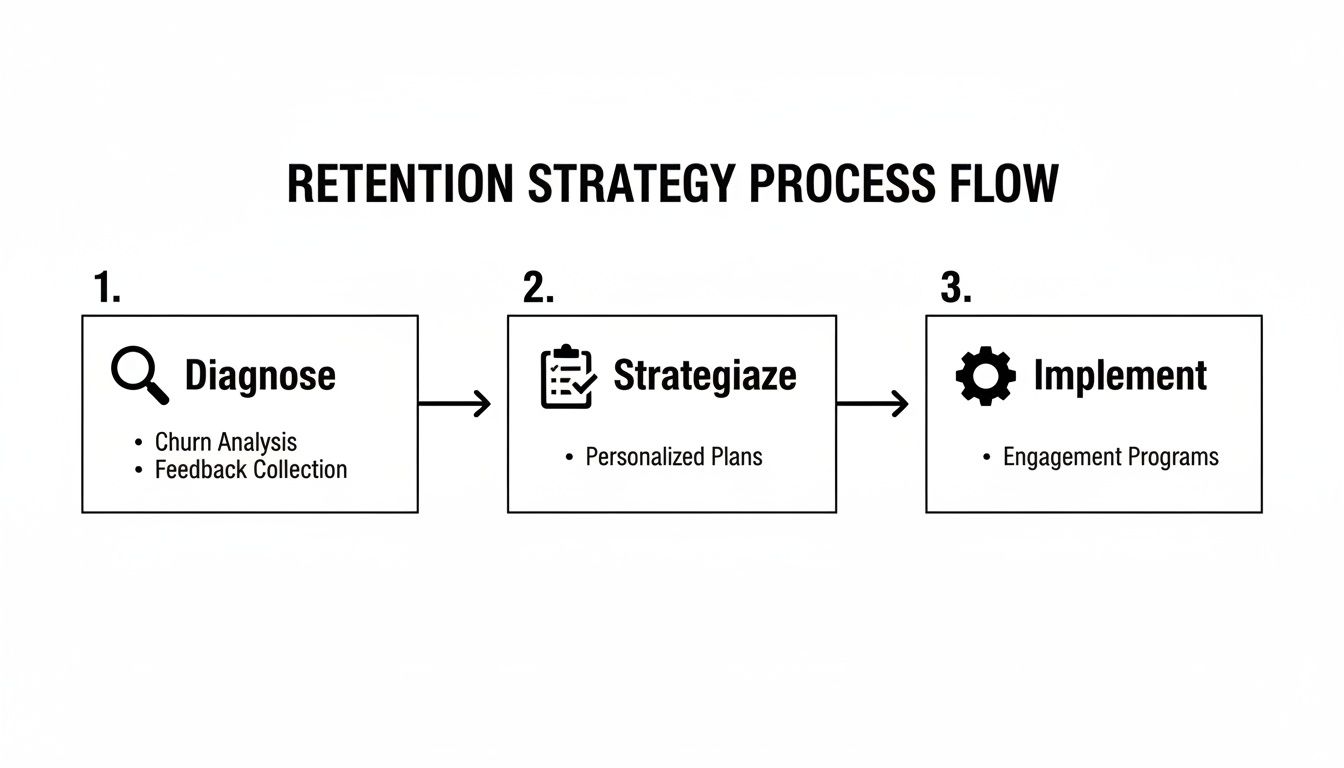
As you can see, successful retention isn’t a one-and-done initiative. It's a continuous cycle of diagnosing what’s broken, building a targeted plan, and actually putting that plan into action.
Uncovering the Truth with Better Exit Interviews
Let’s be real: most exit interviews are useless. They’re a bureaucratic checkbox exercise where departing employees give polite, generic answers because they don’t want to burn a bridge. You’re left with zero actionable feedback.
To get to the good stuff, you need to create a sense of psychological safety and completely reframe your questions.
Stop asking, "Why are you leaving?" It puts people on the defensive. Instead, try more open-ended prompts that encourage storytelling:
- "Can you walk me through the moment you first realized you needed to look for a new role?"
- "If you were in my shoes, what are the first two things you would change about the team?"
- "Tell me about a time you felt really energized here. Now, what about a time you felt the most frustrated?"
These kinds of questions get you past the canned responses and into the nitty-gritty of their daily experience, their relationship with their manager, and the cultural pain points. To really dig in, it helps to understand the full spectrum of the 50 reasons why employees leave so you can tailor your questions better.
The best feedback comes when someone feels heard, not interrogated. I've found it helps to frame the conversation as their chance to improve things for the friends and colleagues they're leaving behind. That simple shift turns it from an awkward goodbye into a constructive, forward-looking chat.
Taking the Team's Pulse in Real-Time
Exit interviews are great for a post-mortem, but pulse surveys are your early warning system. These are quick, frequent check-ins—often just 1-5 questions sent out weekly or bi-weekly—that give you a real-time read on team morale. They let you catch a dip in engagement before it festers into a resignation.
Your pulse questions should hit on the big drivers of retention:
- Workload: "On a scale of 1-5, how manageable was your workload this week?"
- Recognition: "In the last two weeks, have you felt seen and valued for your contributions?"
- Manager Support: "How supported do you feel by your direct manager?"
- Clarity: "How clear are you on what's expected of you in your role right now?"
When you track these responses over time, trends will jump out at you. For example, if "workload manageability" scores for the engineering team start trending down for three straight weeks, that’s a massive red flag for burnout and a potential flight risk.
Using Data to Spot Burnout Before It Happens
In a remote or hybrid world, you can’t just walk the floor and see who looks overworked. This is where objective data can be an incredible ally, as long as you use it to support your people, not to micromanage them. The key is to look for patterns at the team level, not police individuals.
For instance, a manager using a tool like DeskCove can look at team activity reports. Let's say they notice one person’s activity levels are consistently spiking 2-3 hours past the normal workday, week after week. Then, suddenly, that person’s productivity tanks. That’s a textbook burnout signature.
This isn't about calling them out for "slacking." It's a cue to start a supportive conversation: "Hey, looking at our team's patterns, it feels like the workload has been pushing us into late nights. I want to make sure we have a sustainable pace. Let's talk about how we can rebalance things."
By focusing on team trends, you’re using data to be a more proactive and empathetic manager—directly tackling one of the biggest reasons good people quit.
Empower Your Managers to Be Your Best Retention Tool
You’ve heard the old saying: people don’t leave companies, they leave managers. It’s a cliché for a reason—it’s true. When you’re trying to figure out how to reduce employee turnover, giving your managers the right tools and training isn’t just a nice-to-have; it's the single most effective move you can make. For their direct reports, a manager is the company culture, its values, and its support system, all rolled into one.
When your managers lead with empathy, clarity, and trust, they become your greatest asset in keeping your best people. This is even more critical in hybrid and remote setups, where a manager’s influence is magnified. They are the primary connection point for a team that isn’t sharing the same physical space. Investing in them will pay you back in loyalty and stability, guaranteed.

Run One-on-Ones That Actually Build Trust
In a hybrid world, the one-on-one meeting is sacred ground. It’s often the only dedicated, private time a manager and an employee have to connect on a human level. But too often, these meetings get hijacked by tactical status updates, completely wasting the opportunity to build rapport and spot potential issues before they fester.
To make them count, managers need to shift their mindset from "What are you working on?" to "How are you really doing?"
A solid one-on-one agenda should always cover these bases:
- A personal check-in: Kick things off by asking about life outside of work. This simple gesture shows you see them as a whole person, not just a cog in the machine.
- Roadblocks and support: Ask, "What’s getting in your way, and how can I help?" This transforms the manager from a taskmaster into an advocate.
- Career aspirations: Don't let career talks slide. A quick, "What skills are you hoping to build this quarter?" shows you're invested in their long-term growth, not just the current sprint.
Give Feedback That Genuinely Helps
Vague feedback like "good job" feels nice but helps no one grow. On the flip side, harsh criticism dropped without context will just crush morale. To be effective, especially when delivered remotely, feedback needs to be timely, specific, and focused on behavior—not personality.
For instance, instead of saying, "Your presentation was confusing," a manager could try, "During the Q&A, I noticed a few people were unclear about the data on slide five. Next time, what if we add a summary chart to make the takeaways pop?" This is constructive. It’s actionable. It provides a clear path forward.
True leadership isn't about having all the answers. It's about creating an environment where people feel safe enough to find them. Psychological safety is the bedrock of a high-retention culture, and managers are its primary architects.
This means celebrating the lessons learned from mistakes and making it clear that asking for help is a sign of strength, not weakness.
Use Performance Data for Good, Not Evil
Performance data can be a manager's best friend or their worst enemy when it comes to trust. Use it to micromanage, and you’ll breed anxiety and resentment. But use it ethically, and it becomes an incredible source of insight to support your team more effectively.
The secret is to focus on team-level patterns to spot systemic issues, not on individual scores to call people out.
For example, a manager using a tool like DeskCove could review workload trends. If they see the design team’s activity reports consistently show work happening late into the evening before a launch, that isn't a sign to scold individuals. It’s a massive red flag pointing to a resource gap or an unrealistic timeline.
This data becomes the starting point for a supportive conversation: "Hey team, looking at our workload patterns, I see we're all burning the midnight oil. Let's reassess these deadlines or see if we can bring in a freelancer to help." This approach reframes monitoring as a tool for protecting everyone's well-being. Managers looking for a solid framework can explore these performance management best practices.
To truly level up your leaders, consider strategies like building a people manager community of practice. Giving them a space for peer support and continuous learning is invaluable. When managers feel supported, they are far better equipped to support their teams—creating a positive cycle that keeps turnover low.
Building Career Paths People Won't Want to Leave
A dead-end job is one of the quickest tickets out the door. It’s a simple truth. When your most ambitious people can’t see a future with you, they’ll waste no time finding one somewhere else.
This feeling of being stuck is even more intense on remote and hybrid teams. Gone are the spontaneous coffee chats about career goals or the organic mentorship that happens just by sharing an office. You have to be far more deliberate about showing people what's next.
Creating clear, compelling career paths isn't just a nice-to-have HR project; it's a core retention strategy. It’s how you show your team you're invested in them for the long haul, not just for their output this quarter. It turns your company from a stepping stone into a destination.
The numbers don't lie. Stagnant careers are a huge reason people leave, with some studies showing that a staggering 61% of employees quit within their first year. On the flip side, making internal promotion a priority can dramatically boost retention. You can dig deeper into workforce turnover trends to see just how much of an impact this makes.
Map Out Growth with Career Lattices
For decades, the only way forward was up a rigid "career ladder." But today's workplace is way more fluid, and growth isn't always a straight line up. A career lattice is a much more realistic and flexible model for how people can advance, especially in a hybrid world.
This model shows employees they can move sideways into a new department to learn different skills, take on a special project that stretches them, or even make a lateral move that offers better work-life balance—all without feeling like their career has stalled. Think of a sharp marketing specialist moving into a product management role, bringing a deep understanding of the customer with them.
Here’s how to bring it to life:
- Define Competencies for Each Role: Get crystal clear on the skills, knowledge, and behaviors needed to crush it at every level. This transparency removes the guesswork and shows people exactly what to work on.
- Publish Your Maps: Don’t hide this information. Post the career lattices on your company intranet or knowledge base where everyone can easily access them and explore their potential futures.
This empowers your team to drive their own development. It shows them that progress comes in many forms, which keeps them engaged even when a direct promotion isn't on the table right now.
People are far more likely to stay and invest their energy when they can see a clear, achievable path forward. A career lattice essentially says, 'We'll help you grow with us, no matter which direction you choose.'
Promote From Within as Your Default
Honestly, nothing crushes morale faster than seeing an exciting senior role go to an external hire when a talented, qualified person on your team was hoping for that shot. Making "promote-from-within" your default culture is one of the most powerful retention tools you have.
It shows loyalty to your current team and creates a real, tangible incentive for them to perform at their best.
To pull this off, you need a structured internal mobility program. This means creating an official process where internal candidates are always considered first. Post new roles internally for a week before looking outside, and give people the resources to help them nail their applications.
A great real-world example is a "stretch assignment" program. Let's say you have an employee on the customer support team who has a real knack for data analysis. You could give them a three-month project with the business intelligence team. They get incredible experience and a legitimate shot at a new role, and you get to keep their talent in-house.
Actionable Career Development Initiatives
To truly move the needle on career development, you need a mix of programs that support different types of growth. Here’s a look at a few powerful initiatives and how to adapt them for a hybrid environment.
| Initiative | Key Benefit | Remote Team Implementation Tip |
|---|---|---|
| Virtual Mentorship | Connects junior talent with senior leaders, fostering cross-departmental relationships and knowledge transfer. | Use a lightweight tool like Donut on Slack to randomly pair people for virtual coffees. Structure the program with clear goals and check-ins. |
| "Stretch" Assignments | Allows high-potential employees to test-drive new roles or skills on short-term projects without leaving their current team. | Create a dedicated channel or internal job board for project opportunities. Ensure project leads are trained to manage remote contributors effectively. |
| Skill-Based Training | Gives employees a dedicated budget or access to platforms to build high-demand skills relevant to their career goals. | Offer subscriptions to platforms like Coursera or LinkedIn Learning that offer flexible, self-paced courses perfect for remote learners. |
| Peer Learning Groups | Creates small, cross-functional "mastermind" groups where employees can share challenges and knowledge. | Set up recurring video calls for each group and provide a loose agenda or a set of "problem-solving" prompts to get the conversation started. |
These programs do more than just build skills—they show your team you are genuinely committed to their success, building the kind of loyalty that makes them want to stay.
Fuel Growth with Upskilling and Mentorship
You can't just tell people to grow; you have to give them the tools and support to actually do it. Investing in upskilling and mentorship is non-negotiable, but for hybrid teams, these opportunities have to be created with intention.
Consider these practical ideas:
- Virtual Mentorship Programs: Formally pair junior employees with senior leaders from completely different parts of the company. A structured program with clear goals makes these remote relationships thrive.
- Skill-Based Training: Provide a dedicated learning and development budget for each employee, or offer company-wide access to online learning platforms for certifications in high-demand fields.
- Peer Learning Groups: Create small, cross-functional groups that meet over video once a month to share what they're learning and work through professional challenges together.
When you provide these kinds of resources, you send a clear message: your development matters here. That investment builds not just skills, but a deep sense of commitment that makes your company a place people want to stick with.
Creating a Hybrid Culture That Fosters Connection
Let's be honest, culture isn't about ping-pong tables or free snacks in an office kitchen. It's about how your people feel connected—to their work, to their mission, and most importantly, to each other. When your team is hybrid or fully remote, you can't just hope this connection happens on its own.
Without the casual chats by the coffee machine, you have to be deliberate. You need to build a culture that makes every single person feel valued and seen, no matter where they're logging in from. Forget the awkward virtual happy hours; a truly strong culture is built on meaningful recognition, transparent communication, and genuine opportunities to connect. Get that right, and you’ll create an environment people are proud to be part of.
Make Recognition a Daily Habit
Feeling invisible is a one-way ticket to burnout and a job search. A solid recognition program is your best defense, showing people that their hard work actually matters. The trick is to make praise specific, timely, and public.
Don't wait for an annual review. Instead, build a habit of real-time appreciation right where your team already works, like in Slack or Microsoft Teams.
- Create a dedicated #kudos or #wins channel: This gives everyone a public stage to celebrate a colleague’s success, whether it's closing a huge deal or just helping a teammate out of a jam.
- Encourage peer-to-peer shout-outs: Praise hits differently when it comes from the people you work with day in and day out. It builds stronger team bonds and creates a positive loop where everyone is looking out for the good in each other's work.
- Link recognition back to company values: When giving kudos, connect the action to a core value. For example, "Big thanks to Sarah for her incredible work on the Q3 report. Her attention to detail is a perfect example of our 'Own It' value in action."
Recognition is the most affordable and impactful way to make someone feel seen. It’s not about expensive rewards; it’s about consistently reinforcing that you notice and appreciate the effort people are putting in every single day.
Build Trust with Transparent Communication
In a remote or hybrid world, silence is deafening. When people don't have information, they fill in the blanks themselves—and usually not in a good way. This kind of ambiguity breeds anxiety and kills trust, which are major drivers of turnover.
You can counter this by building a culture of transparency. Be open about company performance, the challenges you're facing, and the "why" behind big decisions. This makes employees feel like trusted partners, not just cogs in a machine. A great way to do this is by hosting regular "Ask Me Anything" (AMA) sessions with leadership, where people can ask the tough questions and get straight answers.
The data backs this up. Highly engaged teams can see 18% to 65% less turnover and 21% higher productivity. And what's one of the fastest ways to build engagement? You guessed it: transparent communication.
Create Intentional Spaces for Connection
You can't force the magic of a spontaneous office conversation to happen over a video call. But what you can do is create intentional opportunities for the human connections that make work feel less like, well, work. These moments are critical for preventing the isolation that often leads to disengagement.
Look for simple ways to encourage non-work-related chats that build real rapport.
- Virtual "Water Cooler" Moments: Use an app like Donut that randomly pairs employees from different departments for a 15-minute virtual coffee. It's a fantastic way to build cross-functional relationships and help new hires feel plugged in from day one.
- Special Interest Groups: Set up Slack or Teams channels for shared hobbies—think #book-lovers, #gamers, or #garden-gurus. These spaces let people connect on a personal level, strengthening their ties to both the company and their colleagues.
These small efforts really do add up. By focusing on celebrating wins, communicating openly, and creating spaces for genuine connection, you build a resilient and magnetic hybrid culture. For more inspiration, check out these virtual team-building activities designed to boost morale. A strong culture becomes your best retention tool, making your company a place where great people want to stay and grow.
Common Questions About Employee Turnover
When you're trying to get a handle on employee retention, tough questions always come up. Leaders want straightforward, no-fluff answers for the challenges they're facing right now. Here’s a look at the most common queries we hear and some practical advice to go with them.
What's the Fastest Way to Reduce Turnover?
While a big, comprehensive strategy is the gold standard for long-term health, if you need to make an impact fast, the single biggest lever you can pull is improving your front-line managers. Time and time again, research shows a bad relationship with a direct boss is one of the top reasons people walk out the door.
Investing in targeted leadership training can deliver the quickest wins. Don't boil the ocean; focus on the skills that matter most for today's teams:
- Running effective one-on-ones that are more than just a status update. They need to build real human connection.
- Giving constructive feedback that focuses on behavior, helping people grow without feeling attacked.
- Spotting the early signs of burnout and knowing how to step in with support, not pressure.
When you give managers the tools and data to understand their team's workload—without making them feel like micromanagers—you empower them to become better coaches. That directly lifts morale and gives people a compelling reason to stick around.
How Can I Actually Measure the ROI of My Retention Efforts?
Measuring the return on investment (ROI) of your retention work is what turns it from a "nice-to-have" expense into a core business strategy. The first step is figuring out what turnover is costing you today.
Here's a simple way to get a number on the board:
- Calculate Your Cost of Turnover: A good rule of thumb is 1.5 times an employee's annual salary. This covers everything from recruitment fees to lost productivity while the new person gets up to speed. Multiply that figure by the number of people who left last year to get your baseline cost.
- Add Up Initiative Costs: Tally up what you're spending on new programs—things like leadership coaching, new engagement software, or better benefits.
- Watch Your Turnover Rate: After you've rolled out your initiatives, track how your turnover rate changes over the next 6 to 12 months.
- Calculate the ROI: Plug your numbers into this formula:
[ (Cost of Turnover Avoided) - (Cost of Initiatives) ] / (Cost of Initiatives) x 100.
But remember, the real value isn't just in that one number. You should also be tracking secondary metrics like employee engagement scores, how many people are getting promoted from within, and team productivity. These are the leading indicators that tell you if your strategy is really taking root.
Do Employee Monitoring Tools Just Kill Trust and Make People Leave?
This is a huge one, and the answer is simple: they absolutely can, if you roll them out the wrong way. The line between a helpful diagnostic tool and a trust-killing "big brother" tactic all comes down to two things: transparency and purpose.
If you suddenly introduce tools to spy on individuals or track every single click, you’ll poison the well. Psychological safety will plummet, and good people will head for the exits. But when you frame and use these tools the right way, they can become a powerful ally in keeping your team happy.
The trick is to be radically transparent about the "why." Frame it as a way to protect employee well-being. Say something like, "We're using this data to see workload patterns across different teams. This helps us make sure work is distributed fairly and lets us spot systemic problems, like chronic overwork, before they become crises." When managers use this data to start supportive conversations, not punitive ones, it shows you're genuinely invested in your team’s health.
Are High Salaries and Great Benefits Enough to Keep People?
Think of competitive compensation as the ticket to the game. It gets you in the door. If your pay and benefits are way below market rate, you're always going to be fighting a losing battle, no matter how amazing your culture is. It's a basic "hygiene factor."
But it's almost never the reason your best people decide to build a career with you. Today’s top talent is looking for much more than a paycheck. They're weighing things like:
- Real opportunities for career growth and learning new skills.
- A positive and flexible work culture where they feel supported.
- A sense of purpose and a connection to what the company is trying to achieve.
- A strong, trusting relationship with their manager.
Ultimately, good pay gets their attention, but it won't keep them. To truly win at retention, you have to pair a fair compensation package with a work environment that is genuinely engaging and supportive.
Ready to build a more engaged and stable team? DeskCove provides the insights you need to understand workload balance, prevent burnout, and support your managers in becoming retention leaders. Discover how DeskCove can help you reduce turnover and boost productivity.
