Top Performance Management Best Practices for Remote Teams
The shift to remote work has permanently altered the landscape of team management. Traditional annual reviews, once a cornerstone of corporate life, now feel outdated and insufficient for accurately gauging contribution and fostering growth. In a distributed environment, managers lack the daily, in-person cues that once informed their assessments, from a quick chat by the coffee machine to observing collaborative energy in a meeting room.
This creates a critical gap: How can you accurately measure, support, and elevate employee performance when your team is spread across different locations and time zones? The answer lies in evolving your strategy beyond once-a-year evaluations. Relying on outdated methods in a modern work setting leads to disengaged employees, missed development opportunities, and a fundamental disconnect between effort and recognition. The stakes are simply too high to manage a remote team with a rear-view mirror approach.
This guide moves beyond theory to provide actionable, modern performance management best practices specifically designed for the challenges and opportunities of remote work. We'll explore how to leverage data-driven insights from productivity tools and continuous feedback loops to build a high-performing, engaged, and accountable remote workforce.
You won't find vague advice here. Instead, you'll get a clear roadmap for implementing systems that drive tangible results. We will cover critical strategies, including:
- Establishing continuous feedback and coaching cycles.
- Implementing 360-degree feedback for a holistic view.
- Using performance analytics to make objective decisions.
- Creating meaningful Individual Development Plans (IDPs).
We'll show you not just what to do, but precisely how to implement these strategies to unlock your team's full potential, no matter where they work.
1. Continuous Performance Management
The era of the once-a-year, high-stakes performance review is over. Continuous performance management is a dynamic, modern approach that replaces the traditional annual review with a system of ongoing feedback, regular check-ins, and real-time performance discussions. This model transforms performance management from a dreaded yearly event into an integrated part of the daily workflow, making it one of the most crucial performance management best practices for today's agile and remote-first environments. It emphasizes frequent, informal touchpoints between managers and employees, allowing for immediate recognition of achievements and prompt course correction on issues.
Industry giants have demonstrated the power of this shift. Adobe famously ditched annual reviews in 2012 for its "Check-In" system, leading to a significant reduction in voluntary turnover. Similarly, General Electric (GE) moved away from its rigid "rank and yank" system to a more fluid model focused on continuous coaching and development, championed by performance management experts. These companies recognized that to keep pace with rapid business changes, they needed a system that was equally responsive and forward-looking.
Why It Works for Remote Teams
For remote teams, where visibility can be a challenge, continuous performance management is not just a best practice; it's a necessity. Time-tracking and productivity data provide the "what," but frequent check-ins provide the "why." This approach fosters psychological safety, builds trust, and ensures employees feel connected and supported, regardless of their physical location.
Key Insight: Continuous feedback turns performance management from a historical record of past failures into a forward-looking roadmap for future growth and success.
How to Implement Continuous Performance Management:
- Manager Training: Begin by training managers on how to deliver constructive, balanced, and actionable feedback. Equip them with coaching skills to guide development conversations.
- Establish a Cadence: Implement a regular schedule for check-ins. This could be weekly 1:1s, bi-weekly goal reviews, or monthly development discussions. The key is consistency.
- Leverage Technology: Use performance management platforms or even shared documents to log conversation notes, track goals, and set reminders for check-ins, ensuring nothing falls through the cracks.
- Focus on the Future: Frame conversations around future goals, skill development, and career aspirations. While discussing past performance is necessary, the primary focus should be on growth.
2. SMART Goals Setting
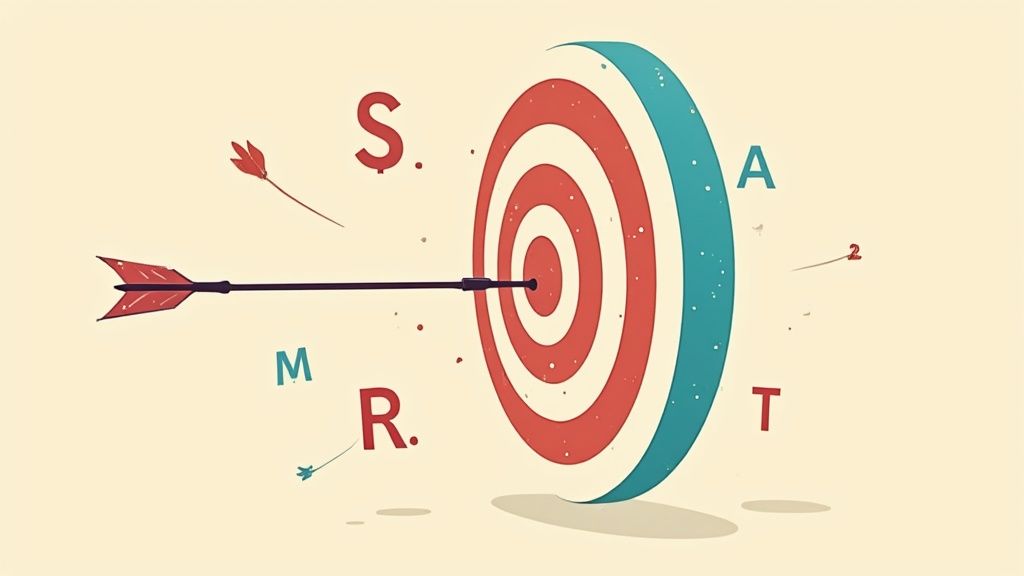
Effective performance management begins with crystal-clear objectives. The SMART goals framework provides a proven methodology for setting objectives that are Specific, Measurable, Achievable, Relevant, and Time-bound. This approach removes ambiguity from the goal-setting process, giving employees a precise understanding of what success looks like and providing managers with a concrete basis for evaluation. By ensuring every goal is well-defined and quantifiable, SMART goals serve as a foundational element of fair and transparent performance management best practices, eliminating confusion and aligning individual efforts with strategic business outcomes.
This powerful framework has been a cornerstone for many of the world's most successful companies. Intel famously integrated SMART principles into its performance review process to drive accountability and clarity across the organization. Google’s renowned OKRs (Objectives and Key Results) system is deeply rooted in SMART principles, focusing on ambitious, measurable outcomes. Similarly, Salesforce uses its V2MOM (Vision, Values, Methods, Obstacles, Measures) process to create aligned goals that are specific and measurable, ensuring everyone is pulling in the same direction.
Why It Works for Remote Teams
For remote teams, where autonomy is high, SMART goals are essential for maintaining alignment and focus. They provide an objective framework that transcends physical distance, enabling managers to track progress based on tangible outcomes rather than hours worked or direct observation. When productivity data shows what is being done, SMART goals clarify why it matters and what the desired result is, empowering employees to manage their work effectively and demonstrate their impact, regardless of location.
Key Insight: SMART goals translate broad company ambitions into actionable, individual commitments, making strategic objectives tangible and achievable for every team member.
How to Implement SMART Goals Setting:
- Involve Employees: Collaborate with team members to set their goals. This co-creation process fosters ownership and ensures goals are both challenging and realistic.
- Link to Broader Objectives: Clearly connect individual SMART goals to larger team and company objectives. This helps employees see the direct impact of their work on the organization's success.
- Review and Adjust Quarterly: Business priorities shift. Implement a quarterly review cadence to assess progress, celebrate wins, and adjust goals as needed to remain agile and relevant.
- Use Action-Oriented Language: Frame goals using strong verbs. Instead of "Improve customer satisfaction," use "Increase the average customer satisfaction score from 8.5 to 9.2 by the end of Q3."
3. 360-Degree Feedback
Traditional top-down performance reviews provide only one perspective: the manager's. 360-degree feedback shatters this limited view by creating a comprehensive evaluation method that gathers anonymous input from multiple sources. This includes supervisors, peers, direct reports, and sometimes even external stakeholders like customers. This holistic approach offers a well-rounded picture of an employee's skills, behaviors, and impact, identifying blind spots and highlighting strengths that a manager alone might miss. It is one of the most powerful performance management best practices for fostering self-awareness and driving targeted development.
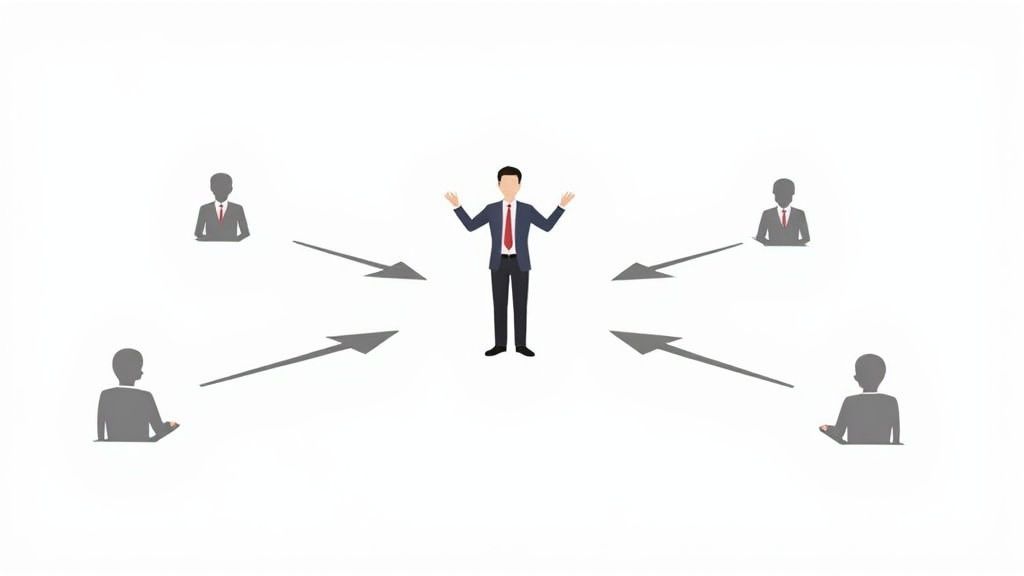
This method was famously championed by leaders like Jack Welch at General Electric in the 1990s and has since been adopted by countless organizations for leadership development. For instance, Johnson & Johnson uses 360-degree feedback to develop its leaders, while PepsiCo implements it for management-level roles to ensure their leaders are effective from all angles. The goal isn't just to evaluate but to provide a complete data set that empowers individuals to grow. This is why it's a cornerstone of modern coaching and leadership development.
Why It Works for Remote Teams
In a remote setting, a manager’s visibility into an employee’s day-to-day collaboration and teamwork is often limited. 360-degree feedback bridges this gap by crowdsourcing performance insights from the very people the employee interacts with most. It helps assess crucial remote work skills like communication, collaboration, and proactiveness that productivity data alone can't capture. This multi-rater feedback ensures that high-impact collaborators who might not be the most visible to management are still recognized and developed.
Key Insight: 360-degree feedback replaces the single-lens view of a manager with a multi-dimensional, panoramic understanding of an employee's true performance and potential.
How to Implement 360-Degree Feedback:
- Ensure Anonymity: Confidentiality is critical. Use a trusted third-party tool or an internal system that guarantees anonymity to encourage honest, constructive responses.
- Train Your Raters: Provide clear guidelines and training on how to deliver specific, behavioral, and constructive feedback. You can learn more about how to get better feedback from employees on deskcove.com.
- Focus on Development: Frame the entire process around growth, not evaluation or punishment. The results should be a starting point for a development plan, not a component of salary decisions.
- Follow Up with Action: The process is incomplete without a follow-up. Schedule sessions for employees to review their results with a manager or coach and create a tangible action plan.
4. Performance Calibration Sessions
Performance calibration sessions are structured meetings where managers come together to discuss their team members' performance ratings and align on a consistent standard. This collaborative process ensures that an employee's evaluation isn't solely dependent on the subjective view of a single manager. By comparing notes and justifying ratings with evidence, organizations can significantly reduce unconscious bias and ensure that performance standards are applied fairly across different departments, teams, and even geographical locations. This practice is a cornerstone of equitable performance management best practices, creating a level playing field for all employees.
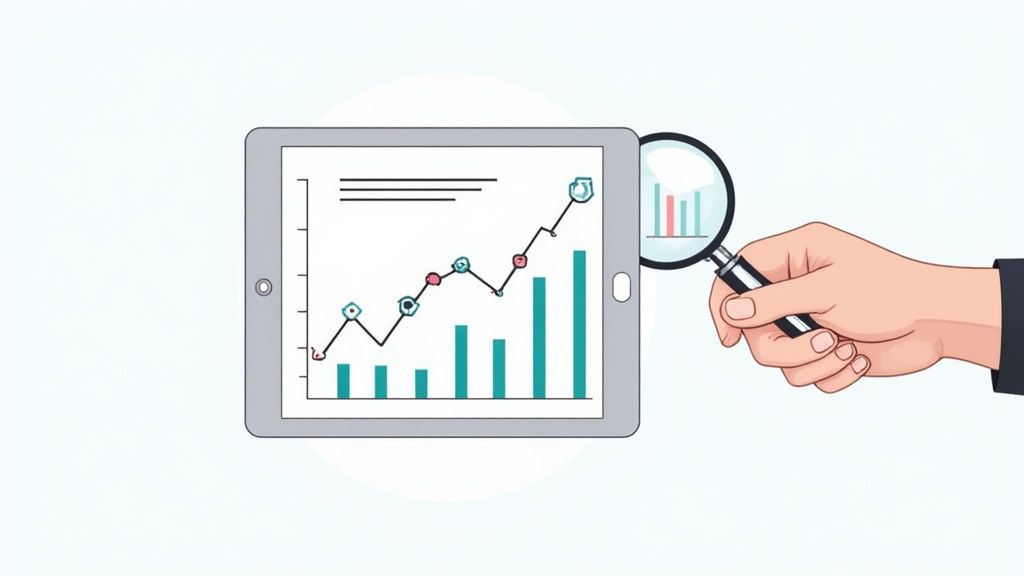
This approach has been championed by global leaders across industries. Tech giants like Amazon and Google rely heavily on calibration to ensure fairness in their vast, diverse workforces. Similarly, management consulting firms such as McKinsey & Company utilize extensive calibration sessions to maintain their notoriously high standards of performance consistently. These organizations understand that standardized evaluations are critical for making fair decisions about compensation, promotions, and development opportunities, which directly impacts employee trust and retention.
Why It Works for Remote Teams
In a remote or hybrid setting, managers have varying levels of visibility into their employees' workdays, which can lead to inconsistent evaluations. Productivity data can show output, but calibration adds crucial context. These sessions force managers to articulate the "why" behind their ratings, using both qualitative insights and quantitative data. This process helps normalize expectations for remote workers, ensuring that factors like time zone differences or communication styles don't unfairly influence performance assessments and that every employee is judged by the same high standards.
Key Insight: Calibration shifts performance reviews from an isolated, subjective judgment into a collective, evidence-based assessment, building trust and fairness into the system.
How to Implement Performance Calibration Sessions:
- Provide Clear Guidelines: Before the session, equip managers with clear performance criteria, rating scales, and examples of what each performance level looks like in practice.
- Train Facilitators: Appoint and train neutral facilitators, often from HR, to guide the conversation, challenge potential biases, and keep the discussion focused and productive.
- Use Data and Evidence: Require managers to come prepared with specific examples, project outcomes, productivity metrics, and peer feedback to support their proposed ratings.
- Document and Communicate: Carefully document the final ratings and the rationale behind any adjustments. Ensure managers are prepared to communicate these outcomes clearly and constructively to their direct reports.
5. Individual Development Planning (IDP)
Individual Development Planning (IDP) moves beyond evaluating past performance and focuses on building a roadmap for the future. It's a structured, collaborative process between a manager and an employee to outline specific career goals, identify current skill gaps, and create a targeted plan for professional growth. This approach transforms performance discussions into forward-looking conversations about potential, linking an individual's aspirations directly to the organization's strategic needs. By personalizing development, IDPs make career progression a shared responsibility, boosting employee engagement and retention.
Global leaders have long integrated this practice. IBM’s extensive career development framework relies heavily on IDPs to ensure its workforce remains agile and future-ready. Similarly, consulting giant Accenture uses IDPs for every consultant and manager to map out their career trajectory and required competencies. Procter & Gamble (P&G) also effectively integrates IDPs into its performance review cycle, ensuring that development is a continuous conversation, not an afterthought. These companies leverage IDPs as a core component of their talent management strategy, demonstrating that investing in individual growth yields significant organizational returns.
Why It Works for Remote Teams
For remote employees, career paths can sometimes feel unclear without the daily visibility of an office environment. An IDP provides a tangible, documented plan that clarifies expectations and shows a clear path for advancement within the company. This process ensures remote workers feel valued and see a long-term future with the organization, mitigating the risk of disconnection and turnover. It gives managers a structured way to support and advocate for their remote team members' growth, even from a distance.
Key Insight: An Individual Development Plan shifts the performance conversation from "How did you do?" to "Where do you want to go, and how can we help you get there?"
How to Implement Individual Development Planning:
- Link to Business Needs: Align development goals with departmental and organizational objectives. If the company is expanding into a new market, for example, an IDP might focus on developing relevant language or cross-cultural communication skills.
- Include Stretch Assignments: Go beyond formal training. Incorporate stretch assignments, cross-functional projects, or mentorship opportunities that push employees out of their comfort zones and allow them to build new skills on the job.
- Review and Update Regularly: An IDP is a living document, not a "set it and forget it" form. Schedule quarterly check-ins to review progress, adjust goals as needed, and celebrate development milestones.
- Provide Resources: Support the plan by giving employees access to necessary resources, such as online courses, workshops, mentors, or a budget for professional certifications.
6. Performance Analytics and Data-Driven Insights
Moving beyond gut feelings and subjective observations, data-driven performance management uses analytics to provide an objective, evidence-based view of employee contributions. This approach harnesses technology to measure, track, and analyze key performance metrics, transforming raw data into actionable insights. By leveraging analytics, organizations can identify patterns, predict future performance trends, and fine-tune management strategies for maximum impact. This makes it an indispensable component of modern performance management best practices, especially for understanding and optimizing remote workforce productivity.
Leading companies have long used data to their advantage. Cisco’s People & Communities team utilizes people analytics to gain insights into everything from team effectiveness to leadership development. Similarly, Netflix famously uses data analytics not just for content recommendations but also to predict and mitigate employee flight risk, allowing managers to intervene proactively. These organizations demonstrate that when performance conversations are grounded in objective data, they become more fair, transparent, and effective.
Why It Works for Remote Teams
For distributed teams, performance analytics provides a crucial layer of visibility. When managers can't physically see their team working, productivity data from tools like DeskCove and project management software offers concrete evidence of effort and output. This data helps identify who is excelling, who might be struggling, and where process bottlenecks exist, allowing for targeted support and data-informed decision-making. You can explore a deeper explanation in our guide on what workforce analytics is.
Key Insight: Data-driven insights transform performance management from a subjective art into a quantifiable science, enabling precise and impactful interventions.
How to Implement Performance Analytics:
- Start with Clear KPIs: Define the specific, measurable key performance indicators (KPIs) that align with team and company goals. Ensure everyone understands what is being measured and why.
- Ensure Data Quality: The accuracy of your insights depends on the quality of your data. Use reliable tools and establish clear processes for data collection to ensure it is clean and consistent.
- Train Managers on Interpretation: Raw data is not enough. Train managers to interpret analytics, spot trends, and use the information to have more meaningful, constructive conversations with their teams.
- Balance Quantitative and Qualitative: Combine "hard" metrics (e.g., tasks completed, hours worked) with "soft" qualitative insights (e.g., peer feedback, 1:1 notes) for a holistic view of performance.
- Maintain Transparency and Trust: Be transparent with employees about what data is being collected and how it will be used. Emphasize that the goal is development and support, not surveillance, to maintain trust.
7. Recognition and Rewards Integration
Effective performance management isn't just about tracking metrics and providing feedback; it's about closing the loop by acknowledging and celebrating success. Integrating recognition and rewards directly into your performance framework transforms it from a purely evaluative process into a motivational one. This practice involves creating a systematic approach to appreciate employee contributions through timely, specific, and meaningful rewards, both monetary and non-monetary. It solidifies the connection between effort and outcome, making it one of the most powerful performance management best practices for boosting morale and retention.
Leading companies have built their cultures around this principle. Salesforce champions recognition through its "Ohana" culture, using various programs to celebrate employees who embody its core values. Similarly, Google's peer-to-peer bonus program empowers employees to instantly reward colleagues for exceptional work, fostering a collaborative environment. These organizations understand that when employees feel seen and valued, their engagement and performance soar. This approach moves beyond annual bonuses to a more continuous and immediate form of appreciation.
Why It Works for Remote Teams
In a remote setting, where employees can feel isolated, a robust recognition program is vital for creating a sense of community and belonging. When managers use productivity data to identify high-achievers, immediate recognition reinforces positive behaviors and ensures that contributions don't go unnoticed. It bridges the physical distance by making appreciation a visible and integral part of the company culture, motivating the entire team.
Key Insight: Recognition is the fuel for discretionary effort. When performance is consistently acknowledged, employees are more likely to go above and beyond their defined roles.
How to Implement Recognition and Rewards Integration:
- Make It Timely and Specific: Don't wait for a quarterly review. Acknowledge achievements as they happen. Instead of saying "good job," say, "Great job on the Q3 report; your data analysis provided the key insight we needed."
- Offer a Variety of Rewards: Combine monetary rewards like spot bonuses with non-monetary options such as public praise in a team channel, extra paid time off, or professional development opportunities.
- Enable Peer-to-Peer Recognition: Implement a system where team members can recognize each other. This builds camaraderie and ensures that valuable contributions are seen at all levels, not just by management.
- Link Rewards to Goals: Clearly tie significant rewards to the achievement of specific, pre-defined goals. This creates a transparent and fair system where everyone understands the path to being recognized.
8. Manager Training and Development
Even the most sophisticated performance management system will fail without skilled managers to execute it. Manager training and development ensures that leaders are equipped with the essential competencies to guide their teams effectively. This involves dedicated programs that go beyond basic administrative tasks, focusing on the nuanced skills of delivering constructive feedback, conducting motivational coaching sessions, navigating difficult conversations, and maintaining fair and accurate performance documentation. Investing in managers is one of the most impactful performance management best practices because it creates a ripple effect of improved performance, engagement, and retention across their entire teams.
World-class organizations have long recognized the critical link between manager capability and business success. Microsoft’s manager excellence training focuses on a "Model, Coach, Care" framework, teaching managers to lead by example and prioritize their team's well-being and growth. Similarly, McDonald's famous Hamburger University includes robust modules on performance management, preparing leaders to uphold high standards consistently across a global workforce. These initiatives prove that great managers are not born; they are trained and developed with intention.
Why It Works for Remote Teams
In a remote setting, managers are the primary conduit for company culture and employee support. They can no longer rely on physical presence to gauge team morale or performance. Targeted training provides them with the tools to interpret productivity data with empathy, build trust through virtual communication, and coach employees from a distance. A well-trained remote manager can spot signs of burnout or disengagement early and intervene proactively, preventing minor issues from escalating. Learn more about how to structure effective Manager Training and Development to empower your leaders.
Key Insight: Training transforms managers from performance evaluators into performance developers, shifting the focus from judgment to growth and empowerment.
How to Implement Manager Training and Development:
- Use Experiential Learning: Move beyond lectures with role-playing scenarios for giving feedback, handling underperformance, and conducting career discussions. This builds practical skills and confidence.
- Provide Ongoing Coaching: Training shouldn't be a one-time event. Offer ongoing coaching and mentorship for managers to help them navigate real-world challenges as they arise.
- Establish Peer Learning Groups: Create small cohorts where managers can share challenges, exchange best practices, and learn from one another’s experiences in a safe, collaborative environment.
- Incorporate Real-World Case Studies: Use anonymized, real-life examples from within your own organization to make the training relevant and immediately applicable to the managers' daily work.
9. Performance Improvement Plans (PIPs)
When an employee's performance consistently falls short of expectations, a structured intervention becomes necessary. A Performance Improvement Plan (PIP) is a formal tool designed to give underperforming employees a clear opportunity to succeed. It outlines specific performance deficiencies, establishes measurable improvement goals, provides a clear timeline, and details the support the organization will offer. This process creates a transparent, documented framework for addressing performance issues, making it a critical component of fair and effective performance management best practices.
The use of structured PIPs is a standard operating procedure in most large organizations, from Fortune 500 corporations to federal government agencies. These entities rely on PIPs not just to rehabilitate struggling employees but also to ensure legal and procedural fairness. By clearly documenting the performance gap and the steps taken to close it, organizations protect themselves while giving the employee a genuine, final chance to improve. The goal isn't just to manage an exit, but to salvage a valuable team member whenever possible.
Why It Works for Remote Teams
In a remote setting, performance issues can sometimes be attributed to a lack of clarity, resources, or connection. A PIP provides an unambiguous, high-definition plan that cuts through the virtual noise. It forces a conversation about specific behaviors and outputs, which is vital when managers lack the daily physical oversight of an office environment. This formal process ensures both the manager and employee are perfectly aligned on what success looks like and how it will be measured, preventing misunderstandings that can fester in remote work.
Key Insight: A well-executed PIP shifts the focus from "you are underperforming" to "here is our collaborative plan for your success," transforming a potentially negative process into a supportive, goal-oriented one.
How to Implement Performance Improvement Plans:
- Focus on Specific, Measurable Behaviors: Avoid vague feedback like "be more proactive." Instead, set clear goals such as, "Independently complete and submit X reports by the weekly deadline without errors for the next 60 days."
- Provide Adequate Resources and Support: The PIP should detail the support offered, which could include additional training, more frequent 1:1s, mentorship from a senior colleague, or access to specific tools.
- Maintain Regular Communication: Schedule frequent, mandatory check-ins (e.g., twice a week) to review progress, discuss roadblocks, and provide real-time feedback throughout the PIP period.
- Document Everything: Meticulously document all conversations, progress milestones, and setbacks. This record is crucial for making an objective final decision and for legal protection.
Performance Management Practices Comparison
| Item | Implementation Complexity 🔄 | Resource Requirements ⚡ | Expected Outcomes 📊 | Ideal Use Cases 💡 | Key Advantages ⭐ |
|---|---|---|---|---|---|
| Continuous Performance Management | Medium-High (ongoing meetings, tech infrastructure) | Manager time & digital tools | Higher engagement, faster issue resolution | Dynamic environments needing real-time feedback | Frequent feedback, reduces recency bias |
| SMART Goals Setting | Medium (structured goal setting) | Time for goal development | Clear expectations, improved focus | Structured performance environments | Objective, measurable goal clarity |
| 360-Degree Feedback | High (multi-source coordination) | Time-intensive, facilitation | Comprehensive insights, improved self-awareness | Development and leadership growth | Holistic feedback, reduces bias |
| Performance Calibration Sessions | Medium-High (cross-team alignment) | Manager time, HR facilitation | Consistent ratings, reduced bias | Large organizations seeking fairness | Standardized evaluations, equitable treatment |
| Individual Development Planning (IDP) | Medium (collaborative planning) | Manager & employee time, learning resources | Targeted skill growth, career progression | Employee development, retention focus | Personalized growth, engagement boost |
| Performance Analytics and Data-Driven Insights | High (tech & data expertise) | Technology investment, data teams | Objective measurement, predictive insights | Data-driven organizations | Evidence-based decisions, early issue flags |
| Recognition and Rewards Integration | Medium (program setup & management) | Budget for rewards, admin support | Motivated workforce, positive culture | Organizations enhancing engagement | Timely recognition, reinforces behaviors |
| Manager Training and Development | Medium-High (training programs) | Time, trainers, ongoing support | Improved manager effectiveness, consistency | Building management capabilities | Better employee relations, legal risk reduction |
| Performance Improvement Plans (PIPs) | Medium (structured processes) | Manager time, documentation | Clear performance expectations, legal protection | Addressing underperformance | Formal improvement path, protects employer |
Building Your Modern Performance Management System
Navigating the landscape of modern work, especially within remote and hybrid models, requires a significant shift from traditional, top-down performance reviews to a more dynamic, human-centric approach. The journey we've explored through these nine performance management best practices is not about adopting a rigid, prescriptive framework. Instead, it’s about architecting a flexible, supportive, and data-informed ecosystem that truly empowers every individual, from team leaders to new hires.
The practices detailed, from establishing continuous feedback loops and setting SMART goals to leveraging 360-degree feedback and performance calibration, all converge on a single, powerful idea: performance management should be a tool for growth, not just evaluation. It's about transforming a once-dreaded annual event into an ongoing, constructive conversation. By integrating recognition, fostering manager development, and creating structured Individual Development Plans (IDPs), you build a culture where employees feel seen, valued, and invested in their own professional journey.
From Theory to Actionable Strategy
The true power of these concepts is unlocked when they are woven together into a cohesive strategy. Think of it as building a system where each component reinforces the others.
- Data as a Foundation: Performance analytics and insights from tools that monitor productivity and work patterns provide the objective foundation. This data removes guesswork, turning subjective performance conversations into evidence-based coaching sessions. It helps identify burnout risks, workload imbalances, and opportunities for process improvement, which is invaluable for managing distributed teams.
- Feedback as the Connector: Continuous feedback and 360-degree reviews act as the connective tissue. They ensure that the data is contextualized with human experience, peer perspectives, and self-reflection, creating a holistic view of an employee's contributions and challenges.
- Goals as the North Star: SMART goals and IDPs provide direction and purpose. They align individual efforts with team and company objectives, ensuring everyone is pulling in the same direction and understands what success looks like.
For growing organizations, integrating these processes can feel daunting. This is where dedicated platforms can be a game-changer. For businesses looking to integrate performance management with other HR functions, exploring comprehensive HR Systems for Small Business can be a valuable step in centralizing employee data, leave management, and performance histories.
Your First Step Towards a High-Performance Culture
Implementing all these performance management best practices at once is unrealistic. The key is to start small and be strategic. Begin by identifying your team's most significant pain point. Is it a lack of clear goals? Infrequent feedback? Perceived bias in evaluations? Select one or two practices that directly address that challenge and commit to implementing them well. For example, you might start by introducing regular one-on-one check-ins (continuous management) and ensuring every team member has clearly defined SMART goals for the next quarter.
By taking an iterative approach, you can build momentum, gather feedback, and refine your system over time. This evolution transforms performance management from a static HR function into a living, breathing part of your company culture, one that fuels engagement, fosters accountability, and ultimately drives exceptional results. The end goal is a transparent, fair, and motivating environment where every employee has the clarity and support they need to do their best work.
Ready to build a high-performance remote team with data-driven insights? DeskCove provides the ethical productivity analytics and time tracking you need to make these performance management best practices a reality. See how your team works, identify bottlenecks, and facilitate more effective coaching conversations by trying DeskCove today.