How to Prevent Employee Burnout a Guide for Leaders

When leaders talk about preventing employee burnout, the conversation often centers on creating a supportive culture, managing workloads, and spotting the early warning signs. It's about fostering open communication and promoting a real work-life balance—not just paying it lip service.
Ultimately, it's about building an environment where your team's energy is protected and valued, not just managed until it runs out.
The Unseen Costs of Employee Burnout
Employee burnout isn't just an individual's struggle anymore; it's a full-blown business crisis with staggering human and financial costs. This isn't just about feeling stressed. The World Health Organization officially calls it an "occupational phenomenon" that stems from chronic, unmanaged stress in the workplace.
That distinction is a big deal. It shifts the responsibility from the individual and places it squarely on the work environment itself.
Burnout typically shows up in three distinct ways:
- Deep-seated exhaustion. This is more than just being tired. It’s a feeling of being completely drained that a good night's sleep can't fix.
- Growing cynicism about the job. You might see this as an employee becoming mentally distant, negative, or detached from their work.
- A drop in professional effectiveness. This is when people start to feel like they’re no longer good at their jobs, leading to a slide in competence and productivity.
A Growing Financial and Generational Crisis
The scale of this problem is massive, posing a real threat to businesses everywhere. Global research has found that the risk of employee burnout is at an all-time high, with a shocking 82% of employees worldwide considered at risk.
This crisis is hitting companies hard in the wallet, costing them an estimated $322 billion annually in lost productivity alone, not to mention billions more in healthcare. What’s even more alarming is the generational trend—Gen Z and millennials are now hitting peak burnout by the age of 25.
This infographic paints a stark picture of burnout's impact, highlighting the percentage of at-risk workers, the huge financial losses, and the surprisingly young age of peak burnout.
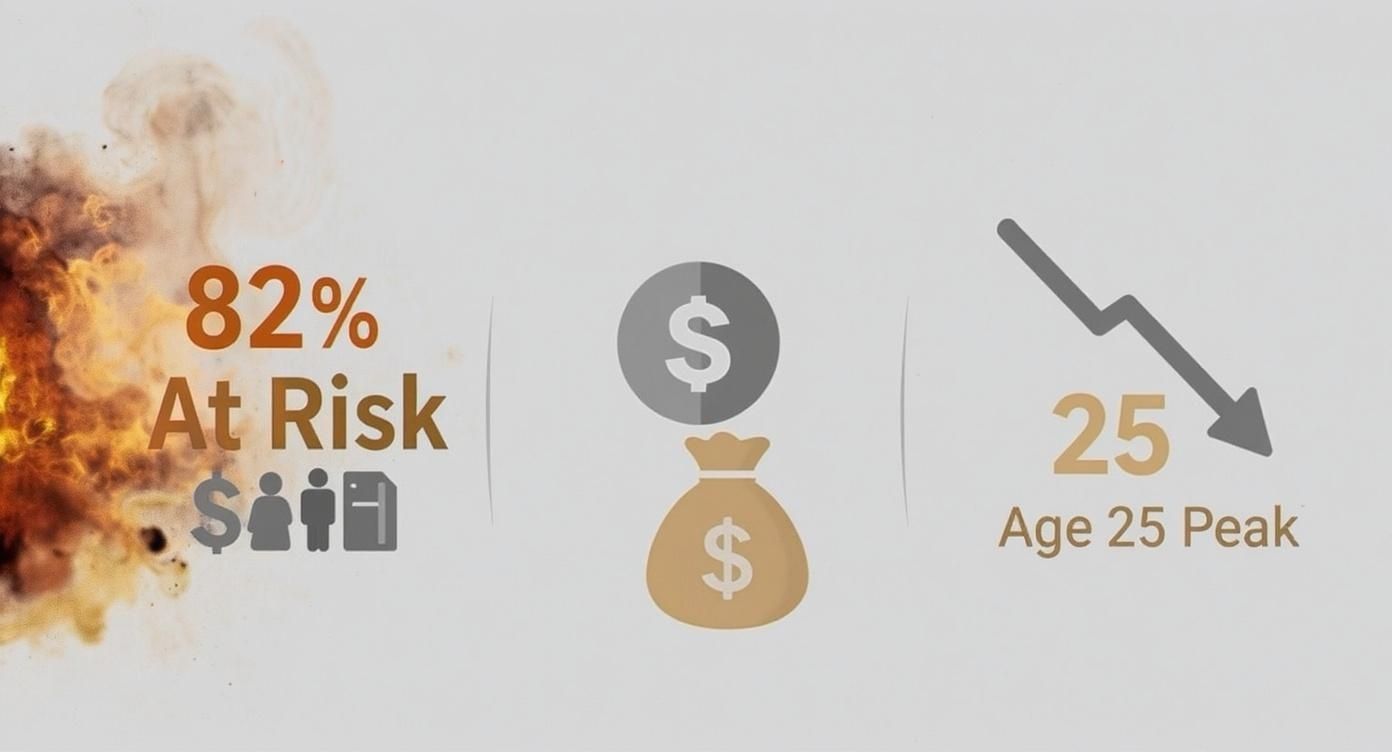
These numbers send a clear message: burnout is an expensive and rapidly growing crisis that demands immediate, strategic action from leaders. This isn't just about team morale; it's a direct threat to your company's survival and ability to grow. Getting a handle on these dynamics is the first critical step toward building a workforce that’s not just productive, but also resilient and sustainable.
Spotting the Early Warning Signs of Burnout

Before burnout becomes a full-blown crisis, it sends out quiet warnings. As a leader, your job is to learn how to listen for them. Getting ahead of burnout means looking past the obvious and picking up on the subtle shifts in behavior and performance that tell you an employee is struggling.
These signals are easy to miss in the daily grind. They're not always loud or dramatic, and they can look different for everyone depending on their personality, role, and whether they’re in the office or working from home.
Changes in Behavior and Attitude
Often, the very first signs that something is wrong are behavioral. You might notice a once-enthusiastic team member has become cynical or just seems… checked out. This isn't about someone having an off day; it's a consistent pattern that points to a deeper emotional drain.
Keep an eye out for uncharacteristic irritability or a shorter fuse during meetings. Another classic sign is social withdrawal—an employee who used to be active in team chats or social events suddenly goes quiet. This kind of emotional detachment is a common defense mechanism when workplace stress becomes too much to handle.
Then there's the drop in energy. This isn’t just feeling tired after a long week. It's a persistent, visible fatigue and a clear lack of enthusiasm for projects that used to get them excited.
Burnout often whispers before it shouts. An employee might not tell you they’re drowning, but their actions—like growing cynicism or pulling away from the team—are sending a clear signal. Stepping in with genuine support at this stage is absolutely critical.
Dips in Performance and Productivity
Once emotional reserves are depleted, work performance is almost always the next thing to suffer. That star performer might start missing deadlines. The quality of their work might slip. This isn't about a sudden loss of skill; it's a sign that their capacity to manage their workload is shrinking.
You may also see a decline in creativity and problem-solving. An employee on the edge of burnout often finds it hard to concentrate or bring fresh ideas to the table. They start showing up passively in brainstorming sessions instead of actively contributing like they used to.
Early Burnout Indicators: Behavioral vs. Performance Cues
To help you connect the dots, it's useful to separate the signs into two main categories: how someone is acting versus how they are performing. They're often linked, but seeing the distinction can make it easier to spot the trouble early.
Here’s a quick breakdown to help you differentiate and decide on the next step.
| Indicator Type | Common Signs to Watch For | Manager's Actionable Step |
|---|---|---|
| Behavioral Cues | Increased irritability, social withdrawal, visible exhaustion, and a negative or cynical outlook. | Initiate a private, supportive one-on-one to check in on their well-being and workload, focusing on listening rather than problem-solving immediately. |
| Performance Cues | Missed deadlines, lower quality of work, reduced participation in meetings, and difficulty concentrating. | Review their current projects and priorities. Ask if their workload feels manageable and look for opportunities to redistribute tasks or adjust deadlines. |
By learning to read these early signals, you can move from reacting to crises to proactively supporting your team. The goal isn't to catch someone slipping up, but to create an environment where you can step in with empathy. This turns a potential breakdown into an opportunity to strengthen trust and show you're committed to their well-being for the long haul.
Building a Culture That Fights Burnout
If you want to truly protect your team from burnout, your culture is your first and best line of defense. But I’m not talking about superficial perks like a ping-pong table or a stocked snack drawer. A genuinely supportive workplace is built on a foundation of trust, respect, and a real commitment to employee well-being.
It all starts by creating an environment where people feel safe enough to be vulnerable. This concept is called psychological safety. It's the shared belief that you won't be shut down, punished, or humiliated for speaking up with new ideas, asking tough questions, or even admitting you made a mistake.
When your team members can openly discuss workload problems or personal challenges without fearing judgment, you've built a powerful antidote to the silence that lets burnout fester.
Leading with Empathy and by Example
A healthy culture has to come from the top. Leaders who talk about work-life balance but then fire off emails at 10 PM are creating a culture of hypocrisy, not health. Real leadership is about demonstrating the very behaviors you want to see in your team.
This means you have to visibly take breaks. Use all of your vacation time. Set firm boundaries around your own working hours.
When a manager logs off at 5:30 PM sharp and tells their team to do the same, it sends a powerful message: rest isn't just allowed, it's expected. Part of this is also fostering positive team dynamics and giving people the tools for navigating workplace relationships amidst stress.
Leaders set the cultural thermostat. If you model an 'always-on' mentality, your team will feel pressured to match it. But if you champion rest and disconnection, you give them permission to protect their own well-being.
Meaningful Recognition and Flexible Work
Recognizing your team’s contributions is absolutely essential, but it has to feel authentic. A generic "good job" in the team chat just doesn't hit the same as specific, timely feedback that shows you're paying attention and truly value someone's effort.
Think about different ways to show appreciation that will actually resonate:
- Public Praise: Call out a specific achievement during a team meeting.
- Private Appreciation: A detailed, personal email can often mean more than a public shout-out.
- Growth Opportunities: Reward excellent work by offering a challenging new project.
Flexibility is another pillar of an anti-burnout culture. When you give employees autonomy over their schedules, you're showing you trust them and respect their lives outside of the office. There are all kinds of flexible work arrangements you can explore to help your team find a healthier balance. You can read more in our guide on flextime.
This need for balance has never been more critical, especially as the lines between work and home have blurred. Globally, nearly half of all workers are reporting burnout symptoms. That number skyrockets to a staggering 63% for UK employees.
It's a strange paradox of remote and hybrid work—many people are logging more unpaid hours than ever, finding it almost impossible to truly disconnect. This cultural shift is the key to learning how to prevent employee burnout for good.
Practical Policies to Protect Your Team's Well Being

A great culture is more than just good intentions. It needs a backbone. That backbone is a set of clear, consistent policies designed to protect your team’s energy and focus. Without these guardrails, even the most supportive environment can crumble under the pressure of deadlines and demands.
Let's be honest: the most common source of burnout isn’t complicated. It's chronic overload. When people are consistently buried under an impossible workload, no amount of goodwill can stop the exhaustion from setting in. This is where proactive policies stop being "nice-to-haves" and become your most powerful tool for your team’s well-being.
Rein in Overwhelming Workloads
Unrealistic expectations are a fast track to burnout. You can't just hope people aren't overworked; you need a system to prevent it. A great starting point is conducting regular workload audits. This isn't about micromanagement; it's about getting a clear, honest picture of who is doing what and how long it really takes.
This process shines a light on imbalances before they mushroom into full-blown crises. Once you have that baseline, you can implement realistic capacity planning and assign new projects based on actual availability, not just wishful thinking. A huge part of this is truly understanding the ins and outs of effective workload management to keep your team productive without sacrificing their health.
A policy isn't just a rule; it's a promise. A promise that you will protect your team's time, respect their boundaries, and actively work to prevent the overload that leads directly to burnout.
Design Flexible Work That Actually Works
Flexibility is fantastic, but without clear guidelines, it can quickly morph into an "always-on" culture where people feel guilty for disconnecting. An effective flexible work policy isn't just about freedom; it’s about establishing firm boundaries that protect everyone’s personal time.
A strong policy gives employees autonomy while also creating structure. Here’s what that might look like:
- Core Hours: A set window of time (say, 10 AM to 3 PM) when everyone agrees to be available for meetings and real-time collaboration.
- Response Time Expectations: A clear guideline that messages sent after hours don't require an immediate response. This simple rule can dramatically reduce evening anxiety.
- Meeting-Free Days: Block out one day a week for deep, focused work. It’s a game-changer for reducing context-switching and boosting genuine productivity.
Mandate Time Off and Offer Real Support
Protected vacation time should be non-negotiable. This means more than just offering PTO; it means actively encouraging—and sometimes even requiring—people to use it. When leaders take their full vacations and completely unplug, it sends a powerful message that the entire organization values rest.
Beyond vacation, consider formalizing mental health days as part of your standard sick leave. This small change acknowledges that mental well-being is just as critical as physical health and helps remove the stigma around taking a day to recharge.
Finally, give your team a clear path forward. Providing resources like professional development plan templates gives people a sense of purpose and momentum, which is a powerful defense against burnout. By weaving these protections into your company’s DNA, you build a workplace where people can do their best work for the long haul.
Using Technology to Support Sustainable Performance
Technology often gets a bad rap in the burnout story. We picture endless pings, the pressure of being "always on," and a constant tether to the office. But what if we flipped that script? When you’re intentional about it, the right digital tools can be one of your strongest allies in building a healthier, more sustainable work culture.
The secret is to stop thinking about tech as a tool for surveillance and start seeing it as a tool for support. The right technology brings clarity to chaos, helps protect personal boundaries, and delivers insights that empower everyone, from team leads to individual contributors. It’s all about building a tech stack that actually serves your people.
Gaining Insight Without Micromanaging
One of the trickiest parts of managing a team—especially a remote one—is getting a real sense of workloads without making people feel like Big Brother is watching. This is where objective data, used thoughtfully, can be a game-changer for preventing burnout.
Platforms like DeskCove give you a high-level view of work patterns and activity levels across the team. By looking at the aggregate data, managers can start to spot red flags before they become full-blown crises. You might notice one team member is consistently working long hours, or see a sudden, dramatic spike in activity on a specific project.
This isn’t about calling someone out on the carpet. It’s about creating an opening for a supportive conversation. Seeing that unusually high activity level is your cue to check in: "Hey, I noticed you've been putting in a ton of time on the new launch. How are you feeling about the workload? Is there anything we can shift around to support you?" You're using data to open a door, not to point a finger.
Technology should illuminate, not interrogate. The goal is to use data to understand workload pressures and offer help proactively, fostering a culture of trust and transparency where employees feel supported, not surveilled.
Tools That Create Clarity and Protect Boundaries
Beyond just monitoring, the everyday tools you already use can be powerful burnout fighters. Think about your project management software. It does more than just track tasks—it creates a single, reliable source of truth for what needs to get done and when. That alone drastically reduces the mental energy wasted on uncertainty and confusion.
Communication apps are another double-edged sword. They can be a huge help, but only if you set clear expectations around their use. Encouraging your team to use features like "do not disturb" modes or scheduling messages to send during normal work hours is a simple way to show you respect their personal time.
Here are a few ways to build a tech ecosystem that actively resists burnout:
-
Clarify Priorities: Use tools like Asana or Trello to create visual workflows. This makes it instantly clear who's at capacity and who might have room to help, preventing bottlenecks before they happen.
-
Set Communication Norms: Establish clear, reasonable expectations for response times in your team chat tool. Most importantly, lead by example—if you’re not sending messages at 9 PM, your team will feel more comfortable logging off, too.
-
Automate the Annoying Stuff: Find ways to automate the repetitive, mind-numbing tasks that drain everyone's energy. Eliminating that low-value work frees up mental bandwidth for what really matters and fights the feeling of monotonous drudgery.
By being strategic with the tools you pick and the ground rules you set, you can design a digital workplace that actively pushes back against the overload and ambiguity that fuel employee burnout.
Got Questions About Burnout? We’ve Got Answers.
When you're trying to build a healthier work culture, questions are bound to come up. It's a complex issue, after all. Here are some straightforward answers to the questions leaders ask most when they're getting serious about preventing employee burnout.
What Should I Do If an Employee Is Already Burnt Out?
The moment you suspect an employee is deep in burnout territory, your first move should be to approach them with genuine empathy. Create a safe, private space to talk. The most immediate and effective support you can offer is encouraging them to take a proper break to disconnect and recover.
For more on that, check out our guide on how to take time off from work for mental health.
When they return, don’t just throw them back into the same situation. Sit down together and figure out what went wrong. This means taking a hard look at their workload, clarifying expectations, and maybe even redefining their responsibilities to make them more manageable. The goal isn't just a quick fix; it's about making sustainable changes.
Isn't Burnout Just Another Word for Stress?
People use "stress" and "burnout" interchangeably all the time, but they are worlds apart. Stress is often a state of over-engagement. You feel a constant sense of urgency, like you're frantically trying to stay on top of everything. You're still in the fight.
Burnout is the opposite. It’s defined by disengagement and complete emotional exhaustion. Instead of feeling wired and frantic, a burnt-out employee feels empty, hopeless, and totally out of gas. Stress can sometimes be a short-term motivator, but burnout is a sign that all mental and emotional reserves are gone.
Think of it this way: A stressed employee is drowning in responsibilities but is still thrashing to stay afloat. A burnt-out employee has stopped thrashing and is emotionally and mentally shutting down.
My Business Has a Tight Budget. What Can I Do?
You don't need a huge budget to fight burnout. In fact, some of the most powerful changes are cultural and cost next to nothing. The best place to start is by setting and modeling clear work-life boundaries. A simple "no after-hours emails" policy, led by you, can make a massive difference.
Here are a few other budget-friendly ideas that really work:
- Hold Real Check-ins: Schedule regular one-on-ones that are only about well-being. No project updates allowed. Just ask how they're doing with their workload and listen.
- Foster Peer Recognition: Create a simple Slack channel or a weekly meeting shout-out for employees to praise each other. It costs nothing but builds incredible morale.
- Champion Breaks: Don't just allow breaks—actively encourage them. Ask people what they did on their lunch break. Lead by example and step away from your own desk.
Remember, there's a serious financial incentive here. Ignoring burnout can cost U.S. employers anywhere from $4,000 to $21,000 per employee each year in turnover and lost productivity. These small, proactive steps aren't just an expense; they're a smart investment in your people and your company's future.
At DeskCove, we know that you can't fix what you can't see. Understanding how your team actually works is the first step to building a healthier, more productive remote environment. Our tool gives you the data you need to balance workloads, spot the warning signs, and stop burnout before it takes hold. See how DeskCove can help you build a more supportive workplace.