10 Proven Ways to Increase Employee Productivity in 2025
In the dynamic landscape of remote and hybrid work, the drive to increase employee productivity has become more critical than ever. It's not about encouraging longer hours; it's about fostering an environment where teams can work smarter, feel more engaged, and achieve peak performance. The real challenge for managers and team leads lies in moving past generic advice to implement strategies that deliver tangible, measurable results.
This guide is designed to cut through the noise. We will provide 10 proven, actionable methods to enhance your team's efficiency, from setting crystal-clear goals with OKRs to championing mental wellness and autonomy. We'll explore how modern tools can offer valuable insights into work patterns, helping you optimize processes and remove bottlenecks without eroding trust. For a deeper dive into strategies that drive measurable results and foster high-performance, consult this complete guide to improving developer productivity.
Prepare to transform your management approach with practical tips that you can implement immediately. By focusing on these key areas, you can unlock a new level of performance, drive sustainable growth, and build a more motivated and effective team across your entire organization.
1. Goal Setting and OKRs (Objectives and Key Results)
The OKR (Objectives and Key Results) framework is a powerful methodology for aligning individual efforts with broader company ambitions. It works by setting an ambitious, qualitative Objective and pairing it with 3-5 specific, measurable Key Results that track progress toward that goal. This structure provides clarity and purpose, helping teams understand how their daily tasks contribute to significant organizational wins. For remote and hybrid teams, OKRs are essential for maintaining alignment and focus without constant supervision.
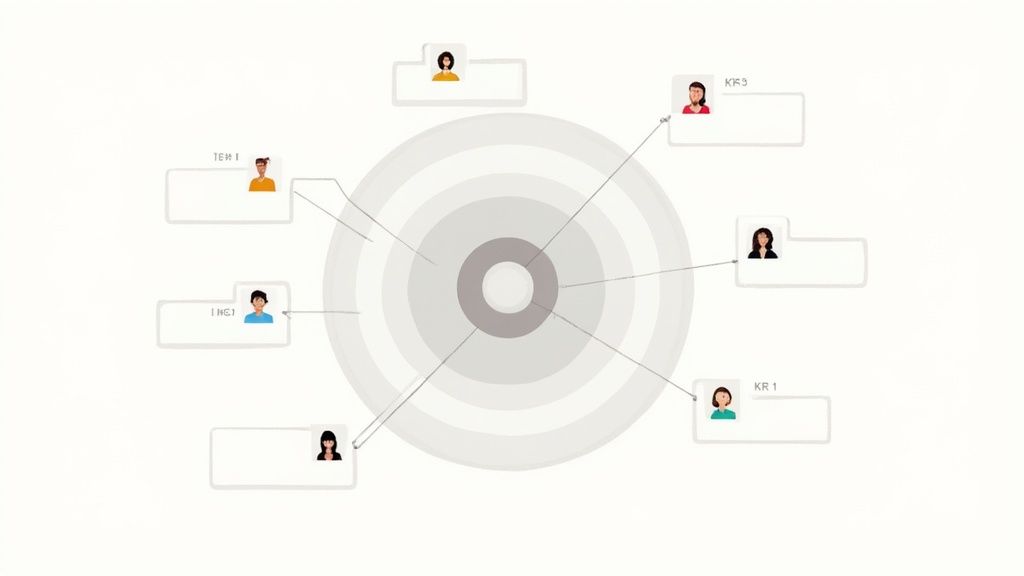
When employees see a direct connection between their work and company success, it’s a major driver to increase employee productivity. Tech giants like Google and Intel famously used OKRs to scale their operations and dominate their markets. They foster accountability by making progress transparent and encourage teams to aim high, even if they don't hit every target.
How to Implement OKRs Effectively
- Limit Your Focus: Stick to 3-5 high-impact objectives per quarter to prevent teams from feeling overwhelmed.
- Aim for Ambitious Goals: Success isn't about hitting 100% on every key result. A 60-70% achievement rate often indicates the goals were sufficiently challenging and pushed the team forward.
- Ensure Transparency: Make OKRs visible across the organization. This encourages cross-departmental collaboration and ensures everyone is pulling in the same direction.
- Review and Adapt: Don't set and forget. Review progress monthly or bi-weekly to make adjustments as needed, keeping the goals relevant and attainable.
To truly leverage this framework, you can master Objectives and Key Results to skyrocket business success and apply these principles directly to your team’s workflow.
2. Flexible Work Arrangements and Remote Work Options
Offering flexibility in where and when work gets done is a transformative strategy to increase employee productivity. This approach gives employees autonomy over their schedules and locations, including remote work, flexible hours, or compressed workweeks. By reducing commute stress and allowing individuals to work during their peak performance hours, companies empower their teams to produce their best work. This model is built on trust and focuses on output rather than hours logged.

When employees feel trusted and have control over their work-life balance, their engagement and motivation naturally increase. Companies like GitLab have built their entire cultures around remote-first principles, demonstrating that high performance is not tied to a physical office. This approach fosters a healthier, more sustainable work environment, which directly contributes to higher productivity and retention rates.
How to Implement Flexible Work Effectively
- Establish Clear Protocols: Define expectations for communication, availability, and response times to ensure everyone stays aligned, regardless of their schedule.
- Invest in Collaboration Tools: Equip your team with the right technology to facilitate seamless communication and project management.
- Set Firm Boundaries: Encourage employees to disconnect after work hours and create "no-meeting" blocks to protect deep focus time, preventing burnout.
- Support Home Offices: Provide a stipend or necessary equipment to ensure remote employees have an ergonomic and productive workspace.
To build a high-performing flexible team, you can boost productivity with a flexibility schedule in your workplace and apply proven strategies to your own model.
3. Continuous Learning and Development Programs
Investing in continuous learning and development programs is a direct investment in your team's capabilities and engagement. By providing ongoing opportunities for skill acquisition, you empower employees to perform their roles more effectively and tackle new challenges with confidence. This commitment to growth shows employees they are valued beyond their immediate output, fostering loyalty and a proactive work culture. Companies like Salesforce and Microsoft have championed this by creating vast internal learning ecosystems, such as Trailhead and company-wide access to platforms like LinkedIn Learning.
When employees are equipped with up-to-date skills and knowledge, it naturally helps to increase employee productivity. They spend less time searching for answers and more time applying expertise to solve complex problems. This approach transforms the workforce from reactive to innovative, directly contributing to the company's competitive edge and long-term success. A culture of learning also attracts top talent who are eager to advance their careers.
How to Implement Continuous Learning Effectively
- Dedicate a Budget: Allocate a specific annual budget, for instance, $1,000 to $1,500 per employee, for courses, certifications, and conferences.
- Personalize Learning Paths: Work with employees to create development plans that align their career aspirations with the company’s strategic needs.
- Schedule Learning Time: Encourage employees to block out time for learning during work hours, signaling that development is a core part of their job.
- Foster Peer-to-Peer Knowledge Sharing: Implement programs like "lunch-and-learns" or mentorships where team members can teach and learn from one another.
4. Performance Management and Regular Feedback Systems
The outdated annual review is being replaced by continuous feedback systems that foster real-time growth and accountability. This modern approach shifts from a once-a-year evaluation to an ongoing, developmental conversation. By implementing regular check-ins and 360-degree feedback, managers can address issues proactively, provide clear direction, and reinforce positive behaviors as they happen. This is crucial for remote teams, where frequent, intentional communication is necessary to maintain alignment and motivation.
When employees receive timely, specific guidance, they feel more supported and engaged, which is a direct way to increase employee productivity. Companies like Adobe and Accenture have famously abandoned annual ratings for systems like Adobe's "Check-in," focusing on regular, forward-looking conversations. This creates a culture of continuous improvement where feedback is a tool for development, not just judgment.
How to Implement Regular Feedback Effectively
- Schedule Frequent One-on-Ones: Hold bi-weekly 30-minute check-ins at a minimum to discuss progress, challenges, and development goals.
- Train Your Managers: Equip leaders to give constructive feedback using frameworks like the SBI (Situation-Behavior-Impact) model, which keeps the conversation objective and focused on outcomes.
- Focus on Behaviors, Not Personalities: Frame feedback around specific actions and their results to ensure it is actionable and less likely to be taken personally.
- Foster Psychological Safety: Create an environment where employees feel safe to receive and give honest feedback without fear of negative consequences.
To build a robust system, you can explore these performance management best practices and integrate them into your team's culture.
5. Eliminating Distractions and Creating Focus Time
Constant interruptions from emails, messages, and meetings are major barriers to deep, concentrated work. Creating protected focus time involves implementing policies that minimize these distractions, allowing employees to engage in tasks that require sustained attention. This approach recognizes that knowledge workers need uninterrupted blocks to solve complex problems, innovate, and produce high-quality work. For hybrid and remote teams, structured focus periods are crucial for maintaining momentum without the physical cues of an office environment.
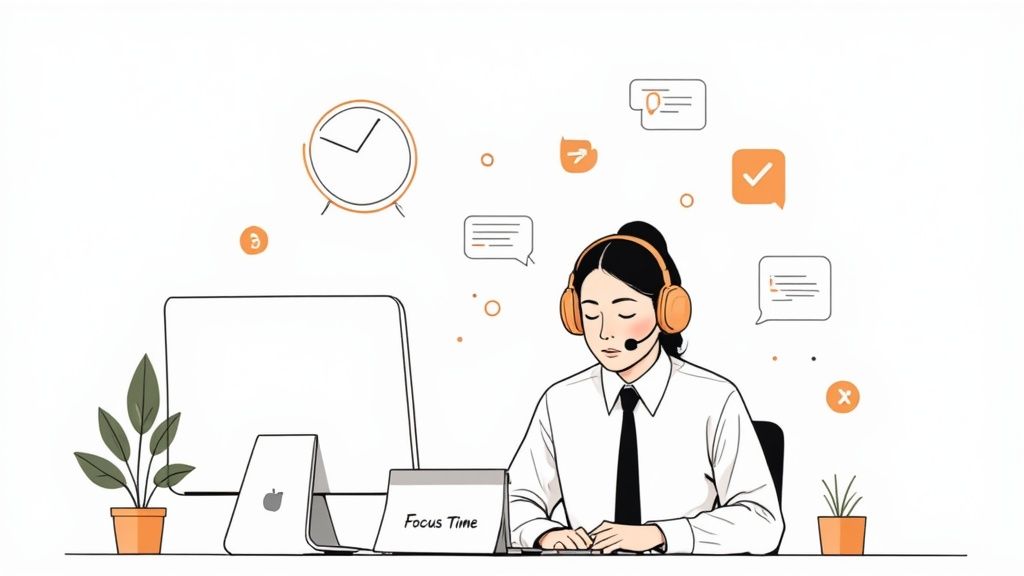
When employees can work without constant context-switching, it leads to a dramatic way to increase employee productivity and reduces burnout. Companies like Meta and Google have successfully implemented concepts like "Meeting-Free Wednesdays" or company-wide "focus time" blocks to ensure their teams have dedicated periods for deep work. This strategy empowers employees to take control of their schedules and prioritize impactful tasks over reactive communication.
How to Implement Focus Time Effectively
- Establish Focus Blocks: Encourage teams to block out 2-4 hour periods for deep work, ideally in the morning when energy levels are highest.
- Create Meeting-Free Days: Implement a "no-meeting Friday" or designate specific hours of the day for meetings to free up the rest of the calendar.
- Promote Asynchronous Communication: Default to tools like email, project management software, or shared documents for updates that don't require an immediate, real-time response.
- Set Clear Expectations: Define response time expectations for platforms like Slack and email so employees don't feel pressured to reply instantly while in a focus block.
6. Workplace Wellness and Mental Health Programs
A holistic approach to employee well-being is a direct investment in organizational performance. Workplace wellness programs go beyond basic benefits to address physical health, mental resilience, and work-life balance through services like fitness, counseling, and stress management. When employees feel supported and healthy, they are more engaged, focused, and less prone to burnout. This proactive care is especially critical for remote teams, where the lines between work and home can easily blur.

Investing in employee health is a proven strategy to increase employee productivity, with data showing that mentally resilient employees are 25-35% more productive and have 41% lower absenteeism. Companies like Google, with their comprehensive wellness centers, and Patagonia, which encourages outdoor activity, demonstrate the power of this approach. These initiatives create a culture where well-being is prioritized, leading to a healthier, happier, and more productive workforce.
How to Implement Wellness Programs Effectively
- Understand Employee Needs: Start by conducting anonymous wellness surveys to identify the specific challenges and needs of your team, from stress management to physical fitness.
- Provide Accessible Mental Health Support: Offer free or heavily subsidized access to professional counseling through an Employee Assistance Program (EAP) or other mental health platforms.
- Encourage Physical Activity: Consider reimbursing gym memberships, offering virtual fitness classes, or organizing team-wide wellness challenges.
- Normalize Mental Health Days: Create a culture where taking a day for mental rest is seen as a responsible and necessary part of maintaining long-term performance.
- Promote Ergonomic Workspaces: For remote and hybrid staff, offer ergonomic assessments and stipends for proper office furniture to prevent physical strain.
7. Recognition and Rewards Programs
A robust recognition and rewards program is a powerful motivator that acknowledges employee contributions and reinforces behaviors aligned with company values. When employees feel seen and appreciated, their engagement and dedication soar. This system works by creating a direct link between effort, achievement, and tangible appreciation, fostering a positive culture where people are motivated to go the extra mile. For remote teams, visible recognition is crucial for maintaining morale and a sense of connection.
Meaningful acknowledgment is a key strategy to increase employee productivity. Companies like Southwest Airlines have built their legendary culture around celebrating employees, while modern peer-to-peer recognition systems have made the process seamless and effective. These systems don't just reward outcomes; they celebrate the values-driven behaviors that lead to success, making employees feel valued as individuals, not just as workers.
How to Implement Recognition and Rewards Effectively
- Be Specific and Timely: Acknowledge achievements promptly. Instead of a generic "good job," specify what the employee did well and describe its positive impact on the team or project.
- Mix Monetary and Non-Monetary Rewards: While bonuses are appreciated, non-monetary rewards like extra time off, professional development opportunities, or a heartfelt public thank you can often be more meaningful.
- Encourage Peer-to-Peer Recognition: Empower team members to recognize each other. This builds camaraderie and ensures that great work happening at all levels is celebrated.
- Align with Company Values: Use recognition to highlight actions that exemplify your core values. This reinforces the culture you want to build and shows what success looks like in your organization.
8. Workload Management and Resource Allocation
Strategic workload management involves ensuring employees have an optimal amount of work, the right resources, and clear priorities to perform effectively. Overloading teams or failing to provide necessary tools are primary drivers of burnout and productivity killers. By balancing assignments and allocating resources intelligently, organizations create an environment where sustainable high performance is the norm, not the exception. This is critical for remote teams where it's harder to visually gauge an employee's stress levels.
Proper workload distribution is a key strategy to increase employee productivity by preventing exhaustion and maintaining focus. Companies like Atlassian champion a "sustainable pace," discouraging overtime and promoting a healthy work-life balance to keep teams engaged and efficient long-term. Similarly, healthcare organizations meticulously optimize nurse-to-patient ratios to ensure high-quality care without over-stretching their staff, proving that balanced workloads directly impact outcomes.
How to Implement Workload Management Effectively
- Conduct Regular Assessments: Perform quarterly workload reviews for each role to identify imbalances and adjust assignments before they lead to burnout.
- Use Project Management Tools: Leverage tools to visualize task distribution, track progress, and see who has the capacity to take on new work.
- Establish Clear Priorities: Implement a prioritization framework (like the Eisenhower Matrix) to help teams focus on high-impact tasks and say 'no' to non-essential requests.
- Eliminate Low-Value Work: Regularly audit recurring tasks and meetings to identify and remove activities that consume time without adding significant value.
9. Clear Communication and Transparency
Establishing open, honest, and regular communication channels is fundamental to building a high-performing team. When employees are kept in the loop about company strategy, key decisions, and performance metrics, it eliminates confusion and builds a powerful foundation of trust. This transparency empowers individuals to make better, more autonomous decisions, as they understand the "why" behind their work and how it connects to the bigger picture. In remote and hybrid environments, clear communication is the glue that holds the organization together.
When an organization embraces transparency, it directly helps to increase employee productivity by fostering psychological safety and a sense of shared ownership. Companies like Buffer, with its public salary formula, and Netflix, known for its culture of radical transparency, demonstrate how this approach boosts engagement and accountability. Sharing both successes and failures builds credibility and encourages a culture where everyone feels responsible for the company’s direction.
How to Implement Clear Communication and Transparency
- Hold Regular All-Hands Meetings: Schedule monthly or quarterly town halls with an open Q&A session to ensure everyone is aligned and has a chance to ask questions directly to leadership.
- Document and Share Everything: Create a centralized, accessible location for important documents like company strategy, goals, and decision logs. For improving communication and ensuring all discussion points are captured in team meetings, utilizing tools for Microsoft Teams transcription can be incredibly effective.
- Share the Good and the Bad: Be transparent about challenges and setbacks, not just wins. This builds trust and shows respect for your team’s ability to handle complex realities.
- Communicate the 'Why': Don’t just announce decisions; explain the context and reasoning behind them. This helps employees understand the strategy and get on board more quickly.
10. Autonomy, Empowerment, and Decision-Making Authority
Granting employees autonomy over their work is a fundamental shift from micromanagement to trust, empowering them to take ownership of their roles. This approach involves delegating decision-making authority, allowing individuals to choose their methods and manage their tasks. When employees feel trusted to make choices within their domain, it boosts intrinsic motivation, sparks innovation, and eliminates bureaucratic bottlenecks that slow progress. For remote teams, this sense of ownership is crucial for maintaining momentum and engagement.
Empowerment directly translates into a significant way to increase employee productivity. Companies like Zappos famously authorize frontline staff to resolve customer issues without needing managerial approval, leading to faster, more satisfying service. Similarly, Spotify's autonomous "squad" model allows small, cross-functional teams to decide how to build and ship products, fostering a culture of rapid innovation and accountability.
How to Implement Empowerment Effectively
- Define Clear Boundaries: Establish the scope of decision-making authority. Let employees know which decisions they can make independently and which require collaboration or approval.
- Provide Necessary Context: Equip your team with the information, data, and strategic context needed to make informed decisions that align with company goals.
- Create Psychological Safety: Foster an environment where employees feel safe to experiment, take calculated risks, and even fail without fear of punishment. This encourages learning and initiative.
- Reduce Approval Layers: Systematically review and remove unnecessary sign-offs and approvals that create delays and disempower your team. Trust your people to do their jobs effectively.
10-Point Productivity Strategy Comparison
| Initiative | Implementation Complexity 🔄 | Resource Requirements ⚡ | Expected Outcomes 📊 | Ideal Use Cases 💡 | Key Advantages ⭐ |
|---|---|---|---|---|---|
| Goal Setting and OKRs (Objectives and Key Results) | Medium — 2–4 wk setup; ongoing alignment 🔄 | Low–Medium ⚡ | Clear measurable goals; improved alignment and accountability 📊 | Scaling orgs, strategic alignment, performance-driven teams 💡 | Transparent targets; measurable progress; drives focus ⭐ |
| Flexible Work Arrangements and Remote Work Options | Low — 1–2 wk policy rollout; process design 🔄 | Low–Medium ⚡ | Higher satisfaction, retention; wider talent pool 📊 | Distributed teams, hiring beyond location, work–life balance focus 💡 | Increases autonomy; reduces commute costs; boosts retention ⭐ |
| Continuous Learning and Development Programs | Medium–High — 2–3 mo design & rollout 🔄 | Medium–High ⚡ | Skill growth, internal mobility, long-term capability gains 📊 | Fast-changing industries, succession planning, skills gaps 💡 | Builds talent pipeline; improves performance and engagement ⭐ |
| Performance Management and Regular Feedback Systems | Medium — 3–4 wk setup; manager training required 🔄 | Low–Medium ⚡ | Timely performance improvements; early issue detection 📊 | High-growth teams, improving manager effectiveness, development cultures 💡 | Promotes continuous improvement; fairer evaluations ⭐ |
| Eliminating Distractions and Creating Focus Time | Low — 1–2 wk policy adoption; scheduling changes 🔄 | Low ⚡ | More deep work, higher-quality output, reduced cognitive switching 📊 | Knowledge work, complex problem-solving, creative roles 💡 | Protects focus; raises output quality and creativity ⭐ |
| Workplace Wellness and Mental Health Programs | Medium — 2–3 mo program design & rollout 🔄 | Medium–High ⚡ | Lower absenteeism; improved morale and sustained productivity 📊 | High-stress environments, large orgs, retention-focused strategies 💡 | Improves wellbeing; reduces long-term costs; boosts retention ⭐ |
| Recognition and Rewards Programs | Low — 2–4 wk rollout; policy design 🔄 | Low–Medium ⚡ | Increased motivation and retention; reinforces desired behaviors 📊 | Sales, frontline teams, culture-building initiatives 💡 | Cost-effective morale boost; reinforces values and effort ⭐ |
| Workload Management and Resource Allocation | Medium — 4–8 wk assessment & rebalancing 🔄 | Low–Medium ⚡ | Reduced burnout; better prioritization; sustainable output 📊 | Overworked teams, project-driven orgs, scaling operations 💡 | Prevents overload; improves focus on high-impact work ⭐ |
| Clear Communication and Transparency | Low — 2–4 wk process setup; cadence planning 🔄 | Low ⚡ | Better alignment, trust, and faster decision-making 📊 | Strategic shifts, remote teams, trust-building efforts 💡 | Builds trust; reduces misalignment and rumor risk ⭐ |
| Autonomy, Empowerment, and Decision-Making Authority | Medium — 4–6 wk framework & training 🔄 | Low–Medium ⚡ | Faster decisions, more innovation, higher ownership 📊 | Customer-facing teams, autonomous squads, innovation-led cultures 💡 | Speeds execution; increases intrinsic motivation; reduces bottlenecks ⭐ |
From Plan to Action: Implementing a More Productive Future
The journey to increase employee productivity is not a one-time initiative but a continuous commitment to cultivating an environment where people can thrive. The strategies we've explored, from setting clear Objectives and Key Results (OKRs) to fostering genuine autonomy, are not isolated tactics. Instead, they are interconnected pillars that support a culture of high performance, engagement, and sustainable growth.
The common thread woven through each of these methods is a focus on the human element of work. Productivity isn't about squeezing more hours out of the day; it's about making those hours more meaningful, focused, and impactful. By implementing robust feedback systems, promoting workplace wellness, and recognizing achievements, you empower your team members to bring their best selves to work, driving both individual and collective success.
Your Actionable Roadmap to Higher Productivity
Transforming these concepts into reality requires a deliberate and phased approach. Avoid the temptation to overhaul everything at once. Instead, identify the most pressing needs of your team and build momentum from there.
- Start Small, Win Big: Begin by selecting one or two strategies that will have the most immediate impact. Is communication a bottleneck? Start by implementing more transparent communication channels. Is burnout a concern? A dedicated wellness program or better workload management could be your starting point.
- Measure and Adapt: The key to sustainable improvement is data. As you implement new initiatives, track their impact. Use qualitative feedback through surveys and one-on-one meetings, and supplement it with quantitative data on project completion rates and focus time. This allows you to understand what's working and where you need to adjust your approach.
- Empower Your Leaders: Equip your managers and team leads with the training and resources they need to champion these changes. They are your most critical partners in fostering a productive culture. Their ability to manage workloads, provide constructive feedback, and empower their teams is essential to long-term success.
Ultimately, the quest to increase employee productivity is an investment in your people. By creating a supportive, efficient, and empowering workplace, you’re not just improving output; you’re building a resilient, innovative, and loyal team capable of navigating any challenge. The future of work is not just about doing more, but about working smarter, and that journey begins with a single, intentional step forward.
Ready to turn insights into action? DeskCove provides the clarity you need to understand workflows, manage workloads, and identify productivity patterns without sacrificing privacy. See how your team truly works and make data-driven decisions to boost efficiency by trying DeskCove today.