A Modern Guide to Manage a Remote Team

Managing a remote team isn't just about sending everyone home with a laptop. To do it well, you have to build a solid foundation—one based on clear expectations, mutual trust, and processes that actually make sense when people aren't in the same room. This is about creating a single source of truth for how your team operates, setting goals that unite everyone, and being transparent from day one. Get this right, and you’ll sidestep most of the common remote work headaches before they even start.
Building Your Foundation for Remote Success
The move to remote work is a fundamental shift in how we operate, not just a change of scenery. It's a reality for a huge slice of the global workforce, with about 48% of employees worldwide now working remotely—a massive leap from just 20% back in 2020. Here in the U.S., that translates to over 32.6 million people working from home. If you want to learn more about the nuts and bolts, it's worth exploring the basics of how to effectively manage remote teams and the strategies that work.
Success in a remote setup doesn't just happen. It takes a deliberate, structured approach that replaces hallway chats and in-person check-ins with clear, documented guidelines everyone can access.
Create a Central Source of Truth
The most critical first step is establishing a comprehensive remote work policy. This isn't just a dusty HR document; it's your team's constitution. It needs to spell out everything from communication etiquette to how performance is measured. Think of it as the central hub that eliminates guesswork and empowers your team to work with confidence.
When building your policy, you need a solid framework. Here’s a quick-reference table outlining the non-negotiable components of a successful policy.
Core Pillars of a Remote Work Policy
| Pillar | Key Objective | Example Action |
|---|---|---|
| Communication Protocols | To ensure clear, efficient, and consistent communication across all channels. | Designate Slack for quick async updates and Zoom for scheduled deep dives. |
| Working Hours & Availability | To respect time zones while establishing predictable collaboration times. | Set core hours (e.g., 10 AM – 2 PM EST) when everyone must be available. |
| Performance Expectations | To shift focus from hours worked to tangible results and outcomes. | Define clear, measurable goals using a framework like OKRs. |
| Tooling & Tech | To provide a standardized set of tools for everyone to use effectively. | Mandate the use of Asana for project management and Google Drive for documents. |
| Security & Data Protection | To safeguard company and client information in a distributed environment. | Require VPN usage on public Wi-Fi and two-factor authentication on all accounts. |
A well-structured policy is your first line of defense against ambiguity and confusion, setting a clear path for everyone to follow.
Crafting this document from scratch can feel overwhelming. To make sure you cover all your bases, you might find it helpful to start with a remote work policy template. It gives you a great starting point for covering all the essentials.
Focus on Goals, Not Clicks
In a remote world, you have to stop managing by activity and start leading by results. This shift is everything. It builds the trust and autonomy your team needs to do their best work without someone looking over their shoulder.
The best way to do this is by setting incredibly clear, measurable goals with a framework like Objectives and Key Results (OKRs). This simple switch ensures everyone knows how their work fits into the bigger picture. When a developer in Poland and a marketer in Brazil can see how their individual tasks contribute to the same key result, you create a powerful, unifying sense of purpose.
The goal is to manage the work, not the person. When you focus on clear deliverables and deadlines, you empower your team to choose the best way to get there, fostering a culture of ownership and accountability.
Make Transparency and Documentation Your Default
Without an office, your documentation becomes your company's collective memory. Every major decision, project update, and process change needs to be written down and stored in a shared space like Notion, Confluence, or your project management tool.
This habit of "working out loud" pays off in so many ways:
- It keeps everyone on the same page, no matter their time zone.
- It gives new hires a rich source of context when they're getting up to speed.
- It creates a transparent, searchable history of how decisions were made.
By laying down these foundational pieces—a clear policy, outcome-driven goals, and a culture of documentation—you build a structured and predictable environment. This is the blueprint for a remote team that doesn't just function, but truly excels.
Mastering Your Team's Communication Rhythm
In a remote setup, you can't just bump into someone in the hallway for a quick chat. Good communication doesn't just happen; it has to be intentionally designed. Without the spontaneous check-ins of an office, creating a deliberate communication rhythm is the only way to keep everyone on the same page and moving forward.
The whole thing starts with understanding two different ways of talking. You've got synchronous communication, which is all your real-time stuff like video calls and instant messages. Then there’s asynchronous communication, where an immediate response isn't expected—think emails, project comments, and recorded video updates.
The Right Tool for the Right Job
A classic mistake I see remote managers make is trying to cram the office experience into a calendar full of back-to-back virtual meetings. This is a fast track to burnout. In fact, a recent study found that only 38% of companies have a formal asynchronous work policy. This means most teams are defaulting to real-time chats, which constantly breaks concentration and leaves people in different time zones out of the loop.
The fix? Create a "communication charter." It’s just a simple document that tells your team which tool to use for what.
Here’s a breakdown you can steal and adapt:
- Slack/Microsoft Teams: Perfect for quick, non-urgent questions and a bit of social banter. Treat it like the virtual water cooler, a place for fast updates that don't need a formal reply.
- Zoom/Google Meet: Save these for when you truly need to collaborate—think brainstorming, tough problem-solving, and weekly team syncs where a real-time discussion is a must.
- Asana/Jira/Trello: All project-related updates, feedback, and task-specific questions live here. This keeps the conversation tied directly to the work.
- Email: Keep this for the formal stuff: company-wide announcements, communicating with clients, and sending detailed reports that people will need to find later.
This kind of decision tree makes it clear what the policy is, preventing guesswork and making communication much smoother.
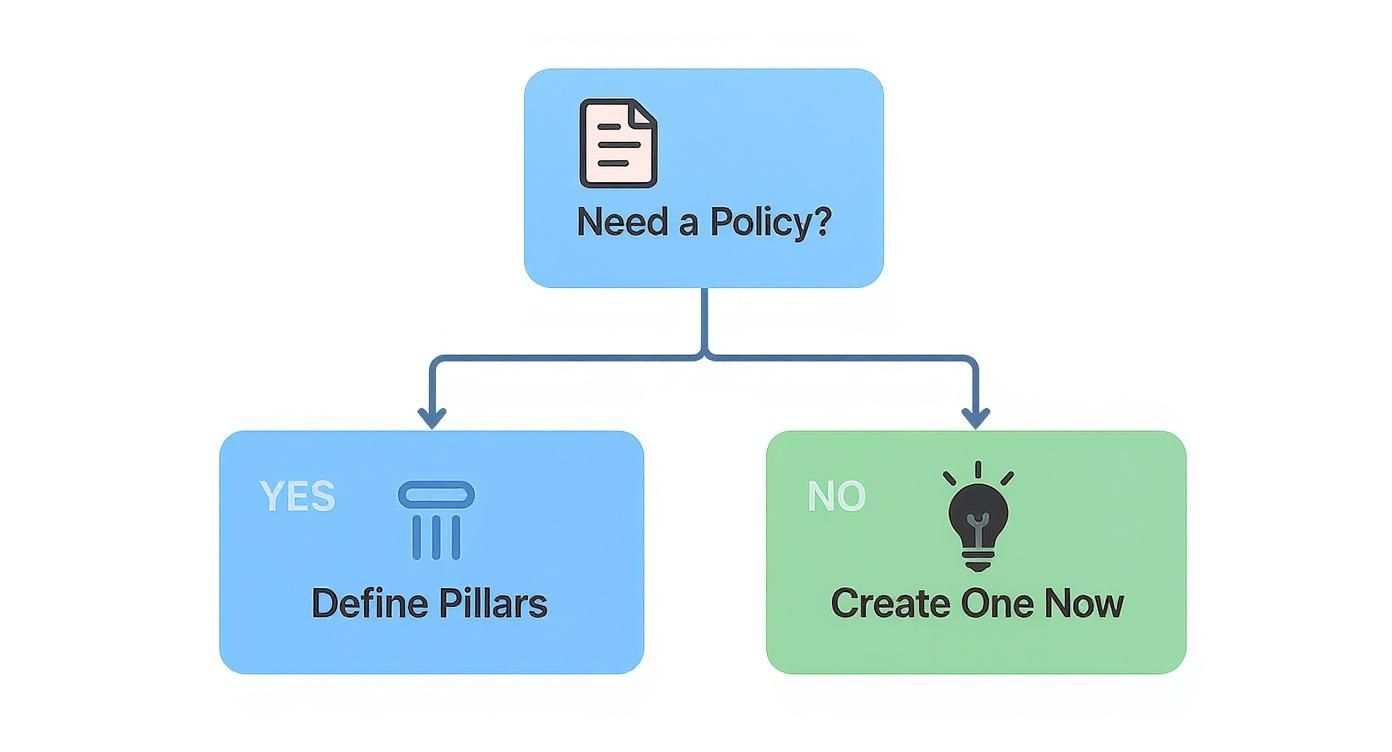
The end goal is a system where everyone knows exactly how to get the information they need without blowing up someone else's focus time.
By defining these channels, you're not just organizing things; you're reducing the mental load on your team. To really master this, it's also crucial to constantly help your team improve communication skills so everyone can contribute clearly and effectively.
Run Meetings That Respect Everyone's Time
When you absolutely must have a synchronous meeting, make it worth everyone's time. A sharp, efficient virtual meeting is a hallmark of a great remote team. The secret sauce is all in the prep and structure.
Always have a clear agenda, a defined goal, and an assigned facilitator. If a meeting doesn't have these three things, it could probably be an email or an asynchronous update instead.
Get that agenda out at least 24 hours beforehand so people can actually prepare. During the call, stay on schedule, make a point to draw out opinions from everyone (not just the loudest person in the virtual room), and always wrap up with crystal-clear action items and who owns them. This simple discipline turns meetings from dreaded time-sucks into genuinely productive sessions.
Build a Culture of Documentation
Documentation is the unsung hero of successful remote teams. Since you can't assume everyone is online at the same time, writing things down becomes your single source of truth. This means documenting decisions, processes, and meeting notes in one central, easy-to-find spot like Notion, Confluence, or even a well-organized Google Drive.
Get your team into the habit of "working out loud"—sharing progress and thought processes right inside your project management tools. This level of transparency is a game-changer for teams scattered across the globe. If you want to go deeper, check out our guide on how asynchronous communication enhances team productivity. Building this habit not only keeps the team aligned but also creates a searchable knowledge base that's priceless for getting new hires up to speed.
Driving Productivity Without Micromanagement
One of the biggest tightropes to walk when you manage a remote team is finding the right balance between accountability and autonomy. How do you actually know work is getting done without making your team feel like they’re under a microscope?
The secret is to shift your focus from tracking activity to measuring impact. It's about building a culture where trust is the default setting. Instead of asking, "Is my team busy?" the better question is, "Is my team delivering results?" This simple change in perspective is the key to boosting productivity without falling into the micromanagement trap, which absolutely kills morale and creativity.

Prioritize Outcomes Over Hours
The most effective remote managers I know are laser-focused on outcomes, not hours clocked. Your team's real value is in the quality and timeliness of what they deliver, not the little green status light next to their name.
To make this happen, you need to get crystal clear on what success looks like for every single role and project. Use a solid goal-setting framework like Objectives and Key Results (OKRs) to establish clear, measurable targets. When everyone knows their goals and how their work fits into the bigger picture, they can manage their own time to hit those targets.
This approach gives your team the freedom to work when they are most productive, which can lead to huge improvements. In fact, studies show remote workers can see a 35% to 40% increase in productivity compared to their in-office colleagues, mainly thanks to fewer distractions and more flexible schedules. You can explore more about the statistical gains of remote work to get the full picture.
Implement Productivity Tools Ethically
Productivity tools can be incredible allies, but only when used correctly. The goal is to give your team insights, not to create a Big Brother vibe. Ethical monitoring means using data to spot trends, identify workflow bottlenecks, and offer support where it's needed most.
When you're picking a tool, keep these things in mind:
- Be Transparent: Be completely open with your team about what’s being tracked and, more importantly, why. Explain how the data will be used to help them and the team as a whole.
- Focus on Trends: Look for patterns in the aggregate data, not individual slip-ups. If you notice the design team is consistently logging extra hours before a launch, that probably points to a resource issue, not a personal performance problem.
- Empower Individuals: Use the data to start conversations. An employee-facing dashboard can help people understand their own work habits and find their own ways to improve.
True productivity management isn't about catching people doing something wrong. It’s about using data to find ways to make work easier, more efficient, and more rewarding for everyone.
By framing these tools as resources for optimization rather than surveillance, you build trust and a much healthier work environment. For managers trying to get this balance right, it's super helpful to learn how to track employee productivity effectively without micromanaging.
Conduct Fair and Forward-Looking Performance Reviews
Performance reviews in a remote setting just have to be different. You can't rely on "face time" or seeing someone at their desk as a stand-in for performance. Your feedback has to be grounded in concrete data and the expectations you set from the start.
A fair remote review process should be:
- Consistent: Use a standardized template and the same criteria for everyone in a similar role. This keeps things fair and cuts down on unconscious bias.
- Data-Informed: Base your feedback on whether they hit pre-defined goals, their project completion rates, and the quality of their work—not on your assumptions about how hard they're trying.
- Constructive and Forward-Looking: The conversation should be all about growth. Talk about what went well, identify areas for development, and work together to set goals for the next review period.
This structured, evidence-based approach makes feedback more objective and truly actionable. It ensures every team member, no matter where they are, is evaluated on the merit of their contributions. That creates a system that’s both fair and highly motivating.
Intentionally Building Remote Culture and Wellbeing
In an office, culture just sort of… happens. It’s the product of shared lunches, inside jokes that make no sense to anyone else, and those random hallway conversations that somehow solve a huge problem. When you manage a remote team, all of that organic connection evaporates.
A strong, supportive remote culture doesn't just spring up on its own. It has to be built, brick by brick, with deliberate and consistent effort. This means going beyond just getting the work done and truly focusing on an environment where people feel connected, valued, and safe to be themselves.
If you neglect this, you're taking a huge risk. A 2022 report found that 24% of remote employees struggle with loneliness, and another 25% find it nearly impossible to unplug from work. These aren't just personal problems; they're giant red flags that your culture needs support.

Engineer Spontaneous Connections
You can't perfectly replicate the office "water cooler," but you can absolutely create digital spaces that serve the same purpose. These casual, non-work interactions are the glue that holds a team together, building the personal rapport that underpins professional trust.
Here are a few practical ways to get this going:
- Dedicated "Fun" Channels: Create channels in Slack or Teams for specific interests. Think
#pets-of-the-company,#cooking-adventures,#gaming-lobby, or#book-club. It’s a low-pressure way for people to share a bit of their personality and find common ground. - Virtual Coffee Roulettes: Use an app to randomly pair up team members for a 15-minute, no-work-talk-allowed video chat each week. This is gold for helping people connect with colleagues they might not otherwise interact with.
- Engaging Virtual Events: Please, no more awkward virtual happy hours. Get creative! Try an online escape room, have everyone contribute to a collaborative playlist for focus music, or organize a virtual cooking class where you send the ingredients to everyone's home.
These small initiatives are powerful weapons against the isolation that can creep in when everyone is working from their own island. They make the team feel more like a real community.
Prioritize Recognition and Appreciation
When everyone's remote, great work can easily feel like it's happening in a vacuum. Without the ability to give a quick "great job on that presentation!" in person, you have to be far more intentional about recognition.
Making people feel seen is one of the most potent ways to boost morale.
A simple "thank you" goes a long way, but public acknowledgment of a specific contribution is a game-changer. It not only rewards the individual but also shows the rest of the team exactly what kind of behavior you value.
Think about implementing a structured-but-personal recognition program. This could be a #wins or #shoutouts channel where team members can praise each other. You could even use a points-based system where employees earn rewards for going the extra mile. Small gestures, like sending a personalized gift card for their favorite coffee shop or a small piece of company swag, make a surprisingly huge impact because they show you're paying attention.
Champion Wellbeing and Healthy Boundaries
Burnout isn't just a risk for remote teams; it's a constant threat. The lines between the living room and the office are blurry, and as a manager, you have a responsibility to actively promote a healthy balance.
This is more than just telling people to "take a break." You have to model the behavior yourself. Log off at a reasonable time. Don't send emails at 10 PM.
On top of that, establish some clear ground rules:
- Set expectations around response times, especially for asynchronous communication, so no one feels pressured to be "always on."
- Encourage PTO and make it crystal clear that taking time off is not just allowed but expected for long-term health and creativity.
- Provide accessible mental health resources. This could be subscriptions to wellness apps like Calm or Headspace, or ensuring your benefits package includes easy access to counseling services.
Building a resilient remote culture is an ongoing process. It's the intentional, human-centric work of forging connections, showing gratitude, and fiercely protecting your team's wellbeing that turns a group of scattered employees into a truly cohesive team.
Hiring and Onboarding for a Global Talent Pool
One of the biggest wins when you manage a remote team is the power to hire the absolute best person for the job, period. Forget being limited to a 30-mile radius around an office. Access to a global talent pool is a genuine superpower for building a world-class team.
But hiring for a remote role means looking through a different lens. You’re not just chasing technical skills; you’re hunting for a specific set of traits that scream "success in an autonomous environment." It’s all about finding people who don't just survive but actually thrive without the constant hum of a traditional office.
This global shift is quickly becoming the new normal. A recent global workforce report found that more than 50% of business leaders are planning to ramp up international hiring in the next year. Companies are tapping into borderless talent pools for specialized skills and greater diversity, which means new HR structures are needed to handle cross-border compliance. You can dig into the full research on these global workforce trends for more detail.
Identifying Remote-Ready Candidates
When you get to the interview stage, your entire focus should shift to uncovering the traits that are non-negotiable for remote work. Your standard interview questions probably won’t cut it.
Instead, you need to dig deeper to find real evidence of these core competencies:
- Proactive Communication: Ask about a time they had to keep stakeholders in the loop on a project with minimal supervision. You’re listening for candidates who naturally over-communicate.
- Self-Discipline and Time Management: Frame a question like, "Walk me through how you'd structure your day with three competing priorities and no one to ask for guidance." You want to hear about the personal systems they’ve built for prioritization and focus.
- Problem-Solving Skills: Throw them a hypothetical roadblock they’d likely face in the role. The goal isn't to see if they find the "right" answer, but to watch how they tackle the problem and articulate their thought process.
Honestly, these qualities are far more critical than whether they’ve worked remotely before. A self-motivated, communicative person can pick up the remote workflow way faster than a seasoned but passive remote employee.
Creating a World-Class Virtual Onboarding Experience
Once you’ve found the right person, the onboarding process is your first real shot at making them feel like they belong. A clumsy virtual onboarding can leave a new hire feeling isolated and confused—a recipe for failure. A great one, on the other hand, weaves them into your company culture and workflows from the get-go.
The goal of remote onboarding isn't just to get someone set up with a laptop and logins. It's to make them feel welcomed, connected, and confident from their very first day, even if they never step foot in an office.
Your process has to be structured, personal, and something you can repeat. Think of it as a journey with clear milestones for their first week, first month, and first ninety days.
Key Elements of a Successful Remote Onboarding
A structured plan is your safety net, ensuring no one falls through the cracks. It should be a thoughtful mix of practical setup, cultural immersion, and genuine personal connection.
Here’s a checklist to get you started:
- Send a Curated Welcome Kit: This needs to be more than just a laptop and a mouse. Include some company swag like a hoodie or a coffee mug, a handwritten welcome note from you, and maybe even a gift card for a local lunch spot. It’s a tangible gesture that makes a huge first impression.
- Assign an Onboarding Buddy: Pair your new hire with a friendly, tenured team member who is not their direct manager. This buddy is their go-to for all the "silly" questions they might be too intimidated to ask you, like, "What's the real story behind the cat emoji in our Slack channel?"
- Schedule a Week of Introductory Meetings: Don't just dump them into their work. Be deliberate and schedule short, 30-minute intro calls with key people they'll be working with across different departments. This helps them build a mental map of the organization and start putting faces to names right away.
- Provide a "First Day" Document: Create a simple, one-page guide with everything they need for day one: links to essential tools, a schedule of their first few meetings, and a clear list of who to ping for specific issues. This single document crushes first-day anxiety and proves you’ve thought through their experience.
By investing in a thoughtful hiring and onboarding process, you're doing more than just filling a seat. You're leveraging your remote advantage to not only attract top global talent but to keep them by making them feel valued and integrated from the very beginning.
Answering Your Remote Management Questions
Leading a remote team for the first time? Or maybe you're a seasoned pro just looking to sharpen your skills? Either way, you've probably got questions. It's a different ballgame when your team is distributed, and certain challenges pop up time and time again.
Let's tackle some of the most common hurdles I see managers face, with some straight-up, actionable advice to help you lead with more confidence.
How Do You Build Trust Without In-Person Interaction?
This is the big one. Building trust when you're not sharing an office space is a top concern for almost every remote leader, but it's completely doable. It all comes down to being consistent, transparent, and willing to empower your people.
First things first, you have to lead with trust by default. Ditch the micromanagement mindset. Your focus should be on the quality of the work and the outcomes being delivered, not on watching the clock or monitoring every single activity.
Next up is unwavering transparency. You need to get serious about documenting key decisions and sharing important information where everyone can find it. No more knowledge hoarding.
This could look like:
- A shared team wiki: Think of it as your team's single source of truth for processes, project plans, and team goals.
- Regular email updates: A quick summary of progress towards company goals and celebrating team wins goes a long way.
- Open calendars: When people share their availability, it fosters mutual respect for each other's focus time. Simple, but effective.
Finally, the single strongest signal of trust is giving your team autonomy over their work. When you empower them, you're telling them you trust their judgment. Combine this professional trust with informal chances to connect—like virtual coffee chats or a dedicated non-work Slack channel—and you'll build the personal rapport that solidifies everything.
What Are the Most Common Mistakes to Avoid?
I've seen so many well-meaning managers stumble into the same traps when they first go remote. Just being aware of these common pitfalls is half the battle.
Here are the mistakes that trip people up most often:
- Replicating the 9-to-5 office schedule: Just because you're remote doesn't mean you should pack everyone's calendar with back-to-back video calls. That's a one-way ticket to Zoom fatigue and burnout.
- Ignoring asynchronous communication: If every question requires an immediate answer, you create constant interruptions and bottlenecks. This is especially frustrating for team members in different time zones who feel left out of the loop.
- Not documenting anything clearly: This always leads to confusion and the same questions being asked over and over. It also creates a single point of failure if one person holds all the critical knowledge in their head.
- Assuming culture will build itself: Team cohesion doesn't just happen on its own in a remote setting. If you don't intentionally create opportunities for connection, you'll end up with a team of isolated individuals.
Fixing these isn't hard, but it does require being deliberate. A thoughtful communication strategy and intentional efforts to foster connection are non-negotiable for long-term remote success.
A one-size-fits-all management style rarely works in any environment, but it's particularly ineffective for remote teams. Failing to recognize individual communication preferences and diverse work styles will undermine your efforts to build a truly inclusive and high-performing team.
What Key Metrics Should I Track for Success?
To really understand how your remote team is performing, you have to shift your focus. Forget about tracking busy work and start measuring what truly matters: output and impact. This approach gives your team the autonomy they need while still holding everyone accountable for results.
You'll want to concentrate on a balanced set of metrics that gives you a complete picture of your team's health and performance.
| Metric Category | Specific Metric to Track | Why It Matters |
|---|---|---|
| Project Delivery | Task and Project Completion Rates | Measures how consistently and reliably your team meets its deadlines. |
| Work Quality | Peer Reviews or Client Feedback | Gives you qualitative insight into how good the final product actually is. |
| Team Morale | Employee Engagement Surveys | A great way to gauge satisfaction and catch hidden problems before they blow up. |
| Team Efficiency | Team Velocity (for Agile Teams) | Tracks the amount of work completed in each cycle so you can spot trends. |
By tracking these outcome-focused metrics, you get a clear, data-driven picture of your team's success without having to resort to invasive monitoring. It’s all about building a culture of accountability based on actual, tangible achievements.
Ready to manage your remote team with clarity and confidence? DeskCove provides the insights you need to drive productivity and support your team's success. See how our ethical time tracking and productivity monitoring can work for you at https://deskcove.com.