Mastering Your Work From Home Challenges

The big shift to remote work was sold to us as the ultimate dream of flexibility, but the reality brought a whole new set of work from home challenges. These aren't small bumps in the road; they're hurdles that range from the complete blurring of our personal and professional lives to the quiet, creeping feelings of isolation and burnout.
The New Reality of Remote Work

At first, working from the couch felt like a revolution. No commute, more control over your day—what wasn't to love? But as the novelty wore off, a more complex picture emerged, one filled with challenges around productivity, communication, and our own well-being. This guide is your map for navigating these common obstacles.
We're going to tackle the core issues head-on, and the first thing to know is that these struggles are completely normal—and solvable. Getting a handle on this new way of working is the first step toward mastering it. And with the ongoing prevalence of remote work, it's a skill we all need to develop.
Understanding the Widespread Shift
The global workforce went through a massive transformation almost overnight. Remote work shot up to about 28% globally, with around 22.8% of U.S. employees working from home. This quick pivot strained the old ways of supporting employees.
Hybrid and fully remote setups mean less direct face-time with managers and fewer of those spontaneous water-cooler chats that are surprisingly important for spotting burnout before it takes hold.
The key takeaway is that remote work isn't just a change in location; it's a fundamental change in how we connect, collaborate, and maintain our mental health. Ignoring these new challenges can lead to decreased morale and productivity.
This new landscape requires everyone, from team members to leaders, to rethink their strategies. Simply recognizing the potential pitfalls is the first crucial step toward building a remote work life that's both healthy and sustainable. As we navigate the remote work and embracing the future of flexible employment, we have to be proactive about solving these problems.
Most of these common hurdles fall into a few key buckets:
- Maintaining Boundaries: Without the physical separation of an office, the line between your professional and personal life can get fuzzy, fast.
- Combating Isolation: The lack of casual, in-person interaction can easily lead to feelings of loneliness and a sense of being disconnected from the team's culture.
- Ensuring Clear Communication: When you lose all those non-verbal cues from face-to-face conversations, misunderstandings can pop up far more often.
Reclaiming Your Work-Life Balance
One of the sneakiest work from home challenges is the way the line between your job and your personal life slowly evaporates. When your living room is also your office, the workday can feel like it never really stops, creating an “always-on” mentality that’s a direct pipeline to stress and burnout.
Remember the old commute? It was more than just a trip—it acted as a mental buffer. That drive or train ride was your brain’s signal to switch off from professional mode and reset for personal time. Remote work yanks that built-in transition right out from under you, making it a lot harder to mentally clock out.
The Psychology of Blurred Boundaries
Without the simple act of physically leaving an office, many remote workers feel this low-level pressure to constantly prove they’re being productive. It’s what leads to answering emails late at night or grabbing extra tasks just to stay visible. The problem gets even worse when companies don't have clear guidelines on working hours.
This pressure isn't just in your head; it's a known psychological response to a lack of structure. Your home, which was once your sanctuary, is now peppered with work triggers—the laptop on the dining table, the constant ping of notifications on your phone. This overlap makes it nearly impossible to truly relax.
This erosion of boundaries is often fueled by a perfect storm: undefined work hours, the physical overlap of home and work, and the disappearance of those old commute rituals.
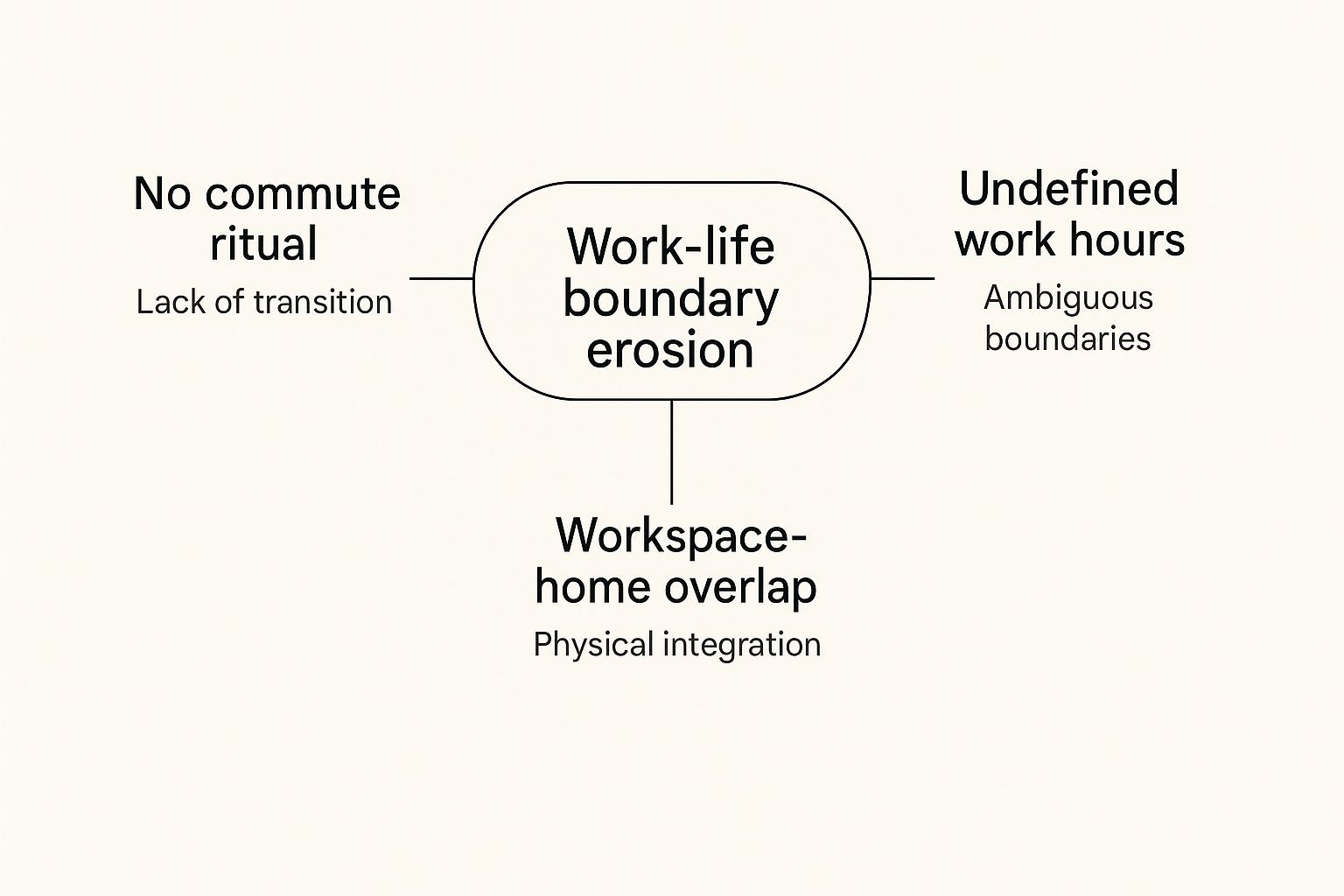
These three factors conspire to dismantle the natural separation we once had between our professional and personal selves, making it incredibly difficult to unplug.
Guarding your personal time isn’t just a nice-to-have; it's absolutely critical for your long-term mental health and sustainable performance at work. This blurring of boundaries is a massive global challenge. In fact, one report found that 17.7% of employees constantly struggled with being unable to unplug after work. This is a huge contributor to higher stress levels among remote workers, a topic explored in more detail in these remote work statistics on hellopebl.com.
Strategies for Setting Clear Boundaries
Taking back your time requires being intentional. You have to actively build the boundaries that the traditional office environment used to provide automatically. Without these guardrails, burnout isn’t a question of if, but when.
Here are a few practical steps you can take to create that crucial separation and protect your well-being:
- Establish a "Shutdown" Ritual: Create a simple routine that tells your brain the workday is over. It could be as easy as closing your laptop for the night, turning off all work notifications, changing your clothes, or just taking a quick walk around the block.
- Designate a Work-Only Zone: If you have the space, set up a dedicated workspace. When you’re off the clock, make a point to avoid that area. This helps your brain associate that specific spot only with your job.
- Communicate Your Availability: Be upfront with your team about your working hours. Set your status to "away" on chat apps and turn on an out-of-office reply when your day is officially done.
Solving Remote Communication Breakdowns
Strong teamwork runs on clear communication, but remote work throws a wrench in the works. Simply piling on more video calls isn't the fix. The real work from home challenges with communication are much deeper and often bubble under the surface until a project goes off the rails.
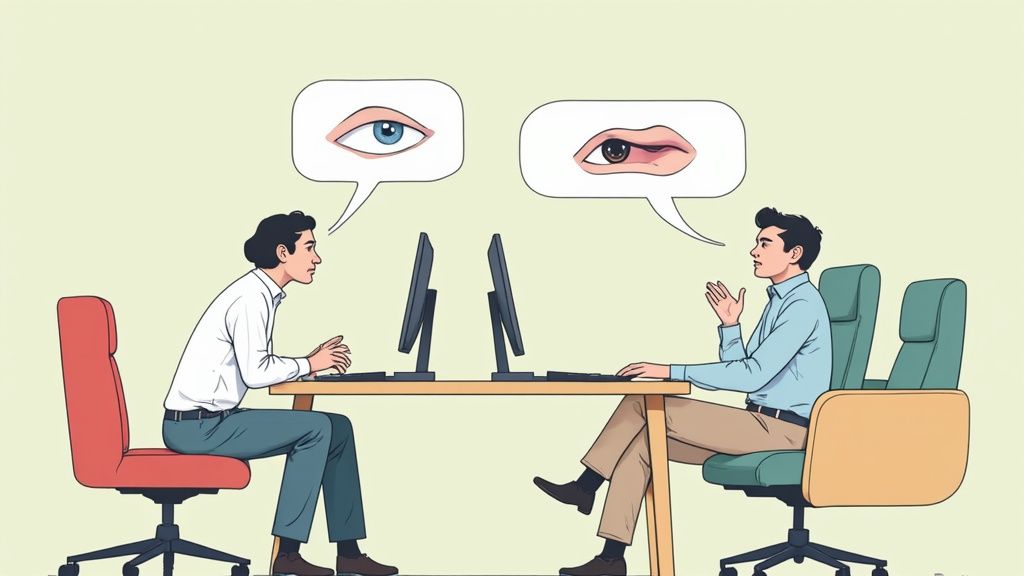
These breakdowns happen because all the subtle, in-person cues we rely on just disappear online. A quick nod of agreement, a furrowed brow showing confusion—that instant feedback is gone. This digital divide makes it incredibly easy for wires to get crossed, turning what would have been a minor mix-up into a major roadblock.
The Loss of Spontaneous Collaboration
One of the biggest casualties of going remote is the spontaneous chat. Think about it: the quick question you’d ask over a cubicle wall, or the hallway brainstorm that happens when you bump into a colleague. Those moments are the secret sauce for innovation and quick problem-solving.
When you're remote, nearly every conversation has to be scheduled and intentional, which can kill creativity and drag progress to a halt. It's a big reason why so many companies are leaning into hybrid models. Even with all the tech in the world, remote teams struggle to talk effectively. Hybrid jobs now represent a huge chunk of the workforce in major U.S. cities—33% in San Francisco and Minneapolis, and 32% in Boston. You can dig into more of the numbers by checking out these remote work statistics and trends.
A successful remote team doesn't just try to copy-paste office communication online. They build a new, intentional strategy that closes the digital divide. The real goal is clarity and connection, no matter where people are logging in from.
Without a solid plan, teams naturally fall into bad habits. The lines blur between asynchronous channels like email or Slack and real-time chats like video calls. A question that needs a fast answer gets buried in an email thread, while a simple update needlessly pulls the whole team into a 30-minute meeting.
Building an Intentional Communication Strategy
Getting past these communication hurdles takes a deliberate game plan. It’s all about being thoughtful and creating clear rules of the road that everyone on the team understands and follows. This is how you make sure information gets where it needs to go and everyone feels looped in and on the same page.
A strong strategy bridges that digital gap, allowing your team to work together like a well-oiled machine.
Here are a few core pieces of a killer remote communication plan:
- Define Channel Purpose: Get crystal clear on which tool is for what. For instance, Slack is for quick, informal questions. Email is for formal announcements. Video calls are for complex discussions that need real-time collaboration.
- Establish Response Time Expectations: Set reasonable expectations for how quickly people need to reply on different channels. This simple step cuts down on the anxiety of waiting for an answer and relieves the pressure to be "always on."
- Schedule Non-Work Interactions: You have to be intentional about creating space for people to just connect as people. A virtual "water cooler" channel or short, no-agenda video chats can help rebuild the social glue that gets lost when you're not in the same building.
When you put a clear strategy in place, you stop reacting to communication fires and start preventing them from ever starting.
Choosing The Right Communication Tool For Remote Teams
Picking the right tool for the job is half the battle. Not every conversation is a video call, and not every question needs an immediate Slack message. Using the right tool for the right purpose makes communication smoother and more efficient for everyone.
Below is a breakdown of common tools to help you decide which one fits your team's needs for a specific task.
| Tool Type | Primary Purpose | Best For | Potential Pitfall |
|---|---|---|---|
| Instant Messaging (e.g., Slack, Teams) | Quick, informal, asynchronous communication | Rapid-fire questions, team-wide updates, sharing links, building team culture | Can become a constant source of distraction if not managed with clear notification rules. |
| Video Conferencing (e.g., Zoom, Google Meet) | Synchronous, face-to-face collaboration | Complex discussions, brainstorming sessions, 1-on-1s, team-building activities | "Zoom fatigue" is real; overuse for simple updates can drain energy and waste time. |
| Formal, asynchronous communication | Official announcements, external communication, detailed documentation, recaps | Slow response times; important information can get buried in long threads. | |
| Project Management (e.g., Asana, Trello) | Task-specific, asynchronous communication | Assigning tasks, tracking project progress, providing feedback on specific deliverables | Can become cluttered if used for general conversation instead of task-focused updates. |
By being deliberate about which channel you use, you reduce noise, increase clarity, and make sure every message lands with the right impact. It’s a simple change that makes a massive difference in how well a remote team works together.
Fighting Isolation And Building Team Connection
Beyond the logistics of schedules and software, one of the biggest work from home challenges is a deeply human one. We've lost the little, everyday interactions that build a team: the coffee breaks, the quick chats in the hallway, the shared lunches. These weren't just filler—they were the invisible threads that stitched a strong company culture together.
When you're remote, those organic touchpoints vanish. Suddenly, every conversation is scheduled and has an agenda. This strips away the social glue that builds real rapport and trust. Over time, that feeling of disconnection can crater team morale, kill engagement, and make people feel less like valued team members and more like isolated cogs in a machine.
Creating Intentional Connection
Smart companies get it. You can't just copy-paste the office environment online, but you can create new, deliberate ways to help people connect. It takes a proactive approach from everyone, from managers to individual team members, to build supportive relationships when you're miles apart. The goal is simple: make room for the non-work stuff that naturally builds camaraderie.
A lot of remote teams are setting up dedicated chat channels just for casual conversation—sharing pictures of pets, talking about hobbies, or swapping weekend plans. It's a low-pressure way for people to connect on a personal level, a digital version of the old water cooler. It sounds simple, but it’s a surprisingly effective way to rebuild those social bonds.
Structured mentorship programs are another powerful tool. Pairing a new hire with a seasoned employee doesn't just speed up their onboarding; it gives them an immediate, personal connection inside the company. For someone feeling a bit lost in a new remote role, that one-on-one relationship can be an absolute lifeline.
Loneliness and the stress that comes with it are estimated to cost U.S. employers over $150 billion a year in lost productivity. Building a connected team isn't just a nice perk; it's a financial and cultural necessity for any company that wants to thrive long-term.
Proactive Strategies For Belonging
Fostering a sense of community from a distance isn't a one-and-done deal. It's not about hosting a single virtual happy hour and calling it a day. It requires consistent, creative effort to weave connection into the fabric of the remote work week.
Managers can take the lead by scheduling regular, short check-ins that are explicitly not about work updates. These can be quick 15-minute video calls just to see how everyone is doing, creating a space for genuine, human conversation. Likewise, anyone on the team can take the initiative to schedule a virtual coffee with a colleague they don't work with directly. It's a great way to break down those departmental silos.
Here are a few more actionable ideas to build stronger team bonds:
- Host Themed Social Events: Think beyond the standard happy hour. Try a virtual escape room, online trivia night, or even a guided cooking class to get people interacting in a fun, structured setting.
- Start a "Kudos" Channel: Create a dedicated space where team members can give public shout-outs and celebrate each other's wins, whether they're big project launches or small daily victories.
- Encourage Group Learning: Start a book club or a skill-sharing session where team members can teach each other something new. It's a win-win, fostering both personal growth and connection at the same time.
By putting these kinds of virtual team building activities into practice, companies can actively push back against isolation and build a remote workforce that's resilient, engaged, and genuinely connected.
Boosting Productivity In A Distracting World

Your home is supposed to be your sanctuary, but let's be honest—it’s also a minefield of distractions. A traditional office is built to minimize them, but at home, you're constantly fighting a battle against household chores, family interruptions, and the siren song of the TV just a few feet away. This is one of the most common work from home challenges people face.
Learning to reclaim your focus isn’t about developing superhuman willpower. It's about being intentional and creating a structured environment that puts up guardrails, signaling to your brain that it’s time to work. Without them, your productivity gets chipped away by the constant pull of your personal life.
Creating A Fortress of Focus
The very first step is to carve out a dedicated workspace. This doesn't mean you need a separate room with a door (though that's great if you have it). Even a specific corner of the dining table can work wonders. The goal is to create a physical boundary that you associate only with your job.
This simple act helps you mentally shift into "work mode" the second you sit down.
Keep this space as free from non-work clutter as you can. A well-known Stanford University study found that remote workers with a defined home office setup saw a 13.5% boost in productivity. That’s a huge gain from a simple change. It helps you compartmentalize, making it far easier to ignore distractions and get into a state of deep work.
Think of your dedicated workspace as your command center. When you’re in it, the mission is clear. When you leave, you’re officially off-duty. This separation is crucial for both getting things done during the day and properly unwinding afterward.
You can also find more proven strategies to boost productivity in desk jobs to build on these foundational habits.
Implementing Practical Techniques
Once your space is sorted, you need a game plan for your time. This is where techniques like time-blocking become a remote worker's best friend. It involves scheduling out your entire day in advance, assigning a specific block of time to every single task on your list.
Suddenly, your to-do list goes from a vague collection of goals to a concrete, actionable plan. By dedicating specific windows for deep work, meetings, and even your breaks, you take the guesswork out of your day and drastically reduce the temptation to procrastinate. For a deeper look at focus techniques, check out our complete guide on how to keep focused at work.
To help you get started, we've outlined some of the most common distractions and what you can do about them.
Common Distractions And Strategic Solutions
This table breaks down the everyday culprits that steal your focus and provides simple, actionable solutions to fight back.
| Common Distraction | Root Cause | Effective Solution |
|---|---|---|
| Household Chores | The visual reminder of an untidy space creates mental clutter and a sense of obligation. | Schedule specific times for chores, like during a lunch break or after work. Don't let them bleed into your focus blocks. |
| Family/Roommate Interruptions | Lack of clear boundaries; others don't know when you're in "do not disturb" mode. | Communicate your work hours clearly. Use a simple visual cue, like a closed door or wearing headphones, to signal you're unavailable. |
| Social Media & Notifications | The addictive nature of alerts creates constant context-switching, breaking your concentration. | Turn off all non-essential notifications on your work computer and phone. Use website blockers if you need extra help. |
| The Lure of the Kitchen/TV | Proximity and the desire for a "micro-break" can easily turn into a major distraction. | Plan your breaks and stick to them. Get up, stretch, and step away from your desk, but have a set time to return. |
By proactively addressing these common issues, you're not just hoping for a productive day—you're designing one. It’s about taking control of your environment instead of letting it control you.
Frequently Asked Questions About Remote Work
Let's face it, navigating the world of remote work can feel like learning a whole new set of rules, and it's totally normal to have questions. This section tackles some of the most common things people ask about overcoming the usual work from home challenges. Think of these as quick, practical answers to reinforce what we've talked about and help you make some immediate improvements.
These are the hurdles that pop up again and again. The solutions usually boil down to being more intentional about how you structure your day and connect with your team.
What Is The Biggest Challenge When Working From Home?
Hands down, the most common struggle is the difficulty in unplugging and keeping a healthy work-life balance. When your office is just a few steps from your living room, the lines get blurry. Work easily spills into personal time, creating that dreaded "always-on" feeling that leads straight to stress and burnout. Your home stops feeling like a sanctuary.
To fight this, the single most important step is creating a dedicated workspace. After that, setting firm start and end times for your workday helps create the mental boundary that your old commute used to provide. It’s a clear signal to your brain that it's time to switch off.
How Can I Feel More Connected To My Team Remotely?
Building real connections when you're not in the same physical space takes a deliberate effort. You can't just rely on bumping into people at the coffee machine, so you have to create those moments virtually.
A great place to start is by scheduling short, informal video chats with colleagues that have zero work agenda. Also, make it a point to actually participate in the non-work channels on your team's communication platform, like Slack or Microsoft Teams.
Feeling connected is less about big, occasional events and more about consistent, small interactions. Making an effort to show up for virtual hangouts or even suggesting new team-building ideas can make a huge difference in your sense of community and belonging.
How Can Managers Better Support Remote Employees?
Great remote management really comes down to three things: trust, clear communication, and a genuine focus on employee well-being. Managers have to shift their mindset from tracking activity to measuring outcomes.
This means setting crystal-clear expectations for tasks and deadlines, then trusting employees to manage their own time to hit those goals. Regular one-on-one check-ins that go beyond just status updates are crucial for understanding what each person is struggling with and offering real support.
It's also incredibly important for managers to lead by example when it comes to healthy boundaries. When a leader takes breaks, respects working hours, and logs off at a decent time, it gives the entire team permission to do the same. This builds a culture where well-being is actually valued, not just talked about.
- Promote Asynchronous Work: Encourage using tools that don’t demand an instant reply, which accommodates different schedules and time zones.
- Provide Resources: Make sure everyone has the right equipment and support for a comfortable and productive home office setup.
- Recognize Contributions: Acknowledge great work, both publicly and privately, to keep remote team members feeling seen and appreciated.
Managing a remote team has its own unique set of hurdles, but the right tools can make all the difference. DeskCove offers clear insights into productivity, helping you support your team's efficiency without falling into the micromanagement trap. Find out how you can simplify remote work by exploring DeskCove today.