How to Manage Remote Teams for High Performance

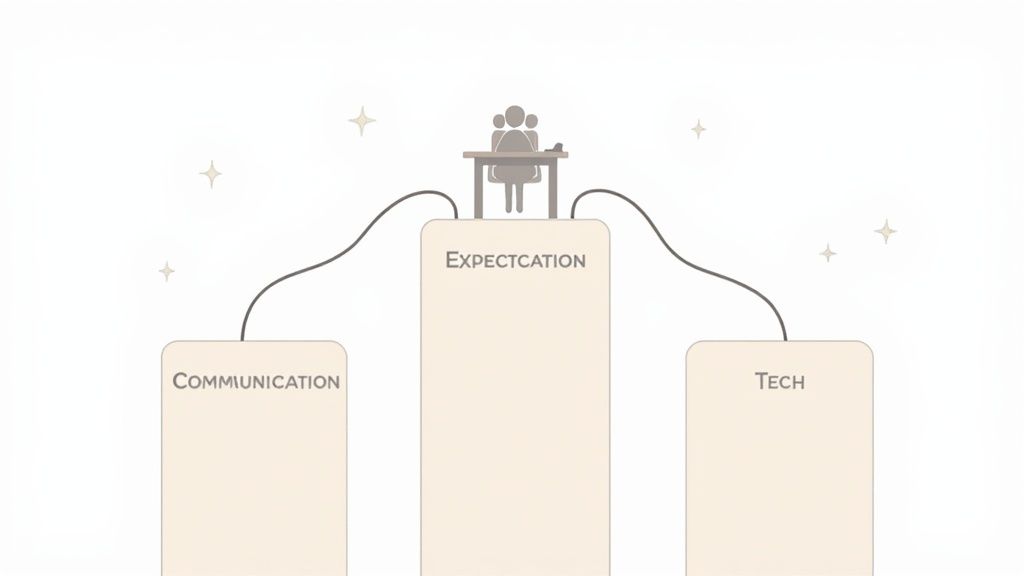
To get remote team management right, you have to start with a solid, intentional foundation. It all boils down to three core pillars: deliberate communication, crystal-clear expectations, and the right tech stack. Think of this framework as the operating system for your team—it’s what allows trust, accountability, and high performance to flourish right from the get-go.
Building the Foundation for Remote Success
Shifting to remote work—or just making your current setup better—isn't about trying to copy-paste your office routines into a virtual space. It just doesn't work. True success comes from a thoughtful, structured approach that tackles the unique challenges of having a distributed team.
Without a deliberate plan, it's easy for teams to drift into silos, tangled up in miscommunication and fuzzy priorities. The goal is to build an environment where everyone understands the mission, their role in it, and how to work together effectively, no matter where they're logging in from. The first step? Document everything.
Establishing the Core Pillars
Your foundation is only as strong as the pillars you build it on. These aren't just buzzwords; they are the practical, everyday rules of engagement for your entire team.
-
Pillar 1: Deliberate Communication: This is all about deciding which tool to use for which conversation. For instance, you might use Slack for quick, informal questions, your project management tool for task-specific updates, and email for formal, company-wide announcements. This simple strategy prevents notification fatigue and stops important information from getting lost in the noise.
-
Pillar 2: Crystal-Clear Expectations: This pillar covers everything from performance metrics and project deadlines to core work hours. When you document expectations, you eliminate ambiguity. It empowers your team with the autonomy to manage their own schedules while still hitting their key objectives.
-
Pillar 3: A Well-Chosen Tech Stack: The right technology should make work easier, not add another layer of friction. Your tools for project management, communication, and collaboration need to be intuitive and integrated, creating a single source of truth for all work-related activities.
This structured approach really pays off. In fact, remote work has been linked to a 35% to 40% increase in employee productivity. This is often because people have fewer distractions and more time for deep, focused work.
A well-defined remote framework isn't about control; it's about clarity. When people know the 'what,' 'why,' and 'how,' they can focus their energy on doing great work instead of navigating confusion.
Your First Actionable Steps
Getting started doesn't have to be a massive project. Just focus on a few high-impact actions to build some immediate momentum and create a stable environment for your team.
For a quick reference, here's a starter framework you can adapt.
Remote Team Management Starter Framework
| Pillar | Key Objective | First Actionable Steps |
|---|---|---|
| Communication | Create clear channels to reduce noise and ensure messages are received. | 1. Define what tool is used for what (e.g., Slack for quick chats, Asana for tasks). 2. Set response time expectations (e.g., within 4 business hours). |
| Expectations | Remove ambiguity around performance, availability, and responsibilities. | 1. Draft a simple remote work policy covering core hours and availability. 2. Document key performance indicators (KPIs) for each role. |
| Tech Stack | Provide a seamless, integrated set of tools that supports workflows. | 1. Audit current tools and eliminate redundancies. 2. Designate a primary project management tool as the "single source of truth." |
This table provides a simple roadmap to get the essentials in place.
First, draft a straightforward remote work policy. This document should be the go-to resource for your team, outlining communication protocols, expected response times, and guidelines for using company software. Keep it practical and to the point.
Next, take a hard look at your current tech stack. Are your tools actually helping, or are they causing confusion? Consolidate where you can, making sure your main project management platform serves as the central hub for all work. Honing your team's synergy is essential, and for any manager, mastering collaboration in project management is a game-changing skill.
Finally, schedule a team meeting to walk everyone through these foundational pieces. Use the time to explain the "why" behind each decision and get their feedback. This fosters buy-in and turns your team into active participants in building a remote culture that works for everyone. By focusing on these initial steps, you create the structure your team needs to not just function, but to truly excel.
Hiring and Onboarding Your Global Team

Here's a truth I've learned from years of building distributed teams: successfully managing a remote team doesn't start on a new hire's first day. It starts the moment you sit down to write the job description.
Your entire hiring and onboarding process has to be built from the ground up for a remote-first world. Getting the right people on the bus is everything. When you nail this part, you're not just filling a role; you're setting the foundation for a team that can run itself.
Attracting the Right Remote Talent
Your first challenge is crafting a job description that resonates with the kind of person who thrives without a manager hovering over their shoulder. It's less about a laundry list of responsibilities and more about signaling the culture and the mindset you're looking for.
Focus on the traits that really matter for remote success:
- Proactive Communication: You need people who are masters of the written word and who aren't afraid to over-communicate. Make it clear you expect clarity and detail.
- Self-Discipline and Autonomy: Use language that attracts self-starters. You want people who can take a project and run with it, not wait for instructions.
- Problem-Solving Skills: Emphasize that you empower your team to tackle challenges on their own first. This fosters a culture of ownership, not dependency.
When you frame the role this way, you naturally attract candidates who are wired for remote work. It also gently filters out those who need the structure of an office to stay on track.
This isn't a niche strategy anymore. A recent survey of 3,650 HR and business leaders found that over 50% of companies are planning to ramp up their international hiring this year. Smart organizations are tapping into global talent pools to find the best skills, wherever they are.
Vetting Candidates for Remote Readiness
Virtual interviews are a completely different ballgame than face-to-face meetings. Your goal is to dig deeper than technical skills and uncover a candidate's genuine ability to excel in a remote setup.
One of my go-to techniques is using scenario-based questions that mimic real remote work challenges.
Forget asking, "Are you a good problem-solver?" Instead, try: "Tell me about a time you hit a roadblock on a project and couldn't get an immediate answer from your manager. What did you do?" Their answer will tell you everything you need to know about their initiative.
If you really want to be sure, consider a paid project trial. It's the ultimate litmus test. Give them a small, real-world task. You'll see exactly how they communicate, manage their time, and deliver work before you make a full-time offer. It's a low-risk way to get concrete proof of their capabilities.
Designing a World-Class Remote Onboarding Experience
Let's be blunt: onboarding is where most remote teams fail. It's your single best chance to make a new hire feel like they belong. A messy, impersonal onboarding experience breeds isolation and disengagement that's incredibly hard to fix later.
A great remote onboarding is structured, personal, and meticulously planned—from day one all the way to day 90. For a deep dive, check out this comprehensive onboarding remote employees guide.
Your checklist should be rock-solid. Here's what's non-negotiable:
- Seamless Equipment Setup: Ship their laptop, monitor, and any other gear so it arrives before their start date. Include a dead-simple setup guide. Their first experience shouldn't be a frustrating call to IT.
- A Structured "First Week" Plan: Don't leave them guessing. Map out their first five days with a clear schedule. Include intro meetings, tool training sessions, and a few small, achievable tasks to help them score an early win.
- Facilitating Meaningful Introductions: A generic welcome email isn't enough. Assign them an "onboarding buddy" for all the informal questions they're afraid to ask. Schedule a round of short, one-on-one virtual coffee chats with everyone on their immediate team.
These steps turn onboarding from a logistical headache into a powerful tool for cultural integration. For even more detailed strategies, we've put together our own guide on how to onboard remote employees. When you invest in this process, you make sure your new hire feels welcomed, prepared, and connected from their very first login.
Designing Communication Rhythms That Work
When you're running a remote team, communication isn't just about passing along information—it's the very pulse that keeps everyone in sync. If you’ve managed remote teams for any length of time, you learn fast that how you communicate is often more critical than what you're communicating. You don't have the natural cadence of an office, so you have to build it yourself.
This isn't about scheduling more meetings or drowning your team in notifications. It's about creating a documented communication playbook that cuts through the noise. The end goal is a system where everyone knows exactly where to find information and how to share it, freeing them up for deep, focused work without that nagging fear of missing something important.
From Ad-Hoc to Intentional Communication
The biggest trap for new remote managers is letting communication just… happen. An urgent question gets buried in a long email chain. A key decision is made in a random chat channel, and suddenly no one's sure what the real priority is. That kind of ambiguity is a productivity nightmare.
The fix is to be intentional. Assign a clear, single purpose to every communication tool you use. This one simple act brings immediate clarity to your team's day-to-day.
- Urgent, Quick Questions? That’s what an instant messaging tool like Slack is for. These platforms are built for rapid-fire, informal chats that need a fast answer.
- Project-Specific Updates? All task-related talk should live inside your project management tool, whether it's Asana or Trello. This creates a permanent, searchable log tied directly to the work itself.
- Deep, Strategic Discussions? For these, schedule a video call on a platform like Zoom. Things like complex problem-solving, brainstorming, and one-on-one feedback just work better when you can see each other's faces.
- Formal Announcements? Stick to email for company-wide updates or sending official documents. Email signals importance and gives you a formal record that’s easy to file away.
By creating these "lanes" for conversation, you cut down on notification fatigue and help your team put their attention where it actually matters.
Mastering Asynchronous Workflows
If your team is scattered across different time zones, forcing everyone into real-time (synchronous) communication is a fast track to burnout. The secret to managing a global remote team is leaning hard into asynchronous workflows. This is a fancy way of saying that progress shouldn't stop just because someone is offline.
This means you have to fundamentally change how you document work. Forget relying on a quick call to explain a task—you need to provide all the context upfront, in writing.
A truly great asynchronous task description includes the 'what,' the 'why,' the deadline, and a crystal-clear definition of 'done.' That level of detail empowers your team to grab their work and run with it, no matter the time of day, crushing the bottlenecks that time differences create.
Think about it: a project manager in New York can assign a task with detailed instructions at the end of her day. A developer in Manila can pick it up, complete the work while she's sleeping, and leave a full update for her to review in the morning. Progress literally happens around the clock because the system isn't built on real-time handoffs.
Establishing a Predictable Meeting Cadence
While async should be your default setting, you still need real-time meetings for connection, alignment, and tackling those really thorny problems. The trick is to make them purposeful, predictable, and respectful of everyone's calendar.
Here’s a sample weekly rhythm that balances connection with much-needed focus time:
| Meeting Type | Frequency | Purpose |
|---|---|---|
| Team-Wide Sync | Monday (30 mins) | Align on weekly priorities and celebrate the wins from last week. Keep it high-level and motivational. |
| Project Stand-ups | Daily (15 mins) | Quick, focused check-ins for specific project teams to unblock issues. This is not a status report meeting. |
| One-on-Ones | Weekly/Bi-Weekly (30 mins) | Reserved for individual coaching, feedback, and genuine connection. This is the employee's time, not the manager's. |
| Deep Dive Sessions | As Needed | Longer, scheduled meetings for brainstorming, strategic planning, or wrestling with a complex challenge. |
A structured cadence like this creates a predictable flow for the week. Everyone on the team knows when they need to be available for collaboration and can fiercely protect the rest of their calendar for deep work. It’s all about building a system that drives momentum, provides clarity, and respects the boundaries people need to do their best work remotely.
Measuring What Matters for Remote Productivity
When your team is remote, the old habit of measuring productivity by "butts in seats" isn't just outdated—it’s actively harmful. Real accountability in a remote setup isn't about tracking hours; it's about measuring outcomes. Your goal should be to build a high-trust environment where performance is transparent, not to create a system of digital surveillance.
This means consciously moving away from micromanagement and toward a culture of autonomy and ownership. When your team has clear, results-oriented goals, they feel empowered to manage their own time and produce their best work. This approach naturally encourages proactive problem-solving and gives everyone a sense of purpose tied directly to the company's success.
Focusing on Outcomes Over Activity
The single most effective way to manage remote performance is to use goal-setting frameworks that put results first. These systems give everyone a shared, unambiguous definition of what success looks like for every role and project.
- Objectives and Key Results (OKRs): This is a fantastic framework for connecting individual contributions to the big picture. An Objective is a high-level goal (like "Improve Customer Onboarding Experience"), while Key Results are the specific, measurable milestones that prove you got there (like "Reduce average onboarding time by 20%").
- Key Performance Indicators (KPIs): These are the vital signs of your team's ongoing performance. For a marketing team, a KPI might be to "Generate 500 new leads per month." For a support team, it could be to "Maintain a 95% customer satisfaction score."
With frameworks like these, conversations about performance stop being subjective and start being data-driven. Instead of asking, "What did you work on today?" you can ask, "How are we progressing toward our Key Results?"
Using Tools for Transparency, Not Surveillance
Productivity tools, especially time trackers, sometimes get a bad rap. But when you frame them correctly, they become powerful instruments for optimization, not oversight. The trick is to use them to get visibility into workloads, spot process bottlenecks, and make sure projects are staffed properly.
For instance, if a project is consistently taking longer than estimated, that data isn't a reason to point fingers. It's a signal to get curious. Is the scope bigger than we thought? Are there hidden roadblocks slowing things down? Does the team need more support? This reframes monitoring as a collaborative tool for making our processes better. If you need some ideas, you can find detailed strategies on how to track remote employee productivity in a way that actually builds trust.
The real value of performance data is in the conversations it starts. It helps you ask better questions and solve problems before they derail a project, creating a culture where people feel supported, not watched.
Different projects and roles require different ways of looking at performance. There isn't a one-size-fits-all solution, so it's helpful to understand the pros and cons of each approach.
Remote Performance Management Approaches
| Method | Focus | Best For | Potential Pitfall |
|---|---|---|---|
| Outcome-Based (OKRs/KPIs) | Results and impact on business goals. | Roles with clear, measurable outputs (e.g., sales, marketing, engineering). | Can be difficult to apply to roles with less tangible outputs (e.g., R&D, design). |
| Project-Based Tracking | Completion of tasks, milestones, and deadlines. | Project-driven teams (e.g., software development, creative agencies). | Can encourage "busy work" if not tied to larger strategic goals. |
| Activity Monitoring | Tracking app/website usage, keystrokes. | Highly regulated industries or roles handling sensitive data. | Easily perceived as surveillance; can damage morale and trust if not handled carefully. |
| 360-Degree Feedback | Peer, manager, and self-assessment of performance and collaboration. | Teams where collaboration and soft skills are critical for success. | Can become a popularity contest if not structured with objective criteria. |
Choosing the right blend of these methods depends entirely on your team's culture, the nature of their work, and your company's goals. Often, a combination works best.
The broader shift toward flexible work models confirms this evolving mindset. Recent data shows that hybrid job postings surged from 15% to nearly 24% of new listings, while fully in-office roles have dropped off. This isn't a fad; it's an institutional pivot.
This simple diagram shows how a modern remote tech stack should work, with tools like Slack for quick chats, Asana for managing projects, and Zoom for face-to-face meetings.
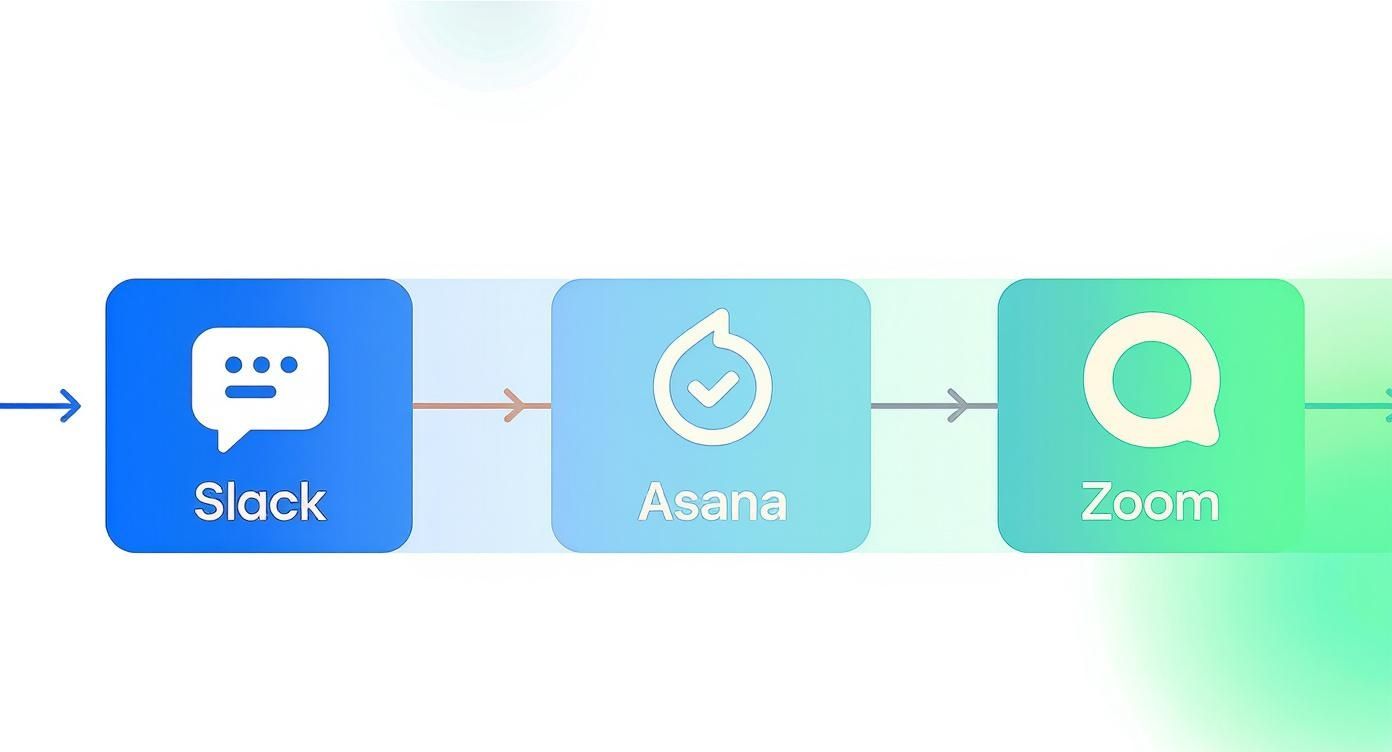
The key is assigning a clear purpose to each tool to create a workflow that makes sense to everyone. At the end of the day, managing a remote team effectively is all about trust and clarity. When you focus on outcomes, use data to make things better, and give your team the freedom to succeed, you build a resilient, high-performing group that can thrive from anywhere.
Nurturing Culture and Connection Across Distances

A vibrant company culture isn't something that lives within office walls. It’s the sum of shared experiences, inside jokes, and genuine connections between people. The problem is, when you manage a remote team, you lose all those spontaneous "water cooler" moments. That’s why you have to be far more intentional about creating opportunities for your team to bond.
This isn’t about forcing fun with awkward virtual happy hours. It’s about building a digital environment where personal connections can actually form organically. Get this right, and your team will be more resilient, collaborative, and engaged. The key is to create low-pressure, consistent rituals that people genuinely look forward to.
Building Bridges Beyond Projects
To foster real bonds, you need to create dedicated spaces where the only agenda item is to connect as people. This can be as simple as setting up specific chat channels for non-work interests.
A #pets channel, for example, will almost instantly fill up with photos of dogs and cats. A #hobbies channel might spark conversations about anything from woodworking to video games. These small touchpoints are surprisingly powerful; they help team members see each other as well-rounded individuals, not just names on a screen.
Virtual coffee chats are another great tool. Try using an app that randomly pairs two or three team members for a 15-minute, non-work video call each week. It's a fantastic way to break down silos and build surprising friendships across departments.
Celebrating Wins and Recognizing Effort
In a remote setting, it’s painfully easy for great work to go unnoticed. This is why a proactive recognition program isn't just nice to have—it's essential for morale. It doesn't need to be complicated; it's the consistency that really counts.
Here are a few simple but effective ideas:
- Weekly Wins Shout-Outs: Dedicate the first five minutes of your weekly team meeting to celebrating wins, both personal and professional. It kicks off the week on a positive note and gives everyone visibility into what’s being accomplished.
- Peer-to-Peer Recognition: Use a dedicated chat channel where anyone can publicly thank a colleague for their help. This fosters a culture of gratitude and mutual support that pays dividends.
- Celebrating Milestones: Make a point to acknowledge work anniversaries and birthdays. Even a simple, coordinated message from the team makes people feel seen and valued.
A culture of recognition has an outsized impact on remote teams. When people feel their contributions are appreciated, they are more likely to go the extra mile, support their colleagues, and feel a stronger connection to the company's mission.
If you’re looking to go beyond the basics, there are tons of options out there. Our guide to virtual team building activities is packed with creative ideas, from online escape rooms to collaborative art projects, that can help your team connect in new and exciting ways.
Prioritizing Wellbeing and Preventing Isolation
One of the biggest challenges when you manage remote teams is the risk of employee burnout and isolation. Without the clear separation between home and office, the lines can easily blur, leading to stress and disengagement. As a manager, you play a massive role in modeling and promoting a healthy work-life integration.
Start by having open conversations about mental health and wellbeing in your one-on-ones. Don't just ask "how are you?" Go deeper with questions like, "What does your work-life balance feel like this week?" This opens the door for much more honest conversations.
Encourage your team to set clear boundaries, like defining their working hours and actually taking proper breaks. Your own behavior sets the standard here. If you're firing off emails at 10 PM, your team will feel pressured to do the same. By actively prioritizing wellbeing, you build a supportive, sustainable culture where your team can thrive without sacrificing their health.
Got Questions About Managing Remote Teams? We've Got Answers.
Leading a remote team comes with its own unique set of challenges. Even with the best-laid plans, you're bound to run into situations that leave you scratching your head. This is where we tackle the most common questions managers ask when they're in the trenches.
Think of this as your go-to guide for those "what do I do now?" moments. We're building on the strategies we've already covered, giving you straightforward answers to help you navigate the day-to-day reality of leading a distributed team.
What's the Single Biggest Challenge of Managing a Remote Team?
Hands down, it's maintaining clear, consistent communication and building a genuine sense of team cohesion. When you lose the spontaneous office chats and shared physical space, you have to be incredibly intentional about creating connections. You can't just let it happen.
This means you need a rock-solid communication plan. Don't leave it to chance. Designate specific channels for specific purposes—maybe Slack for quick questions, a project tool for updates, and email for the big announcements.
The goal is to proactively stop information silos before they even start. It also means committing to regular one-on-ones and team meetings to make sure everyone feels seen, heard, and aligned on what you're all working toward.
How Do You Actually Build Trust with Remote Employees?
Building trust when you're not in the same room boils down to three things: transparency, autonomy, and consistency. The starting point? Trust your people by default. Focus on the quality of their work and the results they deliver, not whether their Slack icon is green.
Give them the autonomy to manage their own schedules and tasks. This single action speaks volumes, showing you have confidence in their ability to get the job done.
Trust is the currency of a high-performing remote team. When you give it freely through autonomy and transparency, you create a psychologically safe environment where people feel respected, valued, and empowered to do their best work.
Beyond that, be radically transparent about company goals, current challenges, and the "why" behind your decisions. And finally, be consistent. Do what you say you're going to do, be available when they need you, and apply your expectations fairly to everyone on the team.
What Are the Must-Have Tools for a Remote Team?
While the specific brands might change depending on your needs, every high-functioning remote team relies on the same core categories of tools. Your tech stack is the backbone of your virtual office.
Make sure you have these four areas covered:
- A Communication Hub: This is your digital water cooler and meeting room all in one. A platform like Slack or Microsoft Teams is essential for real-time chat, quick check-ins, and just building rapport.
- Project Management Software: You need one place where everyone can see what's happening. Tools like Asana, Trello, or Jira are critical for tracking tasks, deadlines, and progress without having to ask.
- Video Conferencing Software: Seeing faces is non-negotiable. A reliable tool like Zoom or Google Meet is a must for team meetings, one-on-ones, and even virtual coffee breaks.
- Cloud Storage and Collaboration: Your team needs a central library for documents. A system like Google Workspace or Microsoft 365 lets everyone create, share, and edit files seamlessly.
How Can I Manage Employees in Different Time Zones Effectively?
Managing a team spread across the globe means you have to embrace asynchronous communication. It's a total mindset shift. You also have to be smart about the few hours of overlap you do have.
First, identify a "core" window of just two to four hours when everyone can reasonably be expected to be online. Protect this time fiercely for any critical meetings or real-time collaboration that absolutely has to happen.
Everything else should be done asynchronously. This means writing incredibly detailed project briefs, recording video updates instead of calling another meeting, and keeping your communication channels impeccably organized. The goal is to build a system where work never gets blocked just because someone is on the other side of the world. It respects everyone's time and keeps the ball moving forward.
Managing a high-performing remote team is a lot simpler when you have the right data. DeskCove gives you the clarity to understand productivity, fine-tune your workflows, and build a culture of trust and accountability. Stop guessing and start making data-driven decisions that help your team thrive, no matter where they are.
Discover how DeskCove can improve your remote team's efficiency today.