How to Increase Work Efficiency: Tips for Smarter Productivity

If you want to get more done, the answer isn’t always to just work more. The real key is shifting your focus from simply being busy to achieving better outcomes with less wasted effort. It’s about working smarter by getting a handle on your time, using the right tools, and setting up your workspace to help you concentrate.
What Work Efficiency Actually Means Today
For too long, "efficiency" was just another word for jam-packed schedules and working non-stop. That old-school approach almost always leads to burnout, not better results. True work efficiency in today's world is all about strategic impact—producing high-quality work without the constant stress and frantic multitasking.
This means you have to stop guessing and start being more intentional. You need to understand where your time and energy make the biggest splash and then be ruthless about cutting out everything else. The good news is, the core ideas behind this are surprisingly simple but incredibly powerful.
To get a better handle on how to structure your efforts, it helps to break down the key pillars of efficiency.
| Strategy Pillar | Key Action | Primary Benefit |
|---|---|---|
| Time Mastery | Actively control your schedule and block out distractions. | Ensures your best hours are spent on high-impact tasks. |
| Smart Technology | Use tools to automate repetitive work and gather insights. | Frees up mental energy for creative and strategic thinking. |
| Optimized Environment | Design your physical and digital space for deep focus. | Reduces friction and makes it easier to stay in a flow state. |
By focusing on these three areas, you can build a workflow that consistently directs your energy where it matters most.
The Modern Pillars of Efficiency
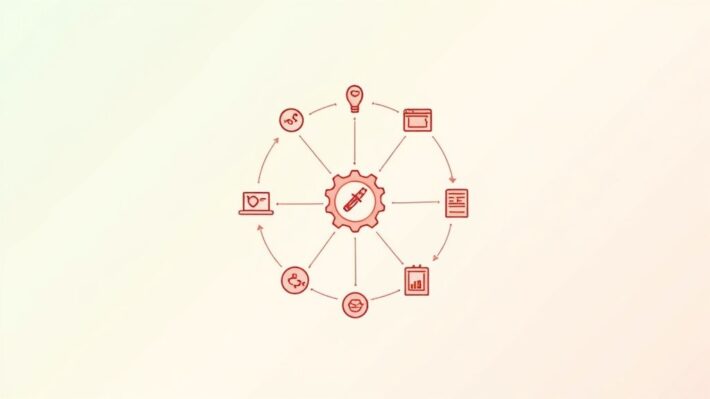
Learning how to increase work efficiency really boils down to making meaningful improvements in three interconnected areas.
-
Mastering Your Time: This is about taking back control of your day. It means figuring out when you're most productive, building a schedule that protects that time, and putting up shields against the constant barrage of distractions.
-
Leveraging Smart Technology: The right software can be a massive force multiplier. Instead of being another source of interruptions, good tools automate the boring stuff and give you the data you need to make smarter decisions.
-
Optimizing Your Environment: Your physical and mental space has a huge effect on your ability to concentrate. A well-designed environment, whether at home or in the office, minimizes friction and supports the kind of deep focus needed for great work.
The goal is to create a workflow where your effort is consistently applied to what matters most. By understanding the true scope of your daily tasks, you can learn how to improve operational efficiency and boost your overall success.
This shift isn't just a nice-to-have; it's becoming critical. Recent data shows a major challenge brewing in the global workforce. In 2024, global work productivity growth slowed to a meager 0.4%. A huge factor in this is employee engagement, which sits at just 21% globally and contributes to an estimated $438 billion in lost productivity. You can dig deeper into these employee productivity statistics to see the full picture.
By adopting the strategies we're about to cover, you can move from a state of being constantly busy to one where you are genuinely productive and effective.
Master Your Time and Eliminate Distractions
If you really want to boost your work efficiency, the first step is to become the master of your own schedule. This isn't about vague goals like "getting more organized." It's about taking deliberate, concrete steps to guard your most valuable resource: your time. It all starts with accepting that not all hours in the day are created equal.
The bedrock of solid time management is figuring out your peak performance windows and then building your day around them. Simple techniques like the Pomodoro Technique—working in focused 25-minute sprints with short breaks in between—are fantastic for keeping your energy high and avoiding burnout on detailed tasks.
Structuring Your Day for Deep Work
For a more strategic approach, I'm a big fan of time blocking. This is where you proactively schedule blocks of time for specific, high-priority tasks, essentially making appointments with your own goals. A project manager, for instance, might block out 9:00 AM to 11:00 AM every single day for "Strategic Planning" and treat that time as non-negotiable.
This simple shift turns your calendar from a reactive list of meetings into a proactive roadmap for getting things done. It forces you to be intentional about where your focus goes, protecting your most valuable thinking time from the endless stream of small requests that can easily torpedo a productive day.
The data backs this up. It turns out the average workday has actually shrunk by 36 minutes since remote work became more common, but productivity has ticked up by 2%. That works out to about 6 hours and 17 minutes of genuinely productive time each day. But the challenges haven't gone away; workers still get interrupted about every three minutes and need a staggering 23 minutes just to get back on track.
Identifying and Neutralizing Distractions
You can't manage your time if you don't get a handle on the constant barrage of distractions. These interruptions are the sworn enemy of deep work and a huge drain on your efficiency. Pinpointing them is the first move toward winning back your focus.
The infographic below lays out a straightforward process for auditing your day and plugging these time leaks for good.
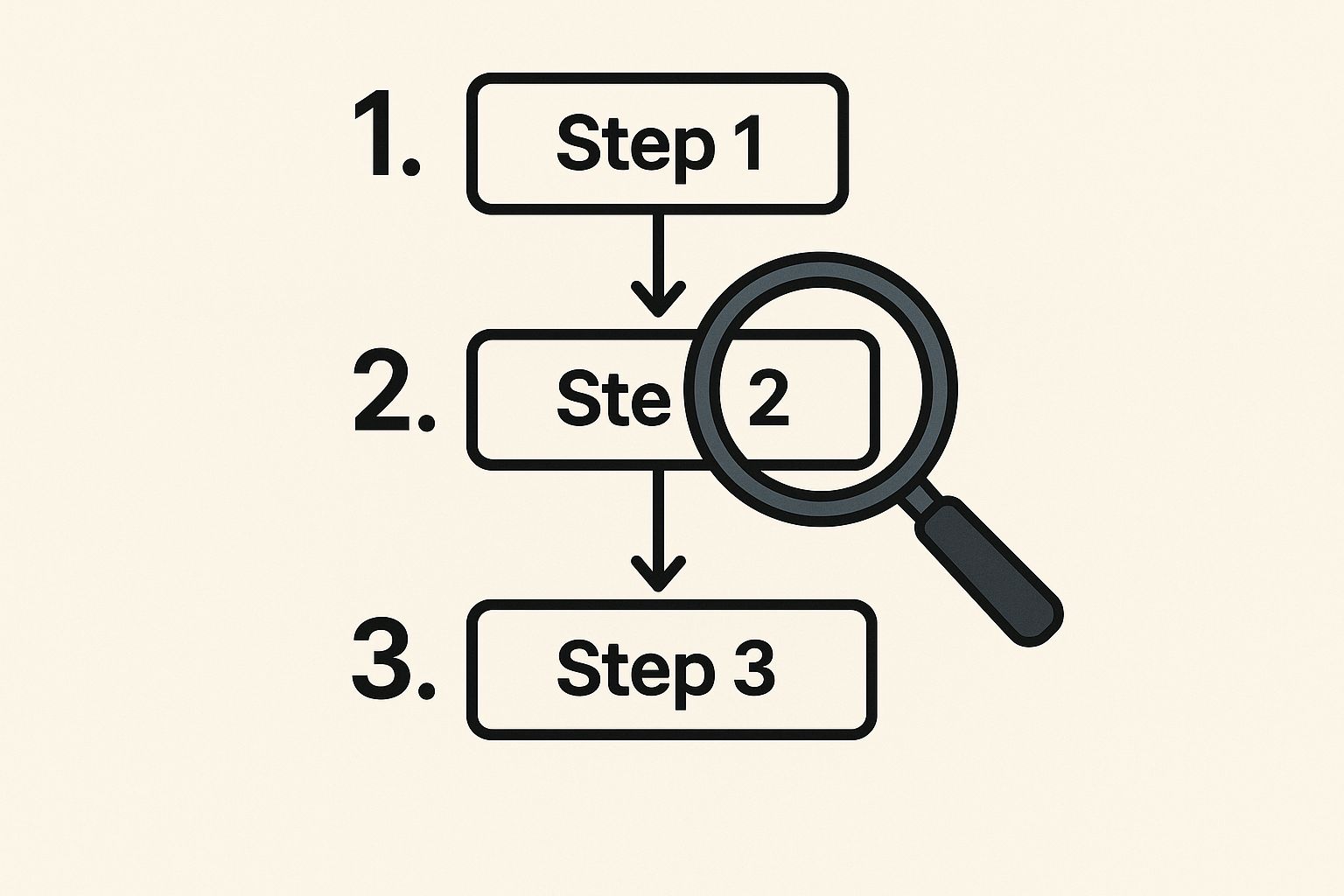
The real takeaway here is that awareness is half the battle. Once you use actual data to see where your time is going, you can take targeted action to fix the problems.
Most of these time-wasters fall into two buckets:
- Digital Distractions: These are the constant pings from email, Slack notifications, and social media alerts. Each one yanks your attention away from your work, and the "switching cost" as your brain tries to re-engage is huge.
- Physical Interruptions: Think unexpected "quick questions" from colleagues, pointless meetings that could have been an email, or just a noisy environment. Even with good intentions, they shatter your concentration and disrupt your flow.
The most powerful way to boost efficiency is to create an environment where focus is the default setting. That means killing non-essential notifications, setting your status to "do not disturb," and clearly communicating your availability to your team.
For a deeper look at this, check out our guide on tackling the most common distractions at work. When you systematically identify and neutralize these interruptions, you clear the runway for long stretches of high-impact work—and that's the secret to real productivity.
Leverage Technology for Peak Performance
In our drive to be more efficient at work, technology can either be our greatest ally or our biggest distraction. The secret is to be deliberate, picking tools that actually help your workflow instead of shattering your focus. A well-chosen tech stack can handle the boring stuff, make communication crystal clear, and give you the data you need to work smarter, not just harder.
The best place to start is by looking at your core processes. Are you drowning in email chains? Project management software can turn that chaos into clean, actionable workflows. These tools become a single source of truth, so everyone knows who's doing what and when it's due. That alone can cut out countless "just checking in" meetings.

It’s the same story with communication platforms like Slack or Microsoft Teams. When you use them right, they can eliminate a ton of unnecessary meetings. The key is setting up clear channels for different topics, pulling quick questions and updates out of your inbox and into a format that’s built for speed.
Embrace Automation to Reclaim Your Time
One of the most powerful ways to get more efficient is to let software do the heavy lifting. Repetitive, manual tasks don't just eat up your time; they drain the mental energy you need for creative thinking and big-picture strategy. Automation tools can connect the apps you use every day to create automated workflows that just run in the background.
Think about what that looks like in the real world:
- Automate Reporting: Instead of spending an hour every Monday pulling numbers from different places, you can set up a workflow that automatically dumps all that data into a Google Sheet or a live dashboard.
- Streamline Client Onboarding: Imagine a new client signs on. Instantly, an automation can fire off a welcome email, create their project folder, and assign the initial setup tasks to your team. No manual steps needed.
- Manage Your Inbox: You can use simple rules and filters to automatically sort incoming emails. High-priority messages get flagged, newsletters get filed away, and routine notifications get archived. Your inbox becomes a to-do list, not a dumping ground.
By automating these low-value activities, you’re not just saving a few minutes here and there. You’re carving out significant blocks of time for deep, focused work. This isn't about replacing people; it's about freeing them up to tackle the complex problems that actually drive results.
The Growing Role of Artificial Intelligence
Lately, artificial intelligence (AI) has become a massive factor in personal and team productivity. If you're serious about peak performance, it's worth exploring some of the incredible AI-powered productivity tools available now. These tools can help with everything from research and drafting documents to analyzing data and summarizing long meetings.
The results speak for themselves. Companies that lean heavily into AI report 72% higher productivity and a 59% increase in job satisfaction. That's because AI handles the grunt work, letting people focus on the more strategic, high-level parts of their jobs. Ultimately, the right technology should feel less like a tool and more like a trusted assistant, seamlessly backing you up so you can perform at your best every single day.
Optimize Your Environment and Mindset
Let's be honest: increasing your work efficiency isn't just about time management hacks and cool apps. The space you work in—and the mental state you bring to it—plays a massive role in your ability to focus and do great work. If your environment is working against you, you're constantly fighting an uphill battle.
Your physical workspace is the easiest place to start. Whether you’re at home or in an office, the goal is to reduce friction. An ergonomic setup with a supportive chair and a properly positioned monitor isn't a luxury; it's a critical tool for preventing the physical fatigue that kills focus and leads to burnout.
Beyond ergonomics, think about decluttering. I’ve found that a messy desk creates a sense of mental chaos, pulling my attention in a dozen different directions. Taking just five minutes at the end of each day to clear your space can have a surprisingly big impact on how you start the next morning.
Cultivating a Mindset for Focus
Your physical environment sets the stage, but it's your mindset that directs the show. True efficiency is impossible without the right mental framework. This means moving from a reactive state—just responding to whatever pops up—to a proactive one where you intentionally guide your focus.
One of the most powerful mental shifts is adopting a growth mindset. Instead of seeing challenges as roadblocks, you start to view them as opportunities to learn and improve. This simple reframing turns difficult tasks from something to dread into something that makes you better, which is a powerful motivator.
Mindfulness is another crucial practice. It’s not about meditating for hours on end. It’s about training your brain to notice when it's wandering and gently bringing it back to the task at hand. Think of it like a muscle—the more you practice, the stronger your focus becomes.
The Importance of Setting Boundaries
In a world where work can follow you anywhere, setting firm boundaries is non-negotiable for long-term efficiency. This is especially true for remote and hybrid teams. Without clear start and end times, the workday can easily bleed into your personal life, leading straight to exhaustion.
Protecting your time isn't just about managing your calendar; it's about protecting your energy. When you allow yourself to fully disconnect, you return to your work refreshed and with a much greater capacity for deep, focused effort.
This practice is what allows you to maintain high performance without burning out. Knowing when to step away is just as important as knowing when to dig in. A huge part of this is understanding your own work patterns and creating a schedule that aligns with your natural energy cycles. You can learn more about how to boost productivity with a flexibility schedule in your workplace in our detailed guide. By creating this structure, you give yourself the best possible chance to succeed day after day.
Use Data to Uncover Your Inefficiencies
You can't improve what you don't measure. It’s a simple truth, but it’s the absolute foundation for getting serious about your work efficiency. Instead of guessing where things are going wrong, a data-driven approach shows you exactly where your time and effort are really going.
This isn't about micromanagement or tracking every last second just for the sake of it. It's about gaining clarity. The goal is to turn all that raw data into insights you can actually use to make smarter, evidence-based decisions about how you work.
Analyzing Your Time and Application Usage
Your first port of call should be your time-tracking reports. These reports are a goldmine, showing you not just how long you work, but what you’re working on. You can quickly spot your most productive hours and pinpoint tasks that consistently drag on longer than they should—a sure sign of a bottleneck.
Next, dive into your application and website usage logs. This is often an eye-opening experience. A marketer, for instance, might discover they spend three hours a day on social media, but only one of those hours is spent on high-impact campaign work. The other two? Lost to passive scrolling. That kind of data gives you the hard proof you need to start changing habits.
To really nail this, it's crucial to understand how to use data, like key user retention metrics, to connect your daily activities to tangible business outcomes.
Turning Data into Actionable Improvements
Once you have the data in front of you, you can start making targeted changes.
- Align Effort with Priorities: Look at your project logs. Is the bulk of your time going toward tasks that actually move the needle? If there’s a mismatch, it’s time to rethink your daily schedule.
- Spot Recurring Bottlenecks: If you notice a certain phase of a project always takes longer than planned, you’ve found a recurring problem. This could be anything from a broken process to a resource gap or just a need for better tools.
- Identify Digital Distractions: Your app usage data will be brutally honest about which websites and apps are your biggest time sinks. Use this info to set up website blockers or carve out specific, limited times for checking non-essential platforms.
Taking a proactive, data-driven approach transforms efficiency from a vague goal into a measurable outcome. It empowers you to stop guessing what’s wrong and start fixing it with precision.
This focus on measurement is reflected in broader economic trends. In the second quarter of 2025, productivity in the nonfarm business sector rose by 3.3%, showing measurable gains. However, inefficiencies persist, as productivity decreased in over half of manufacturing and mining industries in 2024. For more ways to translate these ideas into practice, explore our 8 proven tips to skyrocket worker efficiency at your business.
Common Questions About Work Efficiency
Even with the best strategies, you're bound to run into some common questions and roadblocks on the path to better efficiency. Let's tackle a few of the most frequent ones I hear. Getting these right is key to making any improvements stick.
How Can I Actually Be Efficient When Working From Home?
This is the big one, isn't it? When you're working from home, structure is your best friend. It all starts with creating a dedicated workspace. This isn't just about having a desk; it's about mentally separating your job from your personal life, which is crucial for focus.
Next, you have to set clear boundaries with anyone you live with. Let them know your work hours to keep interruptions to a minimum. A consistent daily routine—same start time, same breaks, same end time—does wonders for keeping you on track. Using a tool to see where your time really goes can be an eye-opener, helping you pinpoint your peak productivity hours and save your toughest tasks for then.
What Are the Biggest Mistakes People Make?
Hands down, the biggest mistake is multitasking. We've all been told it's a superpower, but the research is clear: it just fragments your attention, tanks the quality of your work, and slows you down in the long run. Focus on one thing at a time. Seriously.
Another classic error is skipping breaks. Trying to power through for hours on end is a direct path to burnout and brain fog. Those short, regular breaks aren't lazy; they're essential for recharging. And finally, avoid the "busywork" trap. Don't confuse being busy with being productive. Make sure what you're working on actually moves the needle on your most important goals.
The most pervasive myth about efficiency is that it means being constantly busy. In reality, it's about achieving the best possible outcome with the least amount of wasted effort. True efficiency often feels calmer and more controlled, not more frantic.
Can Technology Actually Make Me Less Efficient?
Oh, absolutely. Technology is the ultimate double-edged sword. It can be your greatest asset or your biggest time-sink. All those pings and notifications from email, Slack, and social media are focus-killers, pure and simple.
The trick is to be the master of your tools, not the other way around. Be ruthless about turning off non-essential notifications. Schedule specific blocks of time to check your messages instead of reacting to every buzz. Diving into your own application usage data can be incredibly revealing—you'll quickly see which apps are helping you and which are just derailing your day.
Ready to transform your team's productivity with data-driven insights? DeskCove provides the tools you need to understand workflows, eliminate distractions, and boost efficiency. Start your free trial today and see the difference clear, actionable data can make. Find out more at https://deskcove.com.