Overcoming Time Management Difficulties | Strategies That Work

If you're struggling with time management, it's easy to feel like it's some kind of personal failure. But here's the thing: it's not. What you're dealing with is a set of solvable problems that have more to do with modern work habits than any personal shortcoming. That feeling of being constantly busy but getting nothing done? It's a classic symptom, not a character flaw. The first real step toward getting your focus back is understanding what's really going on.
Why Your Time Management Difficulties Persist
Ever feel like you're in a constant battle with the clock? You walk into the day with a solid to-do list, but by noon, you're completely swamped, and the important stuff is still sitting there untouched. This isn't just you; it's a common story. Too many of us think of time management as a test of willpower, when it’s actually about managing a resource that can invisibly leak away.
Think of your workday like a bucket filled with a set number of hours. Every interruption, every moment you spend waffling on a decision, every minute wasted on a low-impact task—each one is a tiny hole in that bucket. A single drip doesn't seem like much, but hundreds of them over a day can leave you feeling drained and empty by quitting time. These time management difficulties stick around not because you're lazy, but because you haven't found the leaks yet.
Diagnosing the Leaks in Your Productivity
The path to a fix always starts with a good diagnosis. You can't solve a problem you don't fully understand. The trick is to stop blaming yourself and start analyzing your habits like a detective. So, what are the usual suspects draining your time?
- Constant Context Switching: Every time you jump from a task to your email and then to a chat message, you shatter your focus. It makes that deep, productive work nearly impossible to achieve.
- Vague Priorities: When you don't have a crystal-clear idea of what really matters, the urgent-but-unimportant tasks will always bully their way to the front of the line.
- The Myth of Multitasking: Despite what we tell ourselves, research has shown that juggling multiple things at once just makes us less efficient and more prone to mistakes.
- Unplanned Distractions: A "quick question" from a coworker or a single social media notification can derail your train of thought completely. You can learn more about these by exploring common distractions at work and how to fight back.
To get a clearer picture of what these challenges look like in the real world, let's break them down.
Common Time Management Challenges and Their Real-World Impact
This table lays out some of the most frequent time management issues and how they actually show up in your day-to-day grind.
| Challenge | Common Symptom | Primary Impact |
|---|---|---|
| Procrastination | Constantly pushing important tasks to "later." | Missed deadlines and increased stress. |
| Lack of Prioritization | Spending too much time on low-value activities. | Key goals and projects stall out. |
| Frequent Interruptions | Getting pulled away from work by notifications or colleagues. | Loss of focus and momentum. |
| Poor Planning | Starting the day without a clear plan or to-do list. | Reactive work instead of proactive progress. |
| Inability to Say "No" | Taking on too many commitments and tasks. | Overwhelm and burnout. |
Recognizing your own patterns in this table is the first step toward making a meaningful change.
The infographic below does a great job of showing how all these small, sneaky time-wasters add up, with your valuable hours just dripping away.
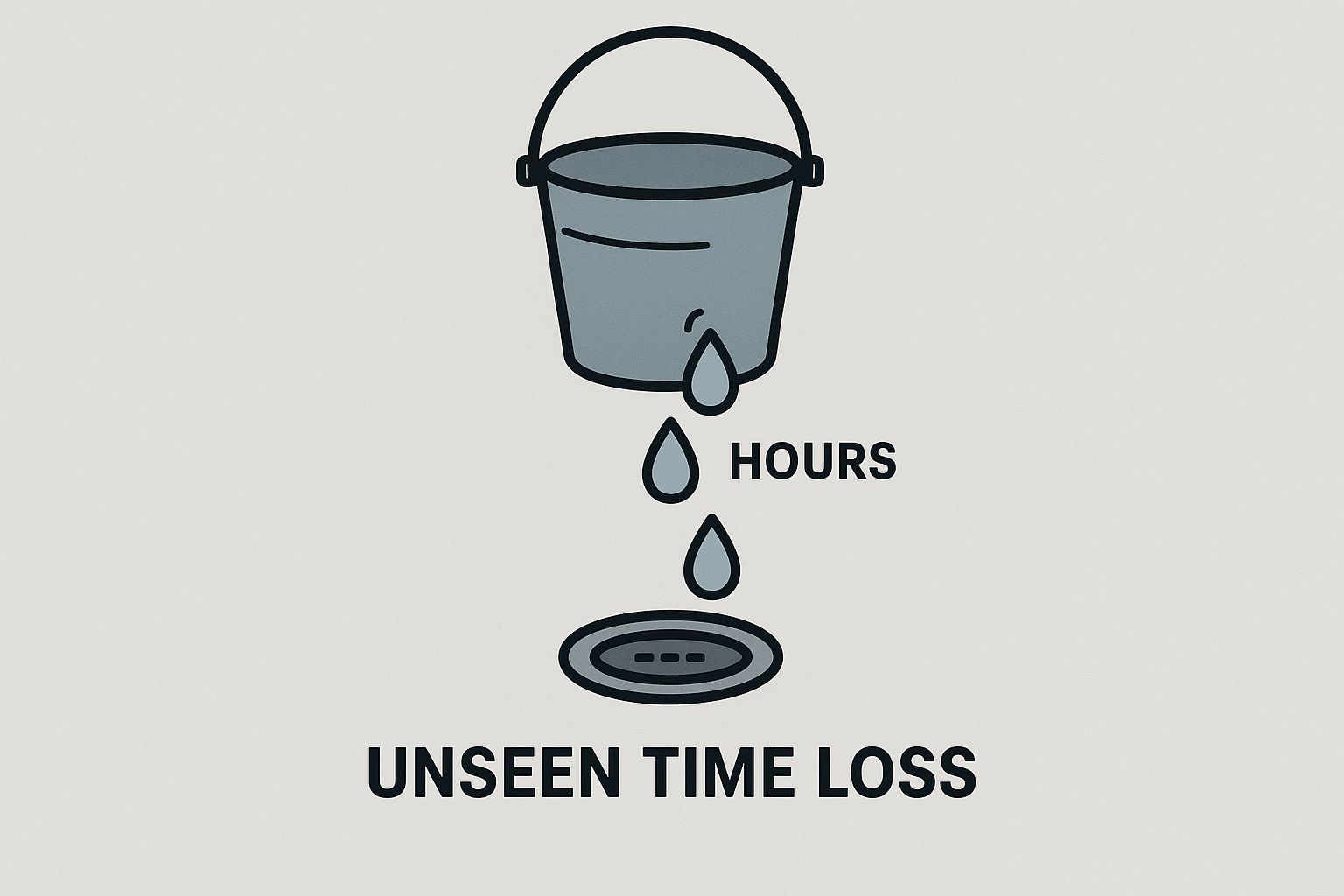
This visual really drives home the point: our biggest productivity losses usually come from a bunch of small, seemingly harmless habits, not one giant problem.
By identifying your specific "leaks," you can begin to plug them one by one. This approach transforms the overwhelming challenge of time management into a series of small, manageable steps.
This guide is here to give you that clear diagnosis. But more than that, it's going to arm you with a practical toolkit to fix these issues for good. We'll cover proven strategies and modern tools that will help you finally take back control of your day.
The Real Reasons You Struggle with Time
Does your daily fight with the clock feel like you're just treating symptoms? If you're tired of blaming "procrastination" for everything, you're onto something big. That's like putting a bandage on a broken arm—it doesn't fix the actual problem. The real culprits are often subtle psychological and environmental triggers that quietly wreck your best-laid plans.

Many of these triggers work just below the surface. They're the invisible currents pulling your focus away, draining your mental battery, and leaving you feeling stressed and behind. Once you understand these root causes, you can finally start solving the right problems.
The Myth of Multitasking
One of the biggest lies of modern work is that multitasking is a skill to be proud of. The hard truth is our brains are not wired to juggle multiple complex tasks at once. What we call multitasking is actually rapid context-switching, and it’s incredibly inefficient.
Think about trying to have three different conversations at the same time. You’d catch a few words from each but wouldn't really follow any of them. That's exactly what happens when you jump between writing a report, checking an email, and firing off a chat message. Every single switch forces your brain to hit the reset button, costing you precious time and mental energy.
Drained by Decision Fatigue
Every single choice you make, no matter how small, sips from a limited reserve of mental energy. This is called decision fatigue. When your day starts with deciding what to wear, what to eat, and which email to open first, you're already spending the mental cash you'll need for bigger decisions later.
By the afternoon, when a critical project choice lands on your desk, your brain is already running on fumes. This exhaustion often leads to sloppy decisions or, even worse, avoiding the choice entirely—which is a classic form of procrastination. The solution isn't more willpower; it's making fewer unimportant decisions.
An Environment Built for Distraction
Let's be honest, modern workspaces can feel like they're designed to break our concentration. One of the biggest obstacles to managing our time is the sheer volume of communication we have to deal with. Studies have found that knowledge workers spend up to 57% of their workday just on emails, chats, and meetings. That's nearly five hours a day not spent on core tasks.
This constant back-and-forth is a huge source of frustration, with 68% of employees saying they can’t focus on their main job because of all the interruptions. If you want to see the full scope of the problem, you can explore more time management statistics.
This "always-on" culture trains our brains to seek out distraction, not deep work. The relentless stream of notifications and pings creates an environment where our attention is constantly being pulled in a dozen different directions.
Constant digital interruptions do more than just waste a few minutes; they fundamentally rewire our ability to sustain focus, making deep, productive work feel nearly impossible.
Recognizing these forces—the multitasking myth, decision fatigue, and a distraction-heavy environment—is the first real step forward. By figuring out which of these culprits are driving your own cycle of inefficiency, you can stop feeling overwhelmed and start taking targeted, effective action.
The True Costs of Unmanaged Time
When time management breaks down, it’s not just a personal headache—it's a costly problem with consequences that ripple through an entire organization. The price tag isn't just measured in lost hours or blown deadlines. It cuts deep into your professional well-being, team morale, and the company's bottom line.
The first casualty is usually your own engagement. When you're constantly playing catch-up, that feeling of being overwhelmed isn't just in your head. It's a real drain on your commitment and motivation, and it’s a direct path to things like 'quiet quitting.' Instead of looking for ways to contribute, you find yourself just trying to get by.
From Personal Stress to Business Impact
That stress you feel from a chaotic schedule doesn't just stay at your desk. It creates a domino effect. We all know chronic stress kills productivity, but it also suffocates creativity, makes collaboration feel like a chore, and tanks overall job satisfaction.
Now, imagine that happening to multiple people on a team. When several team members are struggling with the same time management difficulties, the collective impact is huge. Morale nosedives, communication fractures, and the whole team's performance suffers. What started as an individual struggle quickly snowballs into a major organizational problem.
Poor time management is rarely an isolated issue. It's often a symptom of deeper workplace challenges that lead to widespread disengagement, costing businesses more than just lost hours—it costs them their competitive edge.
This link between personal time struggles and business health becomes painfully clear when you look at employee engagement. One of the biggest time management challenges businesses face globally is keeping their people engaged, which is directly tied to productivity. A shocking 21% of employees worldwide are actually engaged at work. This massive disconnect comes with an equally massive economic toll, contributing to an estimated $438 billion in lost productivity. You can dig into all the details in Gallup's State of the Global Workplace report.
The Hidden Financial Drain
The costs get even more real when you start putting dollar signs on them. Think about all the resources that go down the drain when projects get delayed, opportunities are missed, or good people quit because they’re completely burned out.
- Wasted Payroll: Every hour spent on unproductive busywork or redoing sloppy work is a direct hit to the budget.
- Increased Turnover Costs: Replacing a burned-out employee is expensive. You have to factor in recruitment, hiring, and training costs just to get back to where you were.
- Missed Innovation: When your team is stressed and just trying to keep their heads above water, there’s zero mental energy left for the creative thinking that actually drives the business forward.
At the end of the day, getting a handle on time management isn't just about personal efficiency. It's a critical business strategy. It’s essential for protecting your team's well-being, building a positive culture, and ensuring the long-term health of the entire company. Ignoring the true costs of unmanaged time is a luxury no one can afford.
Proven Strategies to Reclaim Your Schedule
Alright, figuring out why your time management is off-kilter is the first step. Now, it's time to actually do something about it. Reclaiming your schedule means switching from a reactive mode—letting your day happen to you—to a proactive one where you're in the driver's seat.
These aren't rigid, unbreakable rules. Think of them more like flexible frameworks you can bend and shape to fit your own workflow. The real goal is to find a system that just clicks, making productive work feel like the easiest and most natural thing to do.

The Power of the Pomodoro Technique
If your focus feels shattered and burnout is a constant threat, the Pomodoro Technique is a fantastic place to start. It’s built on a deceptively simple idea: work in short, intense bursts, then take a proper break. It’s a systematic way to fight off mental fatigue before it even starts.
Here's the basic loop:
- Pick One Task: Just one. That's it.
- Set a Timer for 25 Minutes: For those 25 minutes, that one task is your entire world. No email, no phone, no "just checking one thing."
- Work Until the Bell: When the timer dings, you've knocked out one "Pomodoro."
- Take a 5-Minute Break: And I mean a real break. Get up, stretch, grab some water, look out the window.
- Repeat and Rest: After four of these cycles, take a longer break—somewhere between 15 and 30 minutes—to really let your brain reset.
This rhythm trains your mind to maintain deep concentration while forcing you to get the rest you need to avoid frying your circuits.
Master Your Day with Time Blocking
Time blocking is exactly what it sounds like: you schedule your entire day in advance, assigning a specific job to every block of time. Your calendar stops being a list of appointments and becomes a detailed game plan. It’s a proactive strategy that walls off your time for deep work, keeping the endless stream of "quick questions" at bay.
For instance, a time-blocked morning could look like this:
- 9:00 AM – 9:30 AM: Clear emails & map out the day's priorities.
- 9:30 AM – 11:30 AM: Deep work on Project Alpha. Notifications off.
- 11:30 AM – 12:00 PM: Prep for the midday team sync.
This approach turns vague intentions into a solid, actionable schedule, making it much tougher for distractions to throw you off course.
The secret to effective time management isn't about cramming more things into your day. It’s about doing the right things with your complete, undivided attention.
Prioritize Ruthlessly with the Eisenhower Matrix
Let's be honest: not all tasks are created equal. The Eisenhower Matrix is a simple but brilliant tool for separating what's genuinely important from what's just loud and urgent. It forces you to sort tasks into four quadrants, helping you cut through the noise and overcome the time management difficulties that come from poor prioritization. If this clicks for you, it’s worth exploring other task prioritization methods to add to your toolkit.
Going beyond scheduling hacks, you can also find broader tips to improve overall workplace productivity that create a more efficient environment. While you can definitely implement these methods manually, the right technology can seriously amplify their power, making them easier and more automatic to follow.
Using Smart Tools to Win Back Your Time
Today's work problems often need modern solutions. While manual strategies like Time Blocking are great, the right technology can act like a personal productivity coach, turning your goals into real, measurable results. Smart tools help close the gap between knowing what you should do and actually getting it done, day in and day out.
Instead of being just another distraction, the right software can be a game-changer, giving you an honest look at your work habits. It helps you move past guesswork and gut feelings, showing you exactly where your hours go with cold, hard data. This clarity is the first step to beating persistent time management difficulties.
Gaining Objective Insights with Automatic Tracking
One of the biggest obstacles in managing time is simply not knowing where it all goes. We have a tendency to underestimate how much time we lose to small interruptions or overestimate how long we focus on crucial work. Automatic time tracking tools, like DeskCove, get rid of that guesswork.
By capturing your activity without you having to lift a finger, these tools create an honest, minute-by-minute log of your day. This isn't about being watched; it's about gaining self-awareness. Think of it like a financial advisor for your time, showing you exactly where every minute is invested so you can make smarter choices. You can find out more about the different kinds of time management tools to boost your productivity and see how they can support what you're trying to achieve.
From Data to Actionable Change
Just tracking your time isn't the whole story. The real magic happens when you start digging into the insights that data gives you. Productivity reports help you pinpoint your biggest time sinks and most common distraction patterns with undeniable clarity.
- Identify Time Sinks: See exactly which apps or websites are eating up the most of your non-productive hours.
- Recognize Patterns: Find out if you're most distracted in the afternoon or if certain tasks always seem to lead to procrastination.
- Measure Focus: Get a clear number on how much of your day is spent on high-value work versus just administrative busywork.
Technology empowers you to make strategic adjustments based on facts, not feelings. It transforms the vague sense of being unproductive into a clear, solvable problem with a specific action plan.
For example, one smart way to reclaim hours is by cutting down on typing. Exploring top speech-to-text software can be a huge time-saver. By bringing in tools that automate or speed up routine tasks, you free up mental energy and time for the work that really moves the needle. Using technology this way lets you take decisive, informed control of your schedule.
Common Questions About Time Management
As you start putting new time management strategies into practice, it's completely normal for questions to pop up. Building any new habit comes with a bit of a learning curve. We've pulled together some of the most common concerns we hear to give you clear, practical answers for any hurdles you might encounter.
Think of this as the final piece of your toolkit. It’s here to clear up any lingering doubts and give you the confidence to apply what you've learned, so you can finally get a handle on your time management difficulties.
What Is the Single Biggest Cause of Time Management Difficulties?
While it’s a bit different for everyone, a massive culprit is a lack of clarity on priorities. It's that simple. When you don't know what's truly most important, it's incredibly easy to get stuck in reactive mode—just putting out fires and answering whatever email is yelling the loudest. Your day ends up being dictated by other people's agendas, not your own.
A great first step is to use a framework like the Eisenhower Matrix to separate what's urgent from what's actually important. This helps you grab the reins back and make sure your energy is flowing into work that creates real impact.
The most common reason for feeling overwhelmed is not having too much to do, but not knowing what to do first. Clarity on priorities is the foundation of effective time management.
How Can I Stop Procrastinating on Important Tasks?
Procrastination is usually just a symptom of feeling overwhelmed. That big, intimidating project on your list feels like a mountain you can't possibly climb. So, the best way to fight back is to break that mountain down into tiny, almost ridiculously small pebbles.
Instead of a task like "Finish project proposal," your first step could be as simple as "Open a new document and write a one-sentence objective." Seriously. This tiny action completely lowers the mental barrier to entry. Combine this with something like the Pomodoro Technique—committing to just 25 minutes of focused work—and you'll find that momentum builds almost on its own.
Can Technology Make Time Management Difficulties Worse?
Oh, absolutely. But only if you let it run wild. Technology without intention, with its constant pings, dings, and notifications, is one of the biggest sources of distraction out there. It's a huge contributor to modern time management problems.
The trick is to be the one in control. Instead of a basic to-do list app that's easy to ignore, imagine a smart time-tracking tool. It doesn't just list tasks; it gives you objective data on where your hours actually go. That kind of insight shows you exactly where your time drains are, turning technology from a distraction into your most powerful ally.
Ready to turn these insights into action? DeskCove gives you the objective data you need to spot your time sinks, master your focus, and finally conquer your time management challenges. Take control of your productivity today.